
I like to take photos too.

Photo credit: Charles Verghese
Click on any gallery to see the full size images.
A River Runs Again: Earth


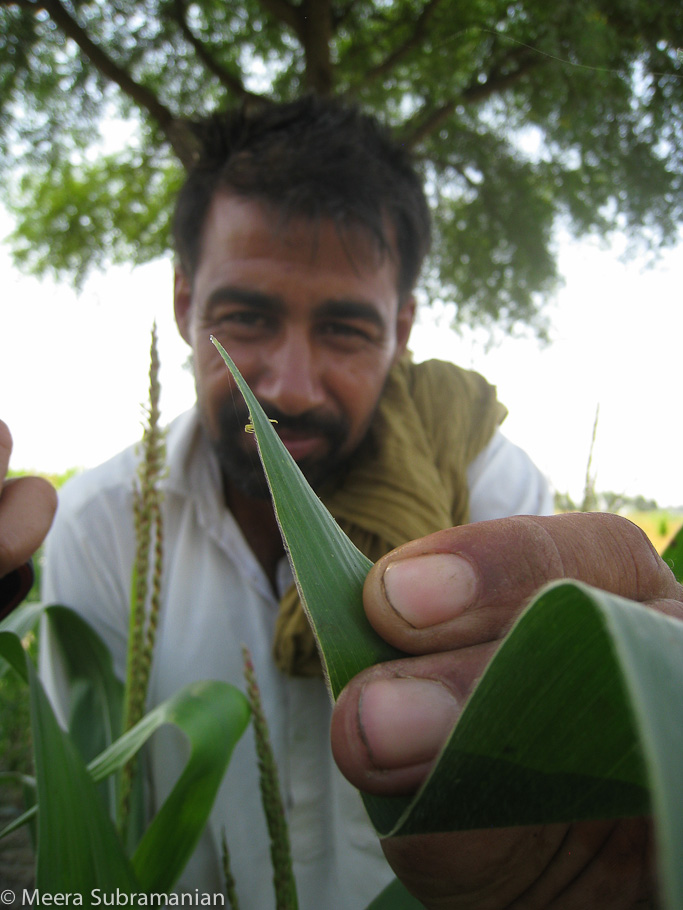
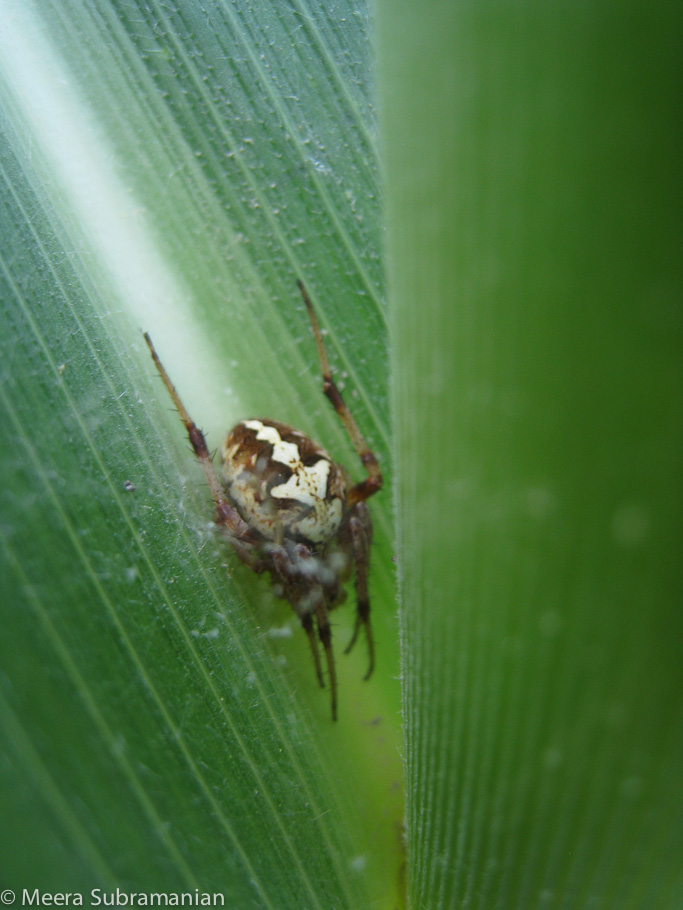
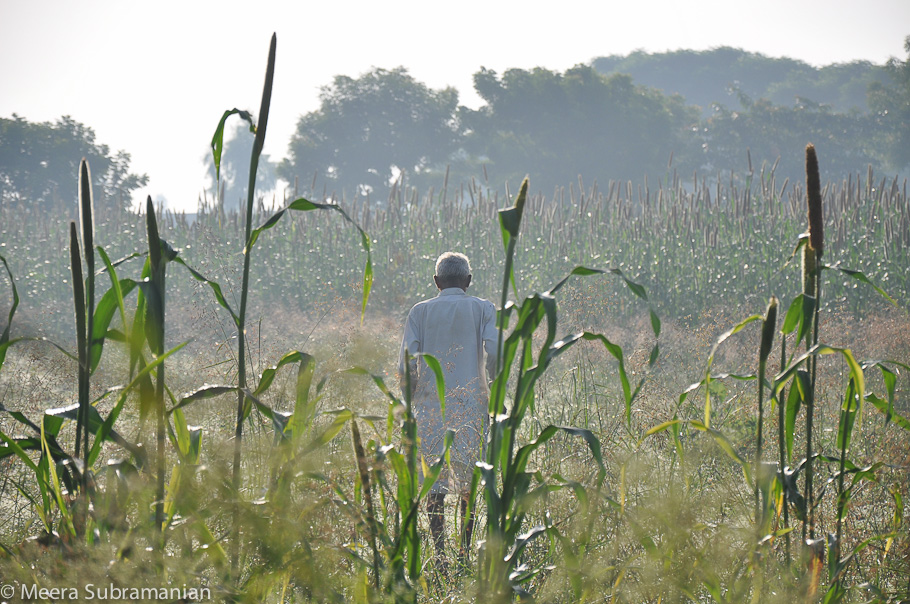
Gora Singh's mother was dying when she asked him to stop using chemicals on their farm. Four years later, his mother was gone and he'd transitioned half of their land - so far - to organic farming, the half he and his family ate from. The crops sprayed and saturated with the pesticides and fertilizers went to market. Gora is content. "Each year," he says, "the yield goes up." With chemical farming, he explains as we sit on the ground among the corn stalks, work is only done on the crop, not on the soil. With organic, it is a slower process, but the idea, the root of the idea, is to build the soil, nurture the tilth that holds the water, that feeds the roots, that makes the plants grow strong. Don't the pests come? He rises, and leans into a stalk of corn, pulling the leaves back. He searches. He points to a spider, black and yellow. In its clutches is the remainder of the pest known as the grey bug. "Before all the bugs were gone, good and bad." Now the good remain, and are there to eat the bad. Once we find the one spider, everywhere I look I see more, tucked into the folds where corn leaf meets stalk, scurrying from my footfalls into cracks in the earth. So why, I ask Gora, doesn’t everyone go organic? It was more work, he admitted, but the main reason is "they’re used to chemical farming and they don’t want to take risks." #RiverRuns #ElementalIndia #ecoswaraj #India
#earth #organic #agriculture #GreenRevolution #Punjab #riskeverything



While I sat perched on Amarjeet’s tree-canopied table at the center of his few acres. A hundred feet in one direction, women and children picked cotton on a neighbor’s land. A hundred feet in another direction, two men walked by with pesticide sprayers on their backs—“nozzleheads” in Western lingo—each rhythmically pumping down on a hand lever that spumed pesticides out in a mist they walked through and inhaled. It was peaceful as they moved apace, a dozen feet from each other, walking up the rows and turning to return down the field. There was the soft pumping sound, the spray landing like a magical mist on the cotton or drifting (some of it) onto Amarjeet’s land. Tiny farms like Amarjeet’s that chose to forgo chemicals or genetically modified crops would always have to contend with drift and cross-pollination from their neighbors’ land. Amarjeet echoed what I heard many farmers say: labor was their greatest problem. “No one wants to come and work on my farm because it’s too much work. Pesticides are like intoxicants—they’re addictive. And it’s more convenient to spray.”

Beside a canal, two farm laborers take a chai break in the shade of a tree, their bodies suspended on a charpoi cot above the earth. Jasbeer is thirty and scowling as he speaks of his work on the fields where industrial fertilizers are used. "I don’t like the chemicals," he says, standing up, a canal a slow flow of liquid brown channeled in concrete behind him. "I feel intoxicated by them, in a bad way." It is the canal water that he and the other farmers use to top off backpack sprayers where the concentrated chemicals are poured before they walk through the fields, barefoot, maskless. " I really detest it because I work with poisons all day and it makes me want to drink at night. I‘d prefer to work on a natural farm." He places his hands on his hips when I lift my camera. The other farmer remains on the charpoi, defeated or just tired. "I can’t afford not to do it without chemicals," he says, "so it doesn’t matter if I don’t like it." #RiverRuns #ElementalIndia
#earth #organic #agriculture #GreenRevolution #ecoswaraj #Bathinda #Punjab #India #truestory

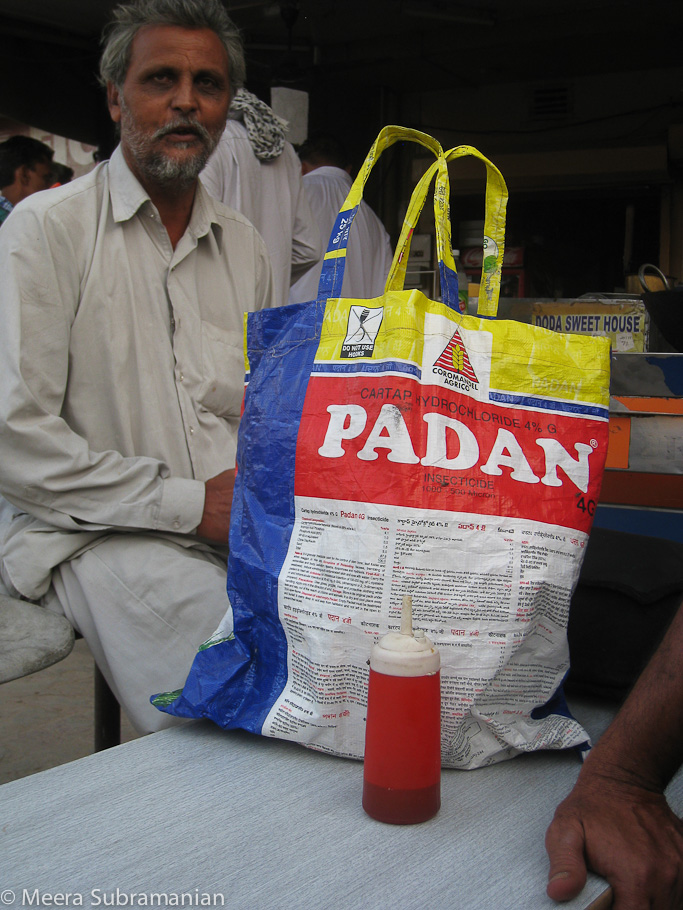
Spent insecticide packets are stabbed onto poles to mark the boundary lines between the fields of the farmers. Of Beant's nine acres, he's made two organic, and plans on more. . "This is the demand of the day," he tells me. "Because of pollution – the air, the water – we have many problems." The soil got hard with chemical farming are organic, or heading there. a neighbor’s property line. He has 16 acres total land, nine around here. men use great big pitchforks to gather straw and pile it twenty feet high on top of a truck. His friend, whos name means pumpkin, is not ready for the change. "I’ll wait to see how Beant does before trying out organic," he says.



Her fingers flutter across the bushes, like bees pollinating, the reaping tossed into a sling across her back. I reach for one cotton bloom, unprepared for the sharp points where the seed head opens into five folds, the soft interior protected from predators like me, the points digging into my fingertips. I yank awkwardly at the bloom and she laughs, a smile seeping though the gauzy fabric that she drew over her face when I arrived. That one’s not ready, she explains, guiding my hand to a better bloom. Tis the season of the reaping, and her fingers move through the green to find the off-white cloud bursts that can be spun into cloth. At six rupees per kilo, a good day can yield a dollar. Medikhere, #Punjab #RiverRuns #ElementalIndia #earth #ecoswaraj


