Meera Subramanian
  • Home
  • Books
  • Writing
  • Bio
  • Blog
  • Photos
  • Events
  • Speaking
  • Contact

Words Matter (omit useless ones)

June 15, 2026 By meerasub Leave a Comment

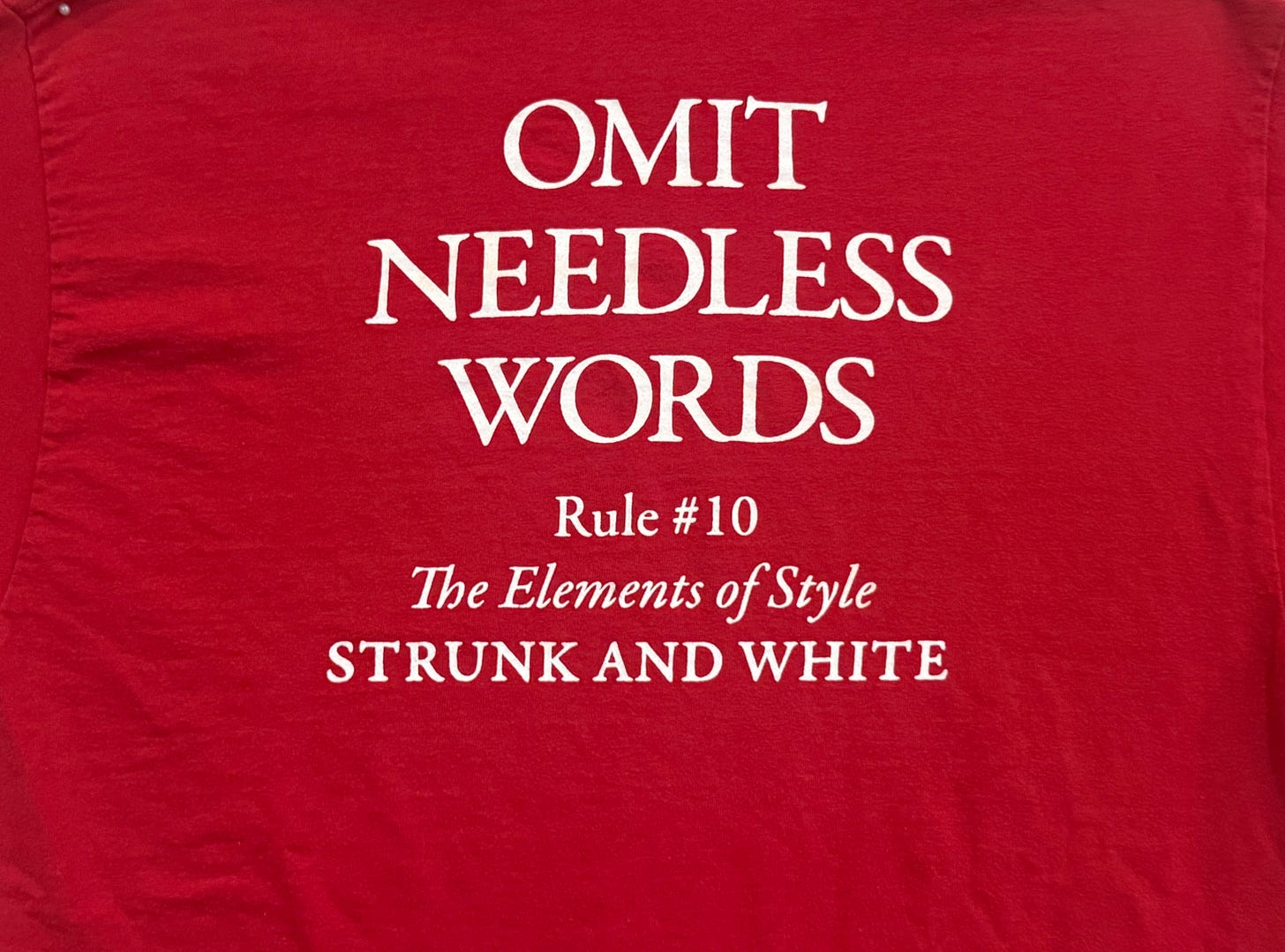
Omit Needless Words quote from Strunk & White

Most everywhere profs and teachers are submitting grades and students are scattering. I like to be contrarian. I’ve left Cape Cod and returned to the mountain that is Sewanee, Tennessee for another round—my seventh—of teaching creative nonfiction to a fine group of curious, crafty individuals at the School of Letters. It is here in the cool of the Cumberland Plateau that we can revel in this fact: words matter.

I was struck by this fact (again) when I finally watched the film H is for Hawk, the adaptation of Helen Macdonald’s sublime book of the same title. It was quiet and powerful in a way, I suppose, but being a story about interiority, about the collapsing struggle of grief and loss and depression, it just didn’t translate to the screen for this viewer. There was a contrived friend I don’t recall from the book that seemed like a set up for explanations, and it completely eliminated the second storyline that follows the complicated story of falconer T.H. White training his own hawk, as she is.
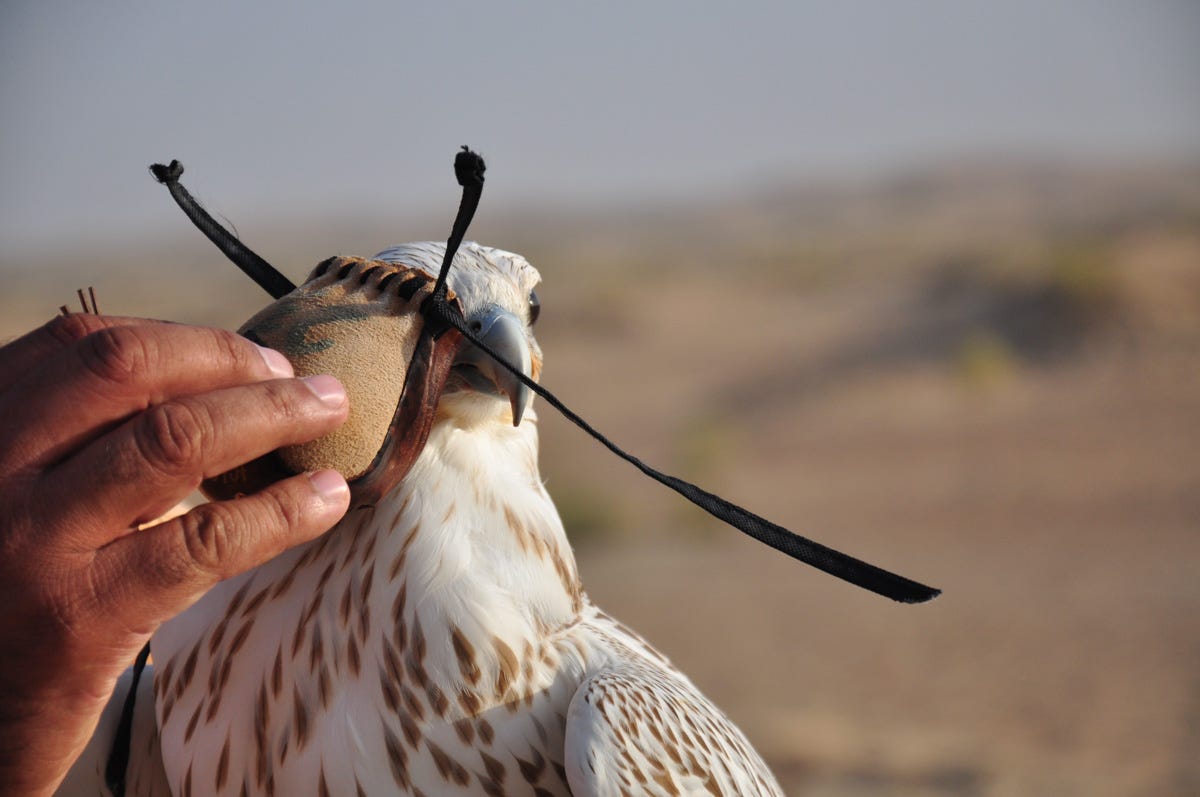
Man's hand removing falconry hood from a bird of prey

Falconry festival in the UAE by Meera Subramanian

Words matter. They can do so much to capture the heartbeat of human experience. I liked the movie, but I love the book. Have read it multiple times. Taught it. I use one passage to show how a writer can stop time and then breathe into it. Let it expand and take hold of us just by the careful decisions about pacing and word choice. When to let sentences tumble together and when to make them stop suddenly, iridescent and catching the light of experience. In the movie, she meets the gyrfalcon she wants to train for falconry. The scene is…fine. On the page, well, here, take a moment and read it, out loud, to revel in the sound of it, the way the images sear themselves into your mind’s eye:

Then he knelt on the concrete, untied a hinge on the smaller box and squinted into its dark interior. A sudden thump of feathered shoulders, and the box shook as if someone had punched it, hard, from within. “She’s got her hood off,” he said, and frowned. That light, leather hood was to keep the hawk from fearful sites. Like us.

Another hinge untied. Concentration. Infinite caution. Daylight irrigating the box. Scratching talents, another thump. And another. Thump. The air turned syrupy, slow, flecked with dust. The last few seconds before a battle. And with the last bow pulled free, he reached inside, and amidst a whirring, chaotic clatter of wings and feet and talons and a high-pitched twittering and it’s all happening at once, the man pulls an enormous, enormous hawk out of the box and in a strange coincidence of world and deed a great flood of sunlight drenches us, and everything is brilliance and fury. The hawk’s wings, barred and beating, the sharp fingers of her dark tipped primaries cutting the air, her feathers raised like the scattered quills of a fretful porpentine. Two enormous eyes. My heart jumps sideways. She is a conjuring trick. A reptile. A fallen angel. A griffon from the pages of an illuminated bestiary. Something bright and distant, like gold falling through water. A broken marionette of wings, legs and light-splashed feathers. She is wearing jesses, and the man holds them. For one awful, long moment, she is hanging head-downward, wings open, like a turkey in a butcher’s shop, only her head is turned right-way-up and she is seeing more than she has ever seen before in her whole short life. Her world was an aviary no larger than a living room. Then it was a box. But now is this; and she can see everything. the point-source glitter on the waves, a diving cormorant a hundred yards out; pigment flakes under wax on the lines of parked cars; far hills and the heather on them and miles and miles of sky where the sun spreads on dust and water and illegible things moving in it that are white scraps of gulls. Everything startling and newstamped upon her entirely astonished brain.
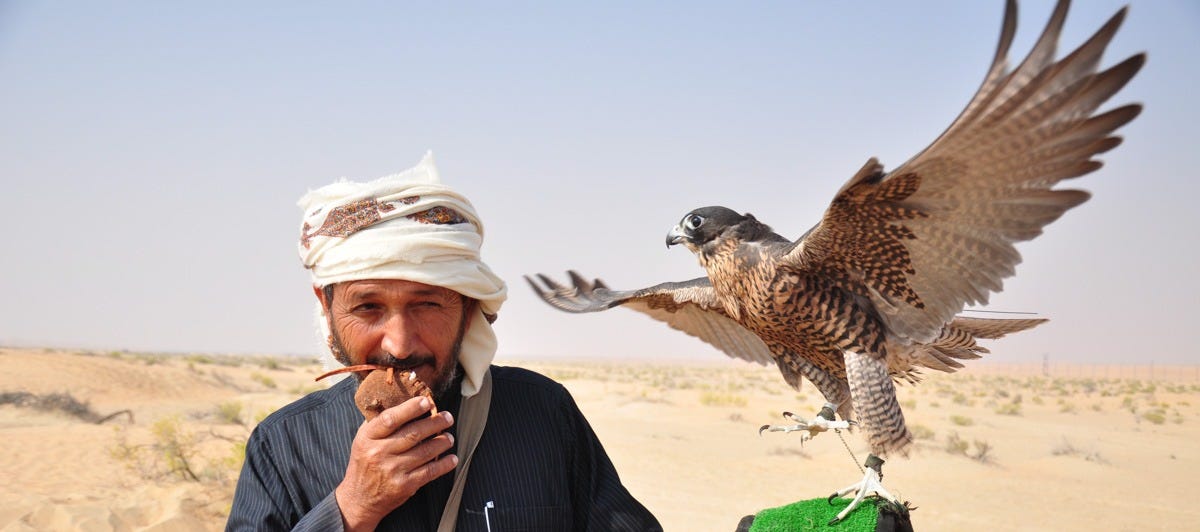
Man with falcon on his arm, its wings extended

Also from the falconry festival in the UAE, by Meera Subramanian

Oh, yes. YES. In class this summer, I shaped the syllabus around the 250th anniversary of this construct we call our nation, and the twentieth anniversary of the School of Letters, and we’re reading everything from Between the World and Me by Ta-Nehisi Coates to One Day, Everyone Will Have Always Been Against This by Omar El-Akkad and Late Migrations: A Natural History of Love and Loss by Margaret Renkl, but also wildly diverse (in every sense) writers from Henry Adams to Elissa Washuta to Jeff Sharlet. Wonderful, powerful words. May we never stop reading and writing to understand our place in the world.

And from the Department of Good News…

…Mine…

  • Lots of goodness is still happening with the new graphic novel, A Better World Is Possible, including an opinion piece I wrote for TIME on Earth Day, an interview with Bookstr, and a bunch of podcasts, some still in the works. There are new events, too, that you can find out about on the site. But two coming up quick…
  • If you (or someone you know) is in New Orleans this Saturday, June 20, come on over to Melba’s to get a Po’boy and snag a free copy of the book and ask me anything you like! High noon.

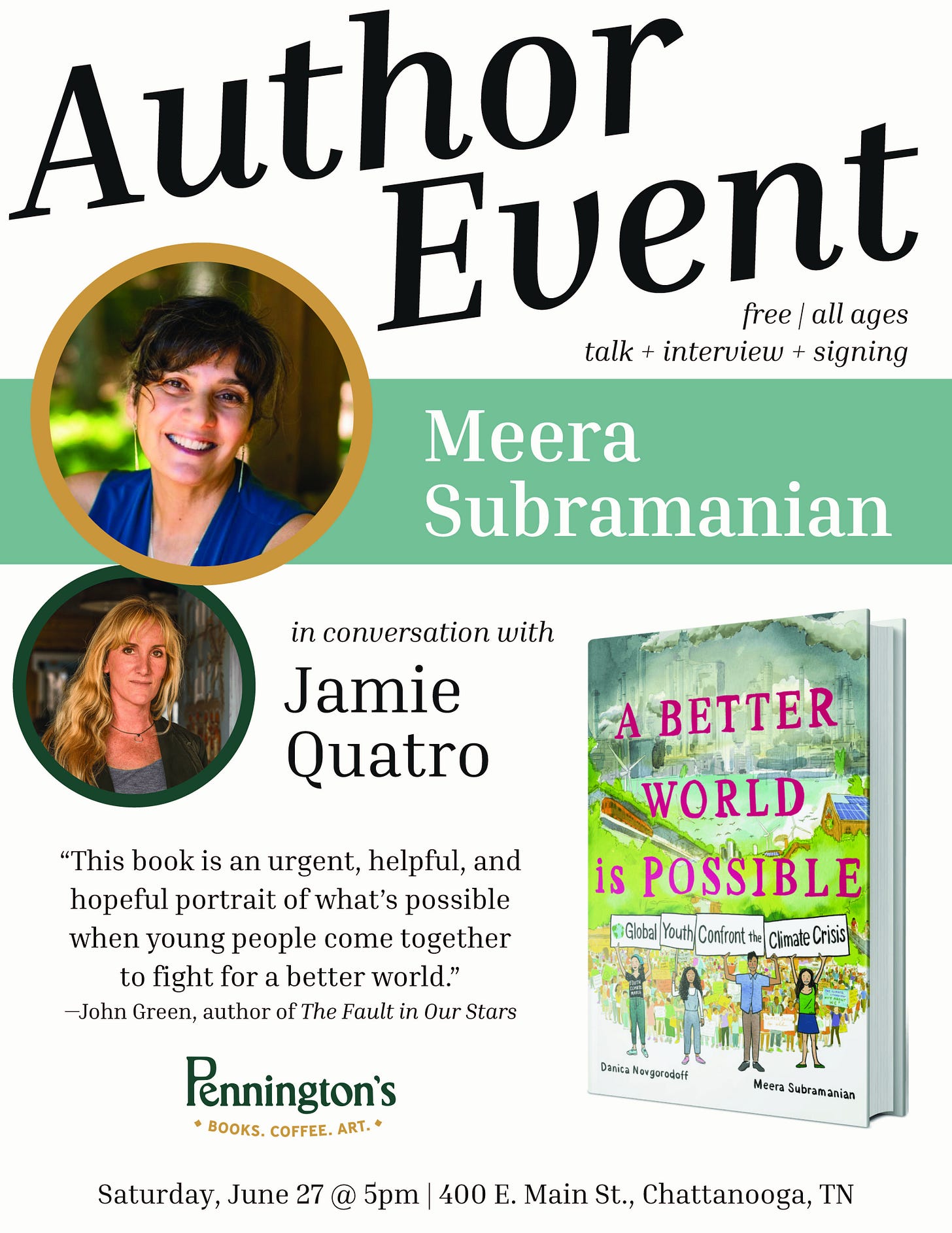
  • And then on Saturday, June 27, I’ll be in conversation with my friend, fab author, and fellow Sewanee faculty Jamie Quatro at Pennington’s Books in Chattanooga. Here are all the deets:
  • Back in May, Stories from a Warming World was a Moth-like storytelling event at CitySpace in Boston with my fellow BU MISI fellows. I took listeners to North Dakota, and other took them to New Orleans and California and Long Island Sound, each story echoing off the others. You can watch the whole event here:
  • And then I was back at CitySpace for the WBUR Festival to share the stage with the incredible singer-songwriter, and friend, Mark Erelli, bringing together songs from his new album Spring Green and my words and Danica’s images from the graphic novel. It was a plan we hatched last fall and it was such a joy to see it come to be.
  • Teens at the Museum of Science in Boston interviewed me (and Jocelyn Poste, who’s an educator associate at the museum) this spring as part of their YES Enrichment Career Explorations. The resulting short videos are to help teens expand their awareness of STEM-related careers. I wish I’d had something like this when I was in high school! Here are three of the videos:

Share

  • I have a behind-the-scenes look at the process of creating A Better World Is Possible in the SEJournal.
  • Smashpages had a nice write up associated with a Picture + Panel event I did with graphic novelist Katy Doughty, moderated by WBUR environmental correspondent Barbara Moran. It was fun talking about both the end of, and the bettering of, the world!
  • For the German speakers out there, my New Yorker piece on the tentative recovery of the vulture population in Nepal was reprinted in the European Reader’s Digest in German. Have a look here.
  • {Welp. After that roundup, now I know why I haven’t had the time to write a Substack for the last two months….}

And the good news of others…

  • Each spring I get to join a wonderful crew of writers and editors to select the next Matthew Power Literary Award winner. Or, rather, winners! This year, $15,000 went to the powerhouse journalist Danielle Mackey, who will be continuing her investigations into the complicated relationship between the United States and El Salvador. Runner-up Michael Adno will receive $7,500 to pursue a story of a botanic mystery in the Pacific Ocean. Can’t wait to see what these two produce. And if you’re a narrative journalist wanting to pursue a deep dive, keep this award on your radar. Applications go live in the winter.
  • Unvaccinated Under God by Kira Ganga Kieffer, who was our fearless assistant for the RESP fellowship, got a shout out in The New Yorker, which describes it as a, “concise and lucid history, grounded in the observation that anti-vaxxers are poorly understood in part because vaccine proponents shame skeptics as aberrant.” Kira instead explores the deep roots of vaccine hesitancy through the lens of religious belief as a way to move toward greater understanding.
  • Congrats to the talented writer Lavinia Spalding, who also happens to be my delightful sis-in-law, who once again edited the The Best Women’s Travel Writing. Volume 13. Cheers to all the storytellers in this latest edition.
  • Cheers also to fellow Sewanee faculty Rebecca Gayle Howell’s new book Erase Genesis. Here we are in conversation about it at Orion. Another Sewanee poetry prof and the leader of the new Hellbender Gathering of Poets, Nickole Brown, just signed a book deal with Timber Press for a book on cicadas. Could not be in better hands.
  • BU MISI fellow, photographer Julia Cumes has a new site up featuring her incredible work and a book in the works.

Journalists & writer friends, take note…

  • Sneaking up fast, but there’s still time to apply to the the Minnesota Northwoods Writers Conference, which takes place Tuesday, June 23 to Friday, June 26 at Bemidji State University.
  • Orion is offering an online writing workshop, Bel Canto: Writing the Lyric Essay, with Hannah Dela Cruz Abrams that includes generative writing prompts and a chance to workshop one full-length lyric essay. Deadline: June 20
  • Journalists in Ethiopia, Indonesia, Kenya, Kyrgyzstan or Madagascar looking to report on biodiversity or nature-based solutions should apply for Earth Journalism Network story grants of up to 1,800 EUR. Deadline: June 30
  • And for those in SE Asia, Mongabay is offering a Southeast Asia Ocean Reporting Fellowship. Deadline: June 25
  • Do you have a screenplay idea that incorporates climate change themes? NRDC and partners are offering a fellowship that grants $20,000 each to three writers to support development. Deadline: December 4
  • The Pulitzer Center is now accepting applications for its initiative focused on climate change and its effects on workers and work. Apply here.
  • Center for Health Journalism is offering journalists an opportunity to transform their reporting by training them to “interview the data” as if it were a human source with its Data Fellowship. Deadline: July 22
  • SEJ’s Energy Reporting 101 for Environmental Journalists webinar this Wednesday, June 12. 1-2 p.m. ET. Register here.
  • And I got to join Meaghan Parker and Ethan Bakuli for an Uproot Project event about how to “Get that Bag,” a webinar all about how to find and apply to the grants and fellowships that, unfortunately, are key to making a career in journalism work. Here’s a recording of the event:

I’m reading…

  • There was so little time for pleasure reading this spring but I did listen, as I moved from her to there and back again, to the audio book of Kiran Desai’s new novel, The Loneliness of Sonia and Sunny. It deserved all the praise it got. The incredible thick description, not being afraid to take up the page, and so perfectly capturing the best and worst of the two countries and cultures I know best: America and India. Highly recommend.

Green Fondo Berkshires 2026

  • Steve and I are joining Team Eco.Cyclers for a Climate Ride fundraiser. We’ll be riding fifty miles in two days (!) to raise money for positive climate solutions. I don’t take money for this Substack, but if you’d like to donate, you can do so here. No amount too small. Or large. 🚴🏼 🚴🏼 🚴🏼

Coda

To be in the woods of the Cumberland Plateau in Tennessee is to hear one of my favorite sounds, the song of the wood thrush. Did you know that, like many birds, the wood thrush uses an organ called the syrinx to produce sound, but the cool thing is that the syrinx has two independent sides, each controlled by its own set of muscles. They can produce two sounds simultaneously. Press play and close your eyes….

Filed Under: A Better World Is Possible, events, News, readings, teaching, travels Tagged With: A Better World Is Possible, book tour, climate change, events, InsideClimate News, readings, Sewanee, teaching

United in Change

December 16, 2019 By meerasub Leave a Comment

Photo by Meera Subramanian

As a reader I find there are stories that just stick with me; I can’t shake them. But as a journalist, I experience this a thousand-fold. What appears in print can feel like a haiku, with too many interviews and notebook jottings ending up on the cutting room floor. The histories of place I unearthed through research. The letters to the editor in the thin pages of the local newspaper. The anecdotes shared by those who didn’t make it into the piece. The deep story revealed behind and between their words, too big for the bounds of the word-count. 

As I finished up each of the nine pieces that were part of the series Finding Middle Ground series for InsideClimate News that I worked on for most of 2017-18, about perceptions of climate change in conservative parts of the country, I would find filaments linking them with each other that I didn’t have room to explore. I’d get tangled in threads leading to stories I’d reported in other parts of the world, a lament I heard from a peach farmer in Georgia echoing what a rice farmer had said in India. There were strands of sinew between what I learned in the field and what I knew from my own personal life, a peripatetic journey that’s granted me multiple vantage points, making me feel at home both nowhere and everywhere at once. 

Last year I became a contributing editor of Orion magazine, a publication I’ve read for many years, enjoying the lush richness of its pages, the images and poems and book reviews and NO ADS. (Yes, this is a nonprofit endeavor, and, yes, you can support it by subscribing.)  With this piece for Orion, I finally had a chance to reach up for some of those disparate threads that have been floating around in my head since I finished the ICN series and try to weave them into something that made sense. Or, at least, began to make sense. Still, it feels like a haiku. Still, there is so much unsaid at the edges. Because the story of climate change at this moment in time is immense, and shifting. We’re all living this in real-time, the scientists and storytellers and skeptics all. Much of what I found over 18 months of reporting is deeply troubling, the changes underway stirring so much into uncertainty, but I also hold onto the possibility of the disruption as a great opportunity. No rain without thunder and lightning, Frederick Douglass reminded us. And the storm of climate change is here, now. Anything could happen. 

The piece begins…

For the past couple of years, I traveled across my country, falling in love with strangers. I sought them out—farmers, ranchers, fly fishermen, evangelicals— and stepped into their lives, uninvited but nearly always, inexplicably, welcome. I sought some kind of connection, asking them questions few seemed to be asking them, about their lives and what they care about and what they believe in. Who they vote for and why. What they remember from before and what they expect in the future, which to their collective grief are often different things.

Read the rest here.

Filed Under: agriculture, cattle, climate change, drought, InsideClimate News, journalism, North Dakota, photography, travels Tagged With: climate change, conservation, grief, InsideClimate News, journalism, loss, Nature, Orion, photography, politics, pollution environment

Conversations Across America: Talking Climate Change with Conservative Voters

November 7, 2018 By meerasub Leave a Comment

As the InsideClimate News Finding Middle Ground series nears an end, I had a chance to speak with the lovely Heather Goldstone of WCAI’s Living Lab about some of the experiences I’ve had as I traveled across the country.

Click here to listen.

Filed Under: audio, climate change, InsideClimate News, journalism Tagged With: cape cod, climate change, InsideClimate News, interview, Montana, North Dakota, politics, radio, Texas, WCAI

Cold-water fish. Warming World.

June 8, 2018 By meerasub Leave a Comment

Craig Fellin fly-fishing on the Big Hole River with his dog Gus, Montana. Photo by Meera Subramanian

Anyone who takes fly-fishing seriously behaves like a scientist. These anglers are biologists, knowledgeable in what’s eating what, when and how. They are hydrologists, studying riffles and stream flow. They are naturalists, observing clouds and sunlight and the circulation of air as their rods flick back and forth across the big sky. They are, in a sense, climate scientists. And some, but not all, are deeply concerned about the effects of a warming climate on the cold-water species that inhabit blue-ribbon trout streams.

But to the extent that they act as climate scientists, partisan politics plays a role in many anglers’ understanding of climate change. Here in Montana, with pristine rivers that are home to some of the best fly-fishing in the country, a majority of votes went for President Trump—and climate change is considered by many of them to be a natural phenomenon beyond human control. Nonetheless, climate change is having a profound influence on fly-fishing, from the timing of insect hatches to the long-term survival of the fish that give this sport its meaning….

Read the full story at InsideClimate News or High Country News.

And I had a great conversation with Nicky Oullet of Montana Public Radio about the story, and you can listen to it here.

Filed Under: InsideClimate News, journalism Tagged With: climate change, conservation, fly-fishing, InsideClimate News, Interior West, Montana, rivers, trout, United States, USA, water

In Texas, Wind Power is Job Security

December 26, 2017 By meerasub Leave a Comment

Kaitlin Sullivan, wind energy student at TSTC, peeks in from the top of a 300′ wind turbine in Texas. Photo by Meera Subramanian


Here’s the latest in Finding Middle Ground series, from Sweetwater, Texas:

All along the straight-shot roads of Nolan County in West Texas, wind turbines soar over endless acres of farms, the landscape either heavy with cotton ready to harvest or flushed green with the start of winter wheat. The turbines rise from expanses of ranches, where black Angus beef cattle gaze placidly at the horizon. Here and there are abandoned farmhouses dating to the 1880s, when this land was first settled and water windmills were first erected. Occasionally a few pump jacks bob their metallic heads, vestiges of a once-booming oil industry still satiating an endless thirst.

Every industry creates an ecosystem around it. If the wind turbines that sprouted in West Texas were huge steel trees, spinning sleek carbon-fiber blades 100 feet in length, then the wind farms—including Roscoe Wind Project and Horse Hollow Wind Energy Center, some of the largest in the world—were their forest. Spread out across the expansive vista, invisible air currents feed the structures, their imperceptible roots extending out to the community that contains them.

Read the rest at InsideClimate News here. 


Filed Under: journalism Tagged With: climate change, energy, InsideClimate News, jobs, journalism, oil & gas, renewable energy, Sweetwater, Texas, Texas State Technical College, USA, wind energy

As Snow Disappears, Dogsledders Disagree on Why

December 21, 2017 By meerasub Leave a Comment

Wisconsin Musher Mel Omernick plays with one of her 25 dogs. She and her father have different views on what’s causing weird weather in the North Woods, leading to a third of winter sled dog races to be cancelled. Photo by Meera Subramanian


Pogo pressed her paws into the ground impatiently, the sound of her yelps joining with those of the three other Alaskan husky mixes that Mel Omernick and her husband, Keith, were hooking up to their tug lines. It was the first weekend of November in Pearson, Wisconsin, and mushers had come from all over the region, and as far away as New Hampshire and Quebec, to race their dogs. They had parked their vehicles across the field at the Ma-Ka-Ja-Wan Boy Scout Reservation—the young women in a Prius, the Trump supporter in a huge trailer emblazoned with “To the victor the spoils.” All year, the mushers had fed and watered and trained and cleaned up after their teams, awaiting the moment when they could let them loose across the starting line. Now the big weekend had finally arrived, though it had gotten off to a rocky start. Once again, the weather was to blame.

Read the full piece, published on InsideClimate News and a shorter version also ran on The New Yorker Elements blog.

Be sure to check out the great accompanying video done by Anna Belle Peevey:


Filed Under: InsideClimate News, journalism Tagged With: Alaska, climate, climate change, dogs, dogsled, Iditarod, InsideClimate News, Middle Ground, New Yorker, North Woods, snow, sports, Wisconsin

Seeing God’s Hand in the Deadly Floods…

October 28, 2017 By meerasub 2 Comments

White Sulphur Springs, WV. Photo by Meera Subramanian.

 Second in a series of stories for InsideClimate News. An evangelical mountain town in West Virginia lost eight people to flooding from an extreme rain storm last year. Many residents see the Biblical prophecy of the apocalypse, and welcome it, while some are considering climate change in a new light.

Jake Dowdy is a police officer in White Sulphur Springs, West Virginia, where he lived a block from Howard Creek, a stream so inconsequential you could usually hop-skip across parts of it without wetting your toes.

It was the morning of June 23, 2016, and a heavy rain was falling as Jake went to the gym for a workout. He wasn’t thinking much about the rain, other than that it’d be good for the garden. When he got home around noon, he had lunch and kicked up his feet in the living room, chilling out for a while before his 4 pm shift. He drifted off to sleep on the couch and awoke when his wife texted, confusing him for a moment; she was concerned about reports of flooding.

His disorientation turned to panic when he set his feet on the carpet and felt it squish soggily beneath his soles. He had just enough time to grab the cat and wade through thigh-high rushing water to his truck.

Read more at InsideClimate News or West Virginia Public Broadcasting. 

Filed Under: InsideClimate News, journalism Tagged With: climate change, evangelical, flood, InsideClimate News, religion, USA, water, West Virginia

In Georgia’s Peach Orchards, Warm Winters Raise Specter of Climate Change

August 31, 2017 By meerasub 2 Comments

 First in a series of stories for InsideClimate News.

MUSELLA, Georgia — Three generations of Robert Lee Dickeys share the two chairs in the cozy office of Dickey Farms, the younger always deferring to the elder. For 120 years, the Dickeys have been producing peaches so juicy they demand to be eaten over the kitchen sink.

Robert Lee “Mr. Bob” Dickey II, 89, is slightly stooped but moves quickly, dropping in just for a morning read of the Wall Street Journal. His son Robert Dickey III, 63, and his grandson, who goes by Lee, age 33, stick around all day, fielding calls and customers, checking the orchards. The next-generation Dickey is having her morning nap and will appear later in a tiny flowered dress, cradled in the arms of her mother, Lee’s wife, Stacy.

Just outside the office is the retail shop, where I watch customers drift into an open-air porch with white rocking chairs and a breeze, to consider peaches. Or, rather, the lack of peaches.

It’s mid-July, what should be peak season, but…

Read the full story here at ICN or in the partner publication, The Atlanta Journal-Constitution.

Filed Under: InsideClimate News, journalism Tagged With: agriculture, Atlanta-Journal Constitution, climate change, farming, Georgia, InsideClimate News, peaches, South, USA

Follow Meera on Substack

for the very occasional bit of news.

Categories

Tags

A Better World Is Possible Alaska anthology A River Runs Again Art awards birds birds of prey books book tour Cambridge cape cod climate change conservation death dissent Elemental India energy events Fulbright india InsideClimate News journalism kenya Knight Science Journalism Nature New York City organic farming Orion peregrine falcon pesticides photography politics pollution environment radio readings renewable energy science Society of Environmental Journalists teaching Texas travel USA vulture water

Archives by Month

Connect

  • Bluesky
  • Facebook
  • Instagram
  • LinkedIn

© 2026 Meera Subramanian. | All Rights Reserved. | Mastodon | Website design by Sumy Designs, LLC

Green_14
