When I first launched this Substack, I said something about including pieces from the archives and the moment has arrived when a particular piece holds a new relevance. I also made the comparison that Substack is just the latest iteration of something I’ve been doing in other forms for a very long time. In 2003, that meant creating a zine called rrrrl girlz that I did with my girlfriends out in Oregon. We kept it going for years, sketching and writing and cutting and pasting, creating covers like this:
Looking back on this cover I think about how much has changed. And how little.
No need for me to tell you what the zine was about. We had a manifesto:
And the piece that feels timely is one I wrote about a camping trip to the Rogue River in southern Oregon. Join me…
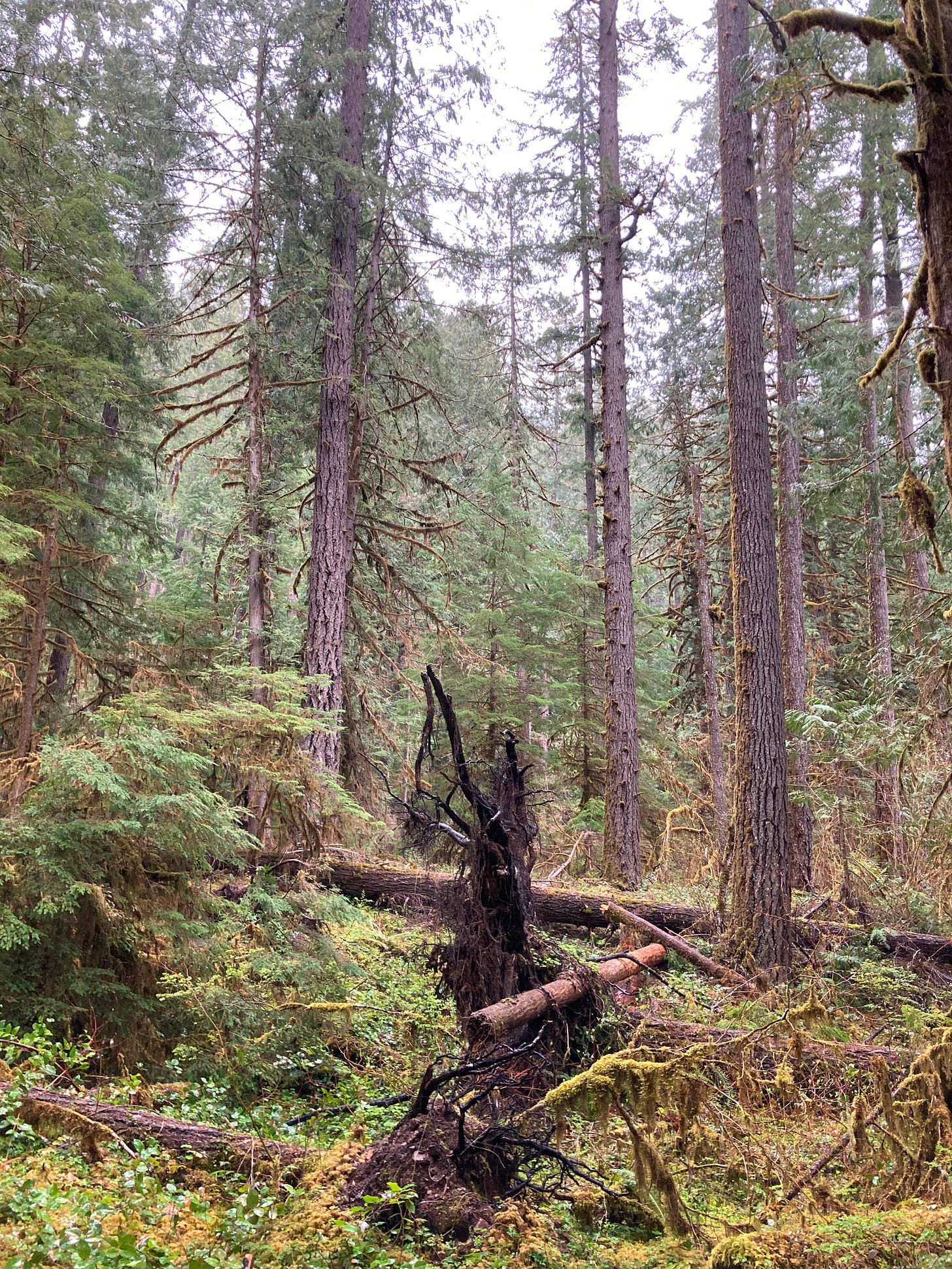
This ancient piece is timely because the Trump administration is currently proposing to eliminate the Roadless Area Conservation Rule, known as the Roadless Rule, that protects the wild places like Zane Grey. I haven’t been back to the banks of the Rogue River for too long, but the Zane Grey roadless area remains the largest of BLM roadless areas in the region that reaches across southern Oregon and northern California, a place where rare plants and animals still find a place to thrive. The proposed rollback would affect Forest Service lands, not BLM lands, but if it proceeds, nearly 45-million acres—nearly a third of the entire national forest system—of undeveloped public backcountry forestland is at risk.
Roads are human inroads to logging and mining, and with them come habitat shattered, water quality compromised, and the loss of pristine areas where more-than-human life can thrive. While reducing fire risk (ie logging) is the government’s reasoning, research has shown that humans on roads start a majority of fires. Losing these roadless areas is also an erosion of the conservation initiative proposed by the late biologist E.O. Wilson to protect half of the Earth’s surface, land and sea, to ensure that biodiversity remains.
This is the challenge with the work of conversation. It remains eternal. Fight to protect places and species, and every win is tentative. Every loss can be forever. Once an old growth forest is slashed, it will be generations before that intricate lace of an place might return, assuming all the pieces of the ecosystem—the northern spotted owl and marbled murrelet above and the Scott Bar salamander and forest sharp-tailed snake below—even remain to return.
And speaking of not harvesting what you did not plant, fare thee well, Wendell Berry. This, also from the pre-computer days when I worked with pen and paper, unable to adhere to Wendell’s steadfastness about resisting the shift to digital:
On the horizon: Feeling ambitious about a story? The Matthew Power Literary Reporting Award, a grant of $15,000 to support the work of a promising early-career nonfiction journalist on a story that uncovers truths about the human condition, will be taking applications in November.
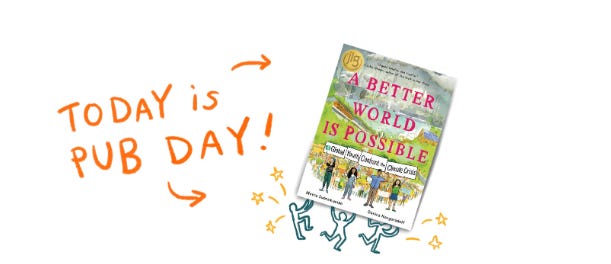
I wish Danica Novgorodoff and I had written a book about climate change that became irrelevant. Quite the opposite.
Others seem to recognize the relevance. The second (paperback) and third (hardcover) printings are arriving to Macmillan soon. And we’re hearing reports of educators already using it in their classrooms, from a college class on resistance movements, where our graphic novel about youth activists sat alongside Gandhi and Adam Hochschild on the syllabus, to a middle-school classroom in Texas, where the teacher said, “There are so many unexpected impactful sections such as the timeline of climate events and the Interlude with world religions. Also, my students commented that the colorful pages are a nice contrast at times when the story feels dark.” We tried to bring the light to the tough but necessary subject of the climate crisis.
Please reach out to us if you’re an educator looking for compelling narrative about climate change that is also deeply researched and fact-checked, complete with Danica’s striking watercolor style that Booklist described as “absolutely perfect for this topic, showcasing both the power of visual comics metaphors and the beauty of the natural world.”
Close to home on Cape Cod, I’ve got two events coming up at my oldest new (newest old?) favorite place, The Old Village Store, in collaboration with the Barnstable Land Trust. It’s been around since the 1880s but is having a revival that includes great food, Guinness on tap, and a slew of live events. My first one, on Sept. 25, is live storytelling event—à la Moth—about survival and understanding in a climate-changed world. I’ll be sharing the stage with my BU MISI fellows from last year: Julia Cumes, Jaelynn Carr and Joanna Davidson. It’s a local redux version of a spring presentation we did in Boston at CitySpace in the spring. Free registration here.
The second event at The Old Village Store is on Oct. 3, when I’ll be in conversation about A Better World Is Possible with Katy Acheson, Executive Director of the Cape Cod Climate Leadership Council. After the talk, Kristie Kapp of Resilient Roots will lead a hands-on workshop to make seed bombs so participants can leave armed to make the world a better place by spreading beauty and life. YAY! Free registration here. [Earlier that day, check out the artist reception for the Julia Cumes & Lipe Borges exhibit, Invisible Threads: Portraits and Stories of Our Global Neighbors, at the Cahoon Museum.]
Between those two events, on Sunday, September 27, co-author Danica Novgorodoff and I will both be at the Brooklyn Book Festival. I will be on an Orion panel with the wonderful authors Maria Pinto and Nicholas Triolo at 11am. Danica will be on a panel for the book at 4pm, and I’ll be at book signings after both events.
Then…off to the West Coast, to that place where the salmon find their way home and I get to cheer. I’ll be doing an event on Orcas Island on Tuesday, Oct. 13. Mark your calendars. More info to come.
Thanks to all those who supported the Climate Ride that Steve and I did in August! Not big bikers, we were super jazzed to have finished our 54-mile, 2-day bike ride in the hilly Berkshires. No small feat when attempting to train on flat Cape Cod with our ole clunkers. I’m vehemently anti-matchy-matchy with S., but I was happy to mutually don our Green Fondo shirts, which we got for raising more than $2,000. The funds went equally and entirely to Earthjustice, Cafeteria Culture (which Rebeca Sabnam, one of the climate youth featured in our book is involved with) and Eco.logic (run by Chicago-based Rozina Kanchwala, who turned us on to this ride and led our fierce and friendly team, the Eco.cyclers). Thank you everyone who chipped in! And, yes, you can still contribute through December if you like.
I’m reading/listening/watching…
The bird migration here in the northern hemisphere is in full swing. Over at Cornell Lab’s Birdcast, you can see them move in real time. At night, I feel the dark skies overhead pulse; in the day I watch the swallows swirl in slow loops south. Since most songbird migration is at night, turn off those (damn) outdoor lights and help them along.
“City of Sweat” Climate journalist Aruna Chandrasekhar and photographer Ishan Tankha recognized the delusion of showing kids swimming to depict heatwaves, a typical visual accompaniment to the legions of stories about heatwaves across the globe this summer. “The impact of heat can be hard to see with the naked eye,” Aruna writes, “let alone capture on camera. But thermal imagery tells a story that ordinary pictures can’t,” which is exactly what they did in Mumbai. Published in Equator, the new magazine about politics, culture and art.
Covering Climate Now has a new Spanish-language bulletin: Radar Clima
Oh, I did love the layered storytelling of Valeria Luiselli’s novel Beginning Middle End. Then luxuriating in her conversation with David Naimon on Between the Covers.
Coda…
Another memoriam. Another loss of a giant. Thanks to Harriet at the Wellfleet book event for turning me onto this one…
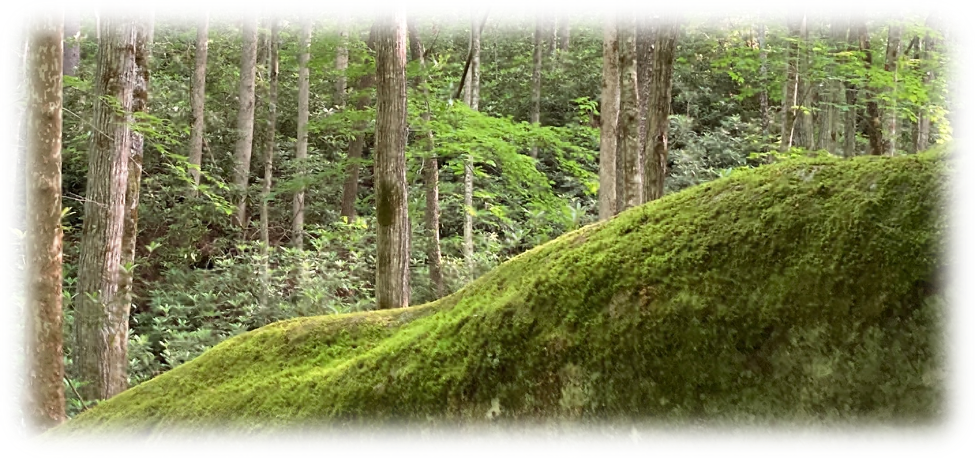
Cumberland Plateau, Sewanee, TN. By Meera Subramanian
It’s my seventh year teaching creative nonfiction at Sewanee School of Letters in eastern Tennessee, drawn back each year by the students so committed to improving their craft, by the stellar faculty, by the very land itself, alive with life. As I developed the syllabus this year, I leaned into two anniversaries, the 250th of this nation and the 20th of the Master’s writing program here, bringing a bit of history into the class to illuminate how the art of creative nonfiction metamorphosizes over time and in response to cultural contexts. What can we learn about craft from some of the best voices of creative non-fiction past and present? What can they tell us about our nation’s history and its relationship to the rest of the world today? What can they tell us about ourselves? Here’s the reading list, with some thoughts…
To get started:
“A Fortnight in the Wilderness” by Alexis de Tocqueville, an appendix to his two-volume Democracy in America (1835 and 1840). The Frenchman is sent by his governmment, along with Gustave de Beaumont, to study America’s prison system, but they go rogue and study all of American society (like James Agee veering from his Fortune assignment and ending up writing Let Us Now Praise Famous Men). “Man becomes accustomed to everything,” he writes, as he documents the felling of the forests and the eternal march west by a “nation of conquerors,” eliminating the native lives that once inhabited the landscape. “What is the life of an Indian?” he asks, seemingly sympathetically. It’s a question that we’ll echo later in the syllabus, when considering a Palestinian child.
How do writers capture the elusive element of time?
“Law of Acceleration” by Henry Adams, which was awarded the Pulitzer Prize in 1919, is a dense piece about how progress hurtles forward (Oh, Henry, if you only knew…). The “volume of coal power may serve as a dynamometer,” he writes, citing how coal output doubled every ten years between 1800 and 1900. Annual coal use had grown to 300 million tons. In 2024… 15 billion tons of coal, and that’s not counting the 18 billion tons of oil and gas.
“In Praise of Idleness” by Bertrand Russell, in which he “advances my own arguments for laziness.” Fuck progress.
“How to Wind the Clock of your Days: Notes on the Nature and Function of Time in the New Millennium” by Bob Shacochis, who reminds us we live in both Big Huge Time and Itsy-Bitsy Time, the chronos and kyros that Jeff Sharlet taught us about when I was in grad school.
What do different forms and structures of nonfiction offer to writers?
“The Fourth State of Matter” by Jo Ann Beard. One of the most brilliant braided essays ever written. Perfectly woven.
“Are We Racist?” by Mira Jacob, to show the power of the graphic novel form.
“Indianapolis” by John Green in his Anthropocene Reviewed podcast, to turn words into breath.
School of Letter Twentieth Anniversary
Sewanee School of Letters… Twenty years so far
A pause in the reading list to share a bit about the SSL 20th Anniversary, honoring what John Grammer brought into being, what Justin Taylor and April Alvarez sustain. Poet Laureate of the US, Natasha Tretheway, gave the keynote. She spoke of the beautiful skills her father, a poet, instilled in her, reading from books, teaching her about metaphor. She valued what she found within bound pages, believed books held truth. And then she told about when she was working her way through the World Book Encyclopedia. Came across the entry on races. Caucasoid, mongoloid, negroid. Measuring her femur and tibia as a girl, trying to figure out how she fit in the world, half white, half black. She spoke about the silences around race that, too often, hold the dominant “Caucasoid” vantage, unable to see people like her, people with more melanin in their skin. It was a perfect set up for the next day….
Students read Ely Green’s original manuscript at the archives. By Meera Subramanian
On Juneteenth, a trip to the University Archives & Special Collections
First two chapters of Ely Green’s Too Black, Too Whitewas the reading assignment, and then a visit to the archives to see the original handwritten manuscript by the bi-racial Sewanee native and hear about how Sewanee is reckoning with its racist roots from Woody Register of the Roberson Project, archivist Mandi Johnson, and podcast producer (and School of Letters Assistant Director) April Alvarez. It was the first time in an archive for many of them. Troves of history and stories and possibilities, many still unprocessed, far beyond the knowledge of seemingly all-knowing Google and AI searches. Go. Touch paper.
“This is Not Who We Are” by Naomi Shaibab Nye, a post 9/11 essay.
How can creative nonfiction writers bridge political divides, chasms created by geography, and other shifts in personal or place-based divisions?
“Compression Wood” by Frank Burroughs, which John Grammer believes Frank read here at School of Letters in its first year. Exquisite piece about how language elevates but also cleaves us from experience, about a friendship that lasts, about how to be from one place and also of another.
“American Grotesque” by John Jeremiah Sullivan
How does nationality shape the stories we tell?
One Day, Everyone Will Have Always Been Against This, by Omar El Akkad, won the National Book Award last year. It was described as “a chronicle of that painful realization, a moral grappling with what it means, as a citizen of the U.S., as a father, to carve out some sense of possibility in a time of carnage.” The carnage he writes about continues. Yesterday, Omar generously Zoomed into our classroom. It was the day after the one that marked a thousand days in which Israel has been trying to bomb Gaza out of existence. Not in (our) news much anymore, what with the Reflecting Pool and all, but the UN has stated that human development in Gaza has been set back 77 years, life expectancy now averages 40 years. So far, an estimated 73,066 Palestinians have been killed, include 21,000 children, a thousand babies. Nine thousand are still missing, likely buried in a place that is virtually all uncleared rubble. Bombings continue, in spite of a supposed ceasefire since October. I’ve written about this book before. It was so good to teach it. To examine the craft of writing into bewilderment and anger, the “scorch marks still on the page,” he told us. “Literature should be a vehicle against loneliness,” he said. He gives voice to all those who believe an unrelenting bombing of a people and blocking of all aid is wrong. Full stop.
Most everywhere profs and teachers are submitting grades and students are scattering. I like to be contrarian. I’ve left Cape Cod and returned to the mountain that is Sewanee, Tennessee for another round—my seventh—of teaching creative nonfiction to a fine group of curious, crafty individuals at the School of Letters. It is here in the cool of the Cumberland Plateau that we can revel in this fact: words matter.
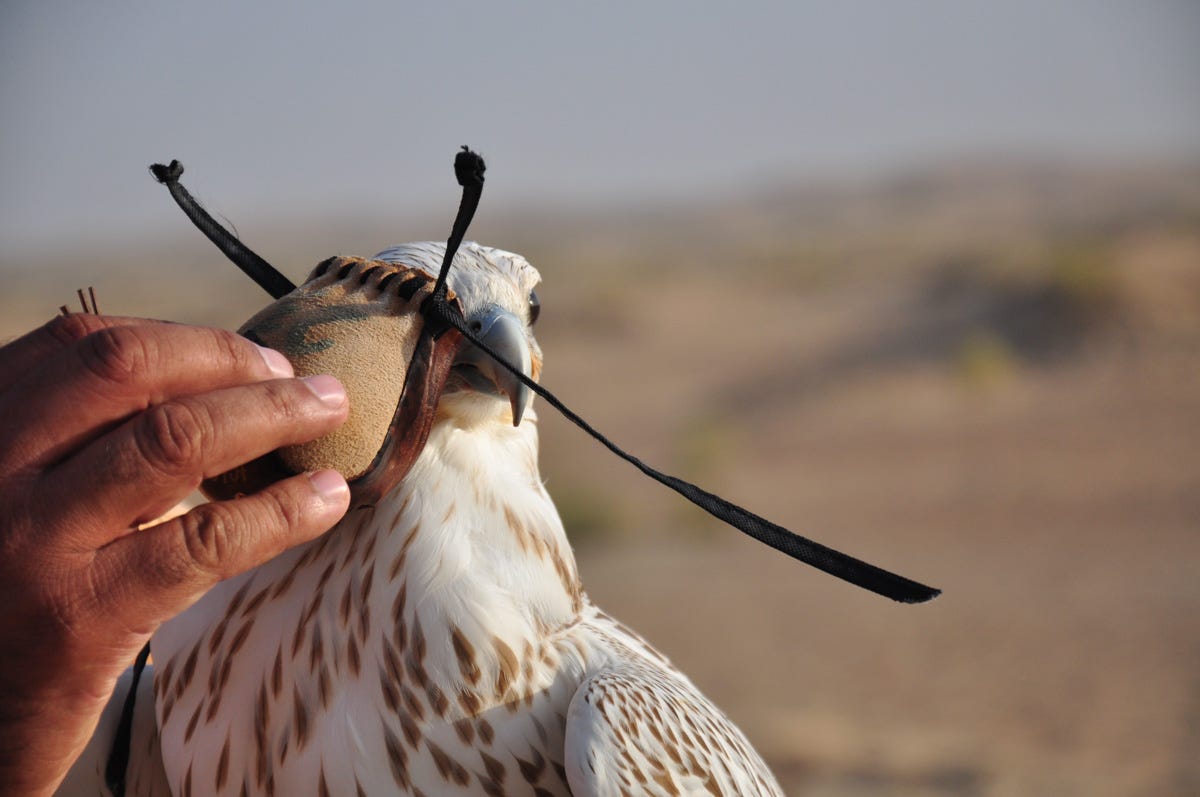
I was struck by this fact (again) when I finally watched the film H is for Hawk, the adaptation of Helen Macdonald’s sublime book of the same title. It was quiet and powerful in a way, I suppose, but being a story about interiority, about the collapsing struggle of grief and loss and depression, it just didn’t translate to the screen for this viewer. There was a contrived friend I don’t recall from the book that seemed like a set up for explanations, and it completely eliminated the second storyline that follows the complicated story of falconer T.H. White training his own hawk, as she is.
Falconry festival in the UAE by Meera Subramanian
Words matter. They can do so much to capture the heartbeat of human experience. I liked the movie, but I love the book. Have read it multiple times. Taught it. I use one passage to show how a writer can stop time and then breathe into it. Let it expand and take hold of us just by the careful decisions about pacing and word choice. When to let sentences tumble together and when to make them stop suddenly, iridescent and catching the light of experience. In the movie, she meets the gyrfalcon she wants to train for falconry. The scene is…fine. On the page, well, here, take a moment and read it, out loud, to revel in the sound of it, the way the images sear themselves into your mind’s eye:
Then he knelt on the concrete, untied a hinge on the smaller box and squinted into its dark interior. A sudden thump of feathered shoulders, and the box shook as if someone had punched it, hard, from within. “She’s got her hood off,” he said, and frowned. That light, leather hood was to keep the hawk from fearful sites. Like us.
Another hinge untied. Concentration. Infinite caution. Daylight irrigating the box. Scratching talents, another thump. And another. Thump. The air turned syrupy, slow, flecked with dust. The last few seconds before a battle. And with the last bow pulled free, he reached inside, and amidst a whirring, chaotic clatter of wings and feet and talons and a high-pitched twittering and it’s all happening at once, the man pulls an enormous, enormous hawk out of the box and in a strange coincidence of world and deed a great flood of sunlight drenches us, and everything is brilliance and fury. The hawk’s wings, barred and beating, the sharp fingers of her dark tipped primaries cutting the air, her feathers raised like the scattered quills of a fretful porpentine. Two enormous eyes. My heart jumps sideways. She is a conjuring trick. A reptile. A fallen angel. A griffon from the pages of an illuminated bestiary. Something bright and distant, like gold falling through water. A broken marionette of wings, legs and light-splashed feathers. She is wearing jesses, and the man holds them. For one awful, long moment, she is hanging head-downward, wings open, like a turkey in a butcher’s shop, only her head is turned right-way-up and she is seeing more than she has ever seen before in her whole short life. Her world was an aviary no larger than a living room. Then it was a box. But now is this; and she can see everything. the point-source glitter on the waves, a diving cormorant a hundred yards out; pigment flakes under wax on the lines of parked cars; far hills and the heather on them and miles and miles of sky where the sun spreads on dust and water and illegible things moving in it that are white scraps of gulls. Everything startling and newstamped upon her entirely astonished brain.
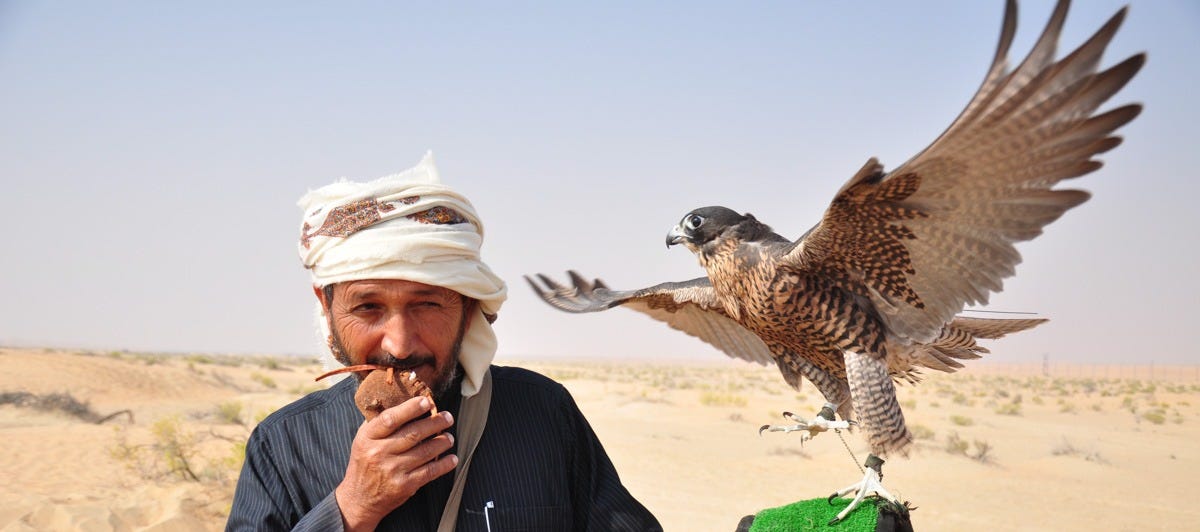
Also from the falconry festival in the UAE, by Meera Subramanian
Oh, yes. YES. In class this summer, I shaped the syllabus around the 250th anniversary of this construct we call our nation, and the twentieth anniversary of the School of Letters, and we’re reading everything from Between the World and Me by Ta-Nehisi Coates to One Day, Everyone Will Have Always Been Against This by Omar El-Akkad and Late Migrations: A Natural History of Love and Loss by Margaret Renkl, but also wildly diverse (in every sense) writers from Henry Adams to Elissa Washuta to Jeff Sharlet. Wonderful, powerful words. May we never stop reading and writing to understand our place in the world.
And from the Department of Good News…
…Mine…
Lots of goodness is still happening with the new graphic novel, A Better World Is Possible, including an opinion piece I wrote for TIME on Earth Day, an interview with Bookstr, and a bunch of podcasts, some still in the works. There are new events, too, that you can find out about on the site. But two coming up quick…
If you (or someone you know) is in New Orleans this Saturday, June 20, come on over to Melba’s to get a Po’boy and snag a free copy of the book and ask me anything you like! High noon.
And then on Saturday, June 27, I’ll be in conversation with my friend, fab author, and fellow Sewanee faculty Jamie Quatro at Pennington’s Books in Chattanooga. Here are all the deets:
Back in May, Stories from a Warming World was a Moth-like storytelling event at CitySpace in Boston with my fellow BU MISI fellows. I took listeners to North Dakota, and other took them to New Orleans and California and Long Island Sound, each story echoing off the others. You can watch the whole event here:
And then I was back at CitySpace for the WBUR Festival to share the stage with the incredible singer-songwriter, and friend, Mark Erelli, bringing together songs from his new album Spring Green and my words and Danica’s images from the graphic novel. It was a plan we hatched last fall and it was such a joy to see it come to be.
Teens at the Museum of Science in Boston interviewed me (and Jocelyn Poste, who’s an educator associate at the museum) this spring as part of their YES Enrichment Career Explorations. The resulting short videos are to help teens expand their awareness of STEM-related careers. I wish I’d had something like this when I was in high school! Here are three of the videos:
Smashpages had a nice write up associated with a Picture + Panel event I did with graphic novelist Katy Doughty, moderated by WBUR environmental correspondent Barbara Moran. It was fun talking about both the end of, and the bettering of, the world!
For the German speakers out there, my New Yorker piece on the tentative recovery of the vulture population in Nepal was reprinted in the European Reader’s Digest in German. Have a look here.
{Welp. After that roundup, now I know why I haven’t had the time to write a Substack for the last two months….}
And the good news of others…
Each spring I get to join a wonderful crew of writers and editors to select the next Matthew Power Literary Award winner. Or, rather, winners! This year, $15,000 went to the powerhouse journalist Danielle Mackey, who will be continuing her investigations into the complicated relationship between the United States and El Salvador. Runner-up Michael Adno will receive $7,500 to pursue a story of a botanic mystery in the Pacific Ocean. Can’t wait to see what these two produce. And if you’re a narrative journalist wanting to pursue a deep dive, keep this award on your radar. Applications go live in the winter.
Unvaccinated Under God by Kira Ganga Kieffer, who was our fearless assistant for the RESP fellowship, got a shout out in The New Yorker, which describes it as a, “concise and lucid history, grounded in the observation that anti-vaxxers are poorly understood in part because vaccine proponents shame skeptics as aberrant.” Kira instead explores the deep roots of vaccine hesitancy through the lens of religious belief as a way to move toward greater understanding.
Congrats to the talented writer Lavinia Spalding, who also happens to be my delightful sis-in-law, who once again edited the The Best Women’s Travel Writing. Volume 13. Cheers to all the storytellers in this latest edition.
BU MISI fellow, photographer Julia Cumes has a new site up featuring her incredible work and a book in the works.
Journalists & writer friends, take note…
Sneaking up fast, but there’s still time to apply to the the Minnesota Northwoods Writers Conference, which takes place Tuesday, June 23 to Friday, June 26 at Bemidji State University.
Orion is offering an online writing workshop, Bel Canto: Writing the Lyric Essay, with Hannah Dela Cruz Abrams that includes generative writing prompts and a chance to workshop one full-length lyric essay. Deadline: June 20
The Pulitzer Center is now accepting applications for its initiative focused on climate change and its effects on workers and work. Apply here.
Center for Health Journalism is offering journalists an opportunity to transform their reporting by training them to “interview the data” as if it were a human source with its Data Fellowship. Deadline: July 22
SEJ’s Energy Reporting 101 for Environmental Journalists webinar this Wednesday, June 12. 1-2 p.m. ET. Register here.
And I got to join Meaghan Parker and Ethan Bakuli for an Uproot Project event about how to “Get that Bag,” a webinar all about how to find and apply to the grants and fellowships that, unfortunately, are key to making a career in journalism work. Here’s a recording of the event:
I’m reading…
There was so little time for pleasure reading this spring but I did listen, as I moved from her to there and back again, to the audio book of Kiran Desai’s new novel, The Loneliness of Sonia and Sunny. It deserved all the praise it got. The incredible thick description, not being afraid to take up the page, and so perfectly capturing the best and worst of the two countries and cultures I know best: America and India. Highly recommend.
Green Fondo Berkshires 2026
Steve and I are joining Team Eco.Cyclers for a Climate Ride fundraiser. We’ll be riding fifty miles in two days (!) to raise money for positive climate solutions. I don’t take money for this Substack, but if you’d like to donate, you can do so here. No amount too small. Or large. 🚴🏼 🚴🏼 🚴🏼
Coda
To be in the woods of the Cumberland Plateau in Tennessee is to hear one of my favorite sounds, the song of the wood thrush. Did you know that, like many birds, the wood thrush uses an organ called the syrinx to produce sound, but the cool thing is that the syrinx has two independent sides, each controlled by its own set of muscles. They can produce two sounds simultaneously. Press play and close your eyes….
But, yes, today offers a moment for your consideration. Take a breath. Ah, the miracle of air. Look at a spring leaf unfurling out of seemingly nothing. Ah, the miracle of a life. Quench your thirst. (And covering the planet.) Ah, the miracle of water.
Take nothing for granted. Fight like f#@* for the preservation of the natural world, which is a fight for humans, sure, but also the million-trillion, give or take, other species of life forms that populate this one magnificent planet we all emerged from.
The past week has been full of too many good things to fit here. But some quick snapshots…
A climate movement grows in Brooklyn
Last Tuesday night in Brooklyn, we celebrated A Better World Is Possible: Global Youth Confront the Climate Crisis in the best possible way: co-author Danica Novgorodoff and I together in the same space at Greenlight Bookstore, where the idea of a collaboration on a graphic novel about youth climate activists took root way back in 2020. AND…we were joined by three of the four youth we feature in the book. It was beyond incredible to meet, in person, Shiv Soin of TREEage, Rebeca Sabnam, and Jamie Margolin of Zero Hour. We only wish Xiye Bastida of Re-Earth Initiative could have made it, too. They have all grown into fierce young adults, working in all different ways to change the world for the better, and I was deeply moved by hearing their latest news, from struggles to sweet victories. And huge thanks to everyone that came out to pack the room and swiftly sell out books.
Selling out, in the good way
Speaking of, we are delighted to share that A Better World Is Possible is now heading into its second (paperback) printing and third (hardcover) printing!!! Help us keep the momentum going by:
✅ Giving us a review on Goodreads or (if you must be there) Amazon
✅ Bumping up the 5-star reviews with a 👍🏽
✅ Asking your local library or indie bookstore to get a copy
✅ Sharing news of the book on socials, where you can also follow us (Insta tags @meerasub and @ABetterWorldtheBook and LinkedIn) and privately with friends
✅ Considering it for your next book club
✅ Suggesting the book for fall coursework for schools, ages 12+. We’ve got a discussion guide and are happy to send desk copies to interested educators for their consideration
✅ And of course, buying a copy for yourself and every young person, friend, neighbor’s friend, family member, frenemy, and human you know who likes a liveable planet.
More live events
Danica’s finished up with event for the moment, but you can still find me out and about…
May 13, 2026: Stories from a Warming World 6:00 – 8:30 pm ET | WBUR CitySpace 890 Commonwealth Ave. Boston, MA
with Meera & others from MISI (not exactly a book event, but all about climate)
May 30, 2025: WBUR Festival Time TBD | WBUR CitySpace 890 Commonwealth Ave. Boston, MA
Meera with musician Mark Erelli
July 25, 2026: YA Midwest Naperville, IL (more info to come)
June 20, 2026: Melba’s
1525 Elysian Fields Ave, New Orleans, LA
Thanks for reading Peregrinations! Subscribe for free to receive new posts.
Enviro journalists unite
And this past weekend, I was in Chicago for my—I’ve lost count—tenth(?) Society of Environmental Journalists conference. I’ve been a part of this incredible organization for twenty years and marvel at its incarnations, even as the struggles of environmental journalists mount.
The Uproot Project has infused new energy into the gatherings, and panels directly addressed the mental health of those reporting from the frontlines of the climate crisis, which Covering Climate Now has assessed in a new report: “A Burning House, A Quiet Media, A Silenced Majority.” Here’s a discussion about it, live from the conference:
Applications are open for a new round of NASW Peggy Girshman Idea Grants. Individuals or groups are invited to apply for grants of up to $10,000 to support projects and programs that will help science writers in their professional lives and benefit the field of science writing. Deadline: May 15
Open call for the Pulitzer Center’s Rainforest Investigations Network Fellowships. In its sixth year, the network will select a new cohort of journalists to receive financial and editorial support to investigate the most pressing issues driving deforestation in the Amazon, Congo Basin, and Southeast Asia. Deadline: May 22
Green Fondo Berkshires 2026
I’m taking part in Climate Ride’s fundraising challenge as part of Team Eco.Cyclers, hoping to raise $1,000 by Sunday! Can you help? Whether you can give $20 or $100, your donation has real impact towards positive climate solutions. Plus, if you donate this week, you’ll be entered into a drawing for a reusable mug from Climate Ride as a thank you! Donate here by April 26…or really anytime. 🚴🏼 🚴🏼 🚴🏼
Coda…
Yes, it can kinda seem like a dumpster fire out there. Find beauty anyway.
I’m standing in line for an oatmilk latte at Audrey’s Coffee in South Kingston, Rhode Island. Stayed overnight after having a lovely talk with my friend and fellow author, Liz Rush at the Metcalf Spring Lecture. We’re both alums of the Metcalf Institute at University of Rhode Island, which brings together scientists and journalists, helps both learn from each other. If you’re a journalist, I highly recommend checking out their fellowship offerings. The room was full of students and faculty, including from a couple new programs: environmental education within the fold of the College of Education and an Environmental Arts & Humanities degree. (Can I go back to school, please?)
The coffee line’s not moving.
“It’s not usually this busy,” says the guy in front of me as we wait. I tell him it’s my first time here. He asks where I’m from. I tell him Cape Cod. Ask if he’s a local.
“I’m a squidder, but it’s not so good ‘cause of climate change…”
The first thing he says. I swear. (And I’m pretty sure he used the word “squidder”…is that right?)
“You do that at night, right?” I ask, and his face lights up with my tiny morsel of knowledge. I know this fact because of my Metcalf fellowship.
He goes on to tell me his captain is seeing changes because of acidification, though he can’t elaborate. Admits it’s above his pay grade.
“It is my pay grade,” I say, laughing. “Climate journalist.” He laughs and we keep talking. He tells me about living in Narragansett. How it’s working class. But progressive. Surfers. Weed smokers. “No one voted for Trump,” he says. He can’t believe the new cluster of five million dollar houses that the new owners must have bought sight unseen, since they’re by the waste water plant and it stinks around there.
I ask him if he has to do other work since the squid’s not so great. Yeah, he says, his face boyish though he must be in his thirties. He’s started making fishing nets, but he misses being on the water.
The line moves forward. I learn his name is Joe and shake his hand before he picks up his coffee and leaves.
I tried to pursue a story about ocean acidification’s impact on shellfishing here in New England about eight years ago. Had a hard time finding scallopers or oysterfolks concerned about it, even as institutional reports warned of the impact.
So much has changed. Is changing. On the ground. In the water. I don’t know if squid are affected by ocean acidification. Maybe not, since it impacts shell production, making scallops and oysters much more at risk. But the fact that the warming climate is on the mind, and tongue, of a squidder from Narragansett named Joe, in line at a coffee shop, buoys me.
Monday, April 6 (tomorrow!): I’ll be joining graphic novelist Katy Doughty in conversation with WBUR’s Barbara Moran for Picture + Panel, Boston’s monthly graphic novel series. Katy’s new book is How to Survive the End of the World. RSVP and details here.
Tuesday, April 14: This feels like the biggest event of our book tour! Danica and I will both be at Greenlight Bookstore along with (at least!) two of the youth featured in A Better World Is Possible. RSVP and details here.
The Institute for Journalism & Natural Resources invites applications from early-career journalists for its 2026 Community Reporting Project fellowships. The three-day, expenses-paid, science and environment reporting workshop is produced by IJNR, the Uproot Project and partners and will take place May 27-30 and begin and end in Detroit, Michigan as they explore Great Lakes water quality and its intersections with public health and environmental justice. Deadline: Friday, April 26.
I’m reading/listening…
Anne Fadiman’s Ex Libris. S. and I read “Marrying Libraries” in bed one night. Something we still haven’t done. 🙂
In the in-betweens, I’m listening to The Loneliness of Sunny and Sonia by Kiran Desai. Don’t know where the story is leading but the descriptive powers of her writing are inspiring.
Joe at the coffee shop isn’t wrong. Nature covers a new study showing that climate change is speeding up, the rate of warming surging since 2015. These regular reports, along with the horror of wars upon humans and the environment within US borders and our great leaders carrying the decimation around the world, and I took a break to listen to…
…RadioLab’s Snail Sex Tape. I will be on the lookout for love darts this spring.
Last year, I spent three months on a FRONTIERS science journalism fellowship in Spain trying to understand if the clean energy transition could work better for biodiversity, people and place. I spent the first part of my time based at the Basque Center of Climate Change (BC3) in Bilbao, and the rest traveling to wind and solar farms around the country.
The question was becoming urgent. In 2023, the world’s annual renewable capacity increased by almost 50% to over 500 gigawatts. Current climate goals have that figure tripling by 2030. As a science journalist who has covered environmental issues for twenty years, I recognize both the need to quickly scale up renewables to meet the climate crisis and the risk of treating the clean energy transition as a technological problem alone. In order to succeed, mega renewable energy projects must address local concerns—ecological, cultural and economic—or risk public backlash that threatens to derail efforts. I realized this while standing with South Indian farmers who’d lost their land to a solar farm the size of Manhattan, reporting for a New Yorker feature. With global renewable energy buildout happening now, projects (and their impacts) will be in place for decades, so these controversial projects must get it right from the start. Turbines that don’t kill birds. Solar that doesn’t steal agricultural land and disproportionately hurt women. Power that is affordable. Is that possible?
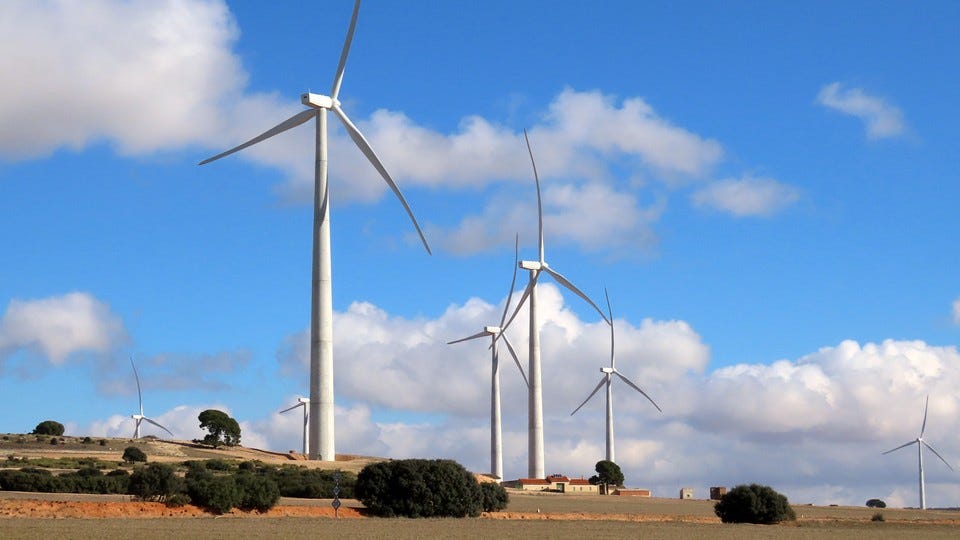
Go looking for wind farms in Spain, and you might quickly end up in Castilla–La Mancha, a region southeast of Madrid. This is the place where Don Quixote, Miquel de Cervantes’s delusional Man of La Mancha, attacked small wooden windmills he perceived as fierce giants and where today giant wind turbines have become an embedded part of the landscape.
There, I met Mayor Isabel Martínez Arnedo, who has run the town of Higueruela since 2019. The region’s distinctive wind whipped her dark curls as she stepped out of her car. “Look!” she said in Spanish. “Windmills, windmills, windmills.”
I hope to share some more stories from my time in Spain here when time allows. Which isn’t now, but hopefully someday. But I did sit down upon a Moorish ruin on a ridge lined with wind turbines that I write about in the Atlantic piece, in the town of Higueruela, at the end of all that exploration. Here’s a video I recorded of me thinking through what I had experienced. Sorry for the whistling of the audio, and the wild hair, but well, wind. (whooosh!)
If you’ve ordered a copy of A Better World Is Possible, first, THANK YOU. We hope you are enjoying it. Both Danica and I are hearing so many good things from people and reviewers. Here are ways you can help us get the word out:
Share kind words on Goodreads. Or on Amazon. Or wherever you can leave a review. Those stars are super helpful.
Take a picture of yourself with the book and tag us or invite the book & me to collaborate on the post! Here are our socials:
Also tag us if you want to share images that show how the world could be a better place if there were more of X.
Ask your local library to buy a copy.
Comment or DM me. I’d love to hear how you’re responding to the book. 🙂
More press:
Graphic Policy has a long positive review on YouTube with one spectacularly placed f-bomb. 🙂 He recognized what a good resource it could be for his kid but also admitted he learned a lot, too. This book was written with a YA audience in mind, but now that it’s out there, we keep hearing how not only teens are loving it, but parents can read it to their five-year-old…and learn something themselves. It’s an all-ages book.
I’m a member of the great organization, the National Association of Science Writers. Here’s a piece I wrote for their Advance Copy column explaining some of the craft process of collaboration.
Photographer drove to Death Valley to capture exquisite images of a superbloom in Death Valley. If you are hungry for color and an riot of life and flower sex, check out more of his images here.
I took a bath last night, immersed in hot water and guilt, listening to Louis Armstrong and wishing the world was a kinder place. That there were fewer strongmen running the (shit)show. That fewer schoolchildren were being bombed. That I didn’t feel as powerless as I do. Louis’ voice filled the steamy room. “The colors of the rainbow, so pretty in the sky….” How, I wondered, can we allow space for moments of beauty and calm when there is so much horror in the world?
When did “A Wonderful World” come to be? When can an artist feel like they have the right to lavish in the wonder, when every age brings its traumas? I looked it up this morning. Apparently, Bob Thiele, (who wrote songs under the pseudonym George Douglas), co-wrote the song with George Weiss in the tumultuous mid-1960s. Thiele wrote about his inspiration: “[I]n the mid-1960s during the deepening national traumas of the Kennedy assassination, Vietnam, racial strife, and turmoil everywhere, my co-writer George David Weiss and I had an idea to write a ‘different’ song specifically for Louis Armstrong that would be called ‘What a Wonderful World.’”
You nurture the light when it’s darkest. You aim to be “different” than the gestalt of all that is around you. It’s a way to keep something alive.
This is just about right, and a way in to share with you news of a new album, Spring Green by Mark Erelli, that makes room for recognizing the goodness of the world and people without shying away from the realities of the times in which we live. I am both friend and fan of the this talented singer-songwriter. Last summer, he invited me to write the introduction to the liner notes of his fourteenth solo album, Spring Green. Oh, yes. Yes and yes. I had a chance last summer to listen to it on repeat. Now you have a chance, too. It’s out today, and you can find it on Bandcamp.
Get the whole album so you revel in his music, his songwriting. You can also read all of what I said, but here are some snippets, which Mark put on these lovely graphics that brighten this drizzly, still snowy Cape Cod day…
I hope you’ll buy this album (and anything from his backlist, which is all good), and see if his tour is coming to somewhere near you. His shows will sustain you, and his music does, too. I’ll leave you with a line from Spring Green:
“Days when the sky is gray – the horizon made less colorful,
just wait and you’ll see – how the world can be so wonderful”
Journalists & writer friends, take note…
A few years back, my husband, Steve Prothero, and I ran the Religion & Environment Story Project (on hiatus now), and had the great pleasure of spending time with RESP fellow Nina St. Pierre. She wrote an incredible memoir Love is a Burning Thingthat deftly explores growing up with a mother both mystical and mad in a world where neither is accepted. Now, you have a chance to study writing with her as she teaches On Writing the Mystical, this spring, in Brooklyn. Sign up now!
And from the Department of Good News…
A Better World Is Possible: Global Youth Confront the Climate Crisis is now out in the wild. Thanks to Sturgis Library in Barnstable, MA and Titcomb’s Bookshop for hosting the kickoff event. (Danica had her’s at Carmichael’s in Louisville.) And thanks to all who came out in the cold rain to share the celebration. You can learn more and get your copy here.
Orion magazine featured an excerpt from A Better World, one of the interludes that are sprinkled throughout the story of the fourth youth climate activists that frame the book and offer a chance to learn more about the impacts of the climate crisis.
Danica and I had a lovely conversation with Itto and Mekiya Outini about creativity and collaboration on the DateKeepers podcast. Have a listen here. More podcasts are coming soon.
More book tour events here. Catch Danica or me, or—on April 14 in Brooklyn— both of us along with two of the youth featured in the book!
I’m reading…
Birds aren’t doing well, populations declining faster and faster, especially in agricultural areas. (It’s part of why I try to eat organic, not just for my body but other bodies, too.) So these lines from The Magic Mountain by Thomas Mann, which I am reading very slowly, leapt out: “Magnificent vistas opened onto regions toward which they were slowly climbing, a word of ineffable, phantasmagoric Alpine peaks, soon lost again to awestruck eyes as the tracks took another curve. Hans Castrop thought about how he had left the hardwood forests far below him, and songbirds, too, he presumed; and the idea that such things could cease, the sense of a world made poorer without them, brought on a slight attack of dizziness and nausea, and he covered his eyes with his hand for a second or two. This passed.”
I’ve been on Cape Cod for fifteen years now, but am still learning so much about its deep history. Nothing More of This Land by Joseph Lee is taking me into the lives of the Wampanoag of Martha’s Vineyard and indigenous people far beyond this corner of the world.
If you haven’t picked up Neil Shea’s wonderful book Frostlines (you should), here’s a taste in his National Geographic piece “The Vikings who vanished.”
Coda…
The turkeys are brightening up with their breeding colors. They’re also getting closer…
March 5, 2026: Carmichael’s Bookstore
7:00 pm ET | 2720 Frankfort Avenue, Louisville, KY
Danica in conversation with Festival of Faiths Program Manager
Sally Evans & climate journalist Lyndsey Gilpin
April 2, 2026: University of Rhode Island Metcalf Institute
Reception at 5:30 pm ET, followed by conversation at 6:00 pm | Hope Room, URI Welcome Center, Kingston, RI
Meera in conversation with author Elizabeth Rush
April 14, 2026: Greenlight Bookstore
7:30 pm ET | 686 Fulton Street, Brooklyn, NY
Danica & Meera and special guests, Jamie Margolin & Shiv Soin, youth climate activists featured in book
(SLIGHT) SPOILER ALERT: this book ends with a view of the Grand Canyon, and the idea that while we are each as small as individual raindrops, we can come together in community to form a river—a movement, the climate movement—with immense power and agency.
Here were my first scribblings as that scene came together in my head…
Both Danica and I have made it to the Grand Canyon since we crafted that scene. To enter such deep geologic time, literally descending through millions of years of rock and earth, is to gain perspective.
Like Danica experienced, too, I was in such awe of the landscape and felt so much renewed passion to protect the natural world, which is the only world we have. School Library Journal’s review of A Better World states:
“This title not only answers the question, ‘how can I help?’ but also offers readers a glimmer of hope… This brilliantly illustrated graphic novel explores the actual crisis, as research shows, the world is facing—climate change.
By allowing readers to see the interconnectedness of the issues and how typical teenagers took small actions to build community and organize advocacy events on behalf of protecting our world, it is easy to understand the following quote: ‘Every single action is a raindrop. They flow together, becoming a force unstoppable as that of gravity. Remember that water has the power to cut through rock.’
This would be a powerful addition to any collection.”
I hope you will join us—in the movement, at a book event, in standing against inaction and despair, in building hope.
“Another world is not only possible, she is on her way. On a quiet day, I can hear her breathing.” —Arundhati Roy
Thank you to the everyone who helped breathe this book into life. The four powerful youth who shared their stories with us (Xiye Bastida, Jamie Margolin, Rebeca Sabnam & Shiv Soin). The whole team at First Second Books (Robyn Chapman, Benjamin A. Wilgus, Michael Moccio, Sunny Lee, Mark Siegel, Morgan Rath, & so many others). Fact-checkers (Amy Westervelt, Susan Joy Hassol, Lucy Prothero, & Rose Andreatta). And Stephen Prothero, who was there every step of the way. And finally to the readers, past, present and future. Everything is possible.
Love,
Meera
Coda….
Also, I saw the lunar eclipse this morning, bundled up in 18-degree weather, a warm coffee my husband fixed for me in my hand and his body behind me to keep me warm as we watched the nearly full moon vanish, our earth’s shadow cast across the only true earth satellite. There are dark forces at play in the world. Seek out the light and people to nurture it with. Onwards, friends.
We are in stormy times, and I am not just talking about the snow, which blankets the world into chiaroscuro. White men in black are murdering peaceful protesters on the streets of America. Ten shots. At least. We are witnessing, in real time, the deliberate unraveling of a developed nation into something barbaric and backwards. I hold onto two things from the past week. One is the speech by Canada’s PM Mark Carney in Davos, who spoke “about a rupture in the world order,” and beckoned the middle powers to unite against the hegemony. He invoked the Czech dissident Václav Havel and the power that emerges when the greengrocer takes down the propaganda sign of political support that he never believed in. “The system’s power comes not from its truth, but from everyone’s willingness to perform as if it were true,” Carney said, “and its fragility comes from the same source.”
The second shard of light comes from seeing the thousands of people in the frigid streets of Minneapolis. Each one a version of the greengrocer, taking down the sign and revealing the fragility. No more. The statement from Alex Pretti’s parents rings out: “The sickening lies told about our son by the administration are reprehensible and disgusting.” They are not just taking down the sign. They are setting it on fire.
Those of us who write about the climate crisis struggle when our work is to “direct your attention toward the horizon,” as Emily Atkins so eloquently put it in her latest Heated Substack. But, she reminds us, climate change is state violence, too. I think of the “slow violence,” as Robert Nixon coined it, that takes lives far from phone cameras and newsfeeds. This slow violence is not nearly as slow as it used to be. Climate is the undercurrent as the hegemon invades and threatens Venezuela and Greenland in a grab for resources. It’s the water crisis fueling the unrest in Iran, where protesters demand, “Water, electricity, life – our basic right.” It’s the storm covering the country that could be worsened by the conditions created by human-caused climate change.
Still, a new generation is rising into adulthood. People go into the streets to fight for their children’s future, maybe more than their own. It is dark, but we need color. We need to keep looking to the horizon. We need to hold on to the belief that…
Book promotion is tough at times like this, but I’m still hoping you’ll hit the button and pre-order our graphic novel, A Better World Is Possible: Global Youth Confront the Climate Crisis, so when it comes out in a month, you can immediately place it in the hands of a young person you adore. An antidote to everything they are absorbing from the news shaping their young lives. People are saying nice things:
“As this lovely book points out, ‘we don’t have the luxury of time anymore.’ This book is an urgent, helpful, and hopeful portrait of what’s possible when young people come together to fight for a better world.”
~John Green, author of The Fault in Our Stars
“Novgorodoff’s watercolor style is absolutely perfect for this topic, showcasing both the power of visual comics metaphors and the beauty of the natural world.”
~Booklist, starred review
“A heart-warming and planet-cooling book about how change happens–anyone reading this will be much better prepared to help in the fight for the planet’s future.”
~Bill McKibben, author of Here Comes the Sun
When does the idea of a book begin? Artist Danica Novgorodoff began thinking about a graphic novel for young adults about climate change many years ago. I joined her in 2020, when I reconnected with Danica at a book event of our mutual friend, Jeff Sharlet, on the eve of the pandemic shutting down world, and we decided to team up. But in some ways, seeds in my mind were planted lifetimes ago, maybe at the base of the maple tree in my front yard as a kid, or in the duff of Oregon’s old-growth forests, or on the streets of Seattle during the 1999 WTO protests.
The response to crisis is to gather. Find others. “We take care of each other,” as an elder in Alakanuk, Alaska told Emily Raboteau. Collaborating with Danica over the past handful of years and immersing myself in the stories of the four climate youth we feature in the book—Jamie Margolin, Xiye Bastida, Shiv Soin and Rebeca Sabnam—has kept the light on for me, added color to my concept of a future.
The process brought back the joy I felt when I did a zine with girlfriends years ago, back in Oregon, before the internet changed everything. When our collective of “city babes and country chicks with shit on their minds” stayed up late with pens and scissors and magazine clippings from the 1940s and a commandeered copy machine to be creative and map out the world we wanted to live in.
In these dark times, keep fighting the powers that be, find the slivers of light and bursts of color, gather with your comrades, and make the world you want to inhabit.
Journalists & writer friends, take note…
Come study with me. I have the great good fortune of going to Sewanee, Tennessee each summer to teach creative nonfiction for the School of Letters MFA program. The setting is stunning, and the community that forms when you bring together talented faculty and just the right number of students creates a certain alchemy where good writing emerges. Feel free to DM me or director Justin Taylor to learn more. Rolling application.
Mid-career journalists: applications now being accepted for the University of Colorado Ted Scripps Fellowship. You can spend a year in stunning Boulder, taking classes to deepen your understanding of environmental issues. Oh, also, get paid $80,000. I’m on the Advisory Board and this is truly an amazing opportunity. Deadline: March 1
The Institute for Independent Journalists, founded by former Knight Science Journalism Project Fellow Katherine Lewis, is having its 2026 Freelance Journalism Conference March 5-6, a “conference for independent journalists and creators to find community and build thriving businesses.”
Introducing the Science Reporting Navigator from the good folks at The Open Notebook. Believing “every story is a science story,” they partnered with Relief Applications and designed a resource to help reporters who might not always be on the science beat get quickly informed. Here you can find dozens of short lessons within ten topics, such as “how to find scientific sources,” “how to navigate scientific data,” and “how to critically evaluate claims.”
To balance most of my days, which revolve around the above, escaping into a novel is requisite. I thoroughly enjoyed the messages of loss, letting go, and transformation in Emily Habeck’s debut novel, Shark Heart. It’s a bittersweet love story that emerges when a newlywed couple faces a diagnosis: the husband is turning into a great white shark. Also, the wife makes friends with a woman pregnant with twin birds.
I saw the magnificent documentary Folktales at the Woods Hole about a traditional “folk school” in the Arctic wilds of Norway. The relationship between the struggling kids, their teachers and the sled dogs is breathtaking. It’s the visual version of Blair Braverman’s excellent memoir, Welcome to the Goddamn Ice Cube.
Coda…
With things on land being dire these days, I have been holding on to images of water during meditations (and three-in-the-morning-try-to-get-back-to-sleep moments). So I found this video of remoras enchanting, hypnotic. Imaging clinging, (how?!), steadfast, to the back of a humpback whale, and then—just at the moment she is about to breach—releasing yourself, racing along ‘til she returns to the water. Then, reattaching. Like skipping rope. Underwater. At speed. There’s a metaphor there, of holding on, of letting go, and holding on again. Steadfast.
It’s been a joy and delight to collaborate with the phenomenal illustrator Danica Novgorodoff on a nonfiction graphic novel called A Better World Is Possible: Global Youth Confront the Climate Crisis. And you might have felt the earth shaking beneath your feet when John Green sent me a boffo blurb for the book (more on that below), which sent me into my happy dance. This spring A Better World comes to life! Here’s… the cover!!
We aimed to make A Better World Is Possible as visually stunning a (nonfiction!) graphic novel as we could, while keeping it deeply rooted in fact-checked research about the state of the planet. Targeted to a young adult audience, it shines a light on what’s happening to our warming world, and why, and how it’s affecting the living beings who inhabit it. It shows what’s possible in terms of action and why it’s necessary. And it’s all told through the stories of four real-world youth climate activists—see them on the cover, holding their signs?—who I think you’ll find extremely inspiring. We do.
Already, we have some good news to share. A Better World is Possible was just chosen as a Junior Library Guild selection! Yup. A fine endorsement for a book that’s still running through the printing presses. Pub date is March 3, 2026.
There are others taking note, too. Like—did I mention?—John Green! This stellar human, thinker, and author of the transcendent YA novel The Fault in Our Stars and the new and important nonfiction book, Everything IsTuberculosis, says:
“As this lovely book points out, ‘we don’t have the luxury of time anymore.’ This book is an urgent, helpful, and hopeful portrait of what’s possible when young people come together to fight for a better world.”
And indefatigable, world-famous climate activist and author Bill McKibben calls A Better World,
“a heart-warming and planet-cooling book about how change happens–anyone reading this will be much better prepared to help in the fight for the planet’s future.”
Jen Wang, whose YA book Ash’s Cabin made multiple book-of-the-year lists, says:
“A comprehensive and compassionate look at the climate crisis that gives readers of all ages a sense of empowerment. A necessary read for anyone who wants to believe in the future.”
The discount is exclusive to B&N members and includes an additional 10% discount for Premium members—but it’s free for non-members to enroll in the “B&N Rewards” program to participate in this promotion.
📣 📣 📣 And please, as we work our way into the fall, we’re seeking any and all help in getting this book into the right hands. If you’re a librarian, a book reviewer, a young adult educator or administrator, a fabulously famous influencer or BookTokker, or if you know someone who is, write us and share their contact info. I’ve been doing environmental journalism for 20 years now, writing for places like Nature and The New Yorker, so the YA space is new to me. Will you help me find my way. 🙂
We hope you’ll enjoy this book, help spread the word of its emergence, and be in touch along the way. Thanks for your support!