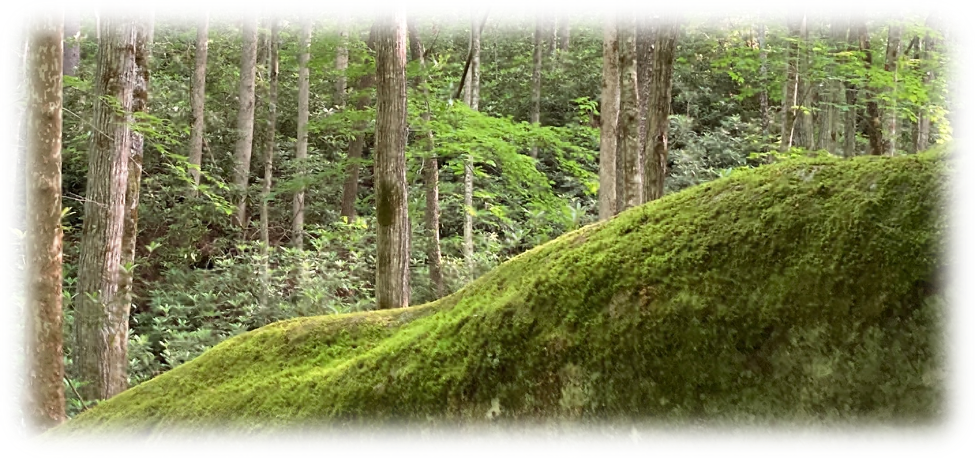
Cumberland Plateau, Sewanee, TN. By Meera Subramanian
To get started:
- “A Fortnight in the Wilderness” by Alexis de Tocqueville, an appendix to his two-volume Democracy in America (1835 and 1840). The Frenchman is sent by his governmment, along with Gustave de Beaumont, to study America’s prison system, but they go rogue and study all of American society (like James Agee veering from his Fortune assignment and ending up writing Let Us Now Praise Famous Men). “Man becomes accustomed to everything,” he writes, as he documents the felling of the forests and the eternal march west by a “nation of conquerors,” eliminating the native lives that once inhabited the landscape. “What is the life of an Indian?” he asks, seemingly sympathetically. It’s a question that we’ll echo later in the syllabus, when considering a Palestinian child.
- “Apocalypse Logic” by Elissa Washuta
- What Happened in Vegas by John D’Agata and Jim Fingal
How do writers capture the elusive element of time?
- “Law of Acceleration” by Henry Adams, which was awarded the Pulitzer Prize in 1919, is a dense piece about how progress hurtles forward (Oh, Henry, if you only knew…). The “volume of coal power may serve as a dynamometer,” he writes, citing how coal output doubled every ten years between 1800 and 1900. Annual coal use had grown to 300 million tons. In 2024… 15 billion tons of coal, and that’s not counting the 18 billion tons of oil and gas.
- “In Praise of Idleness” by Bertrand Russell, in which he “advances my own arguments for laziness.” Fuck progress.
- “How to Wind the Clock of your Days: Notes on the Nature and Function of Time in the New Millennium” by Bob Shacochis, who reminds us we live in both Big Huge Time and Itsy-Bitsy Time, the chronos and kyros that Jeff Sharlet taught us about when I was in grad school.
What do different forms and structures of nonfiction offer to writers?
- “This Is, Quite Literally, What a Personal Essay Looks Like” by Tim Bascom
- “The Fourth State of Matter” by Jo Ann Beard. One of the most brilliant braided essays ever written. Perfectly woven.
- “Are We Racist?” by Mira Jacob, to show the power of the graphic novel form.
- “Indianapolis” by John Green in his Anthropocene Reviewed podcast, to turn words into breath.
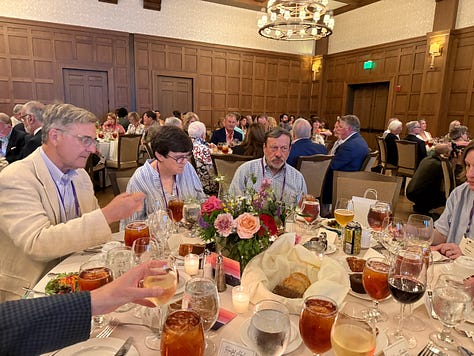
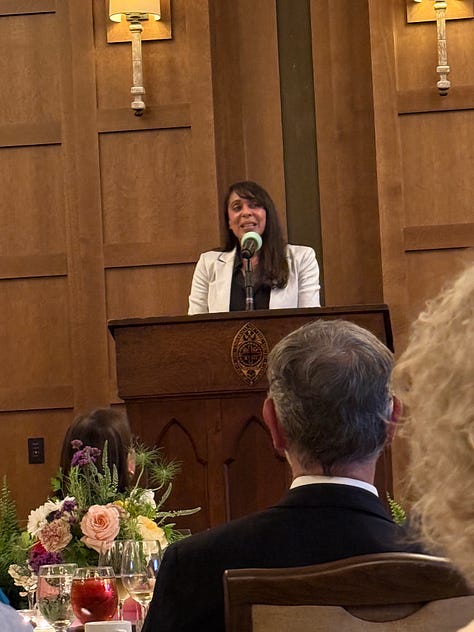
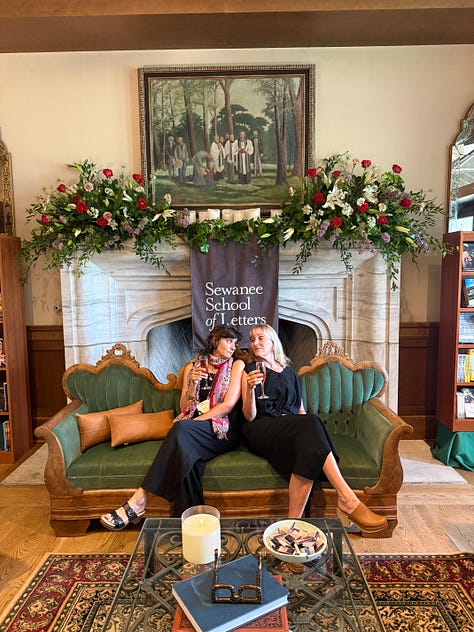
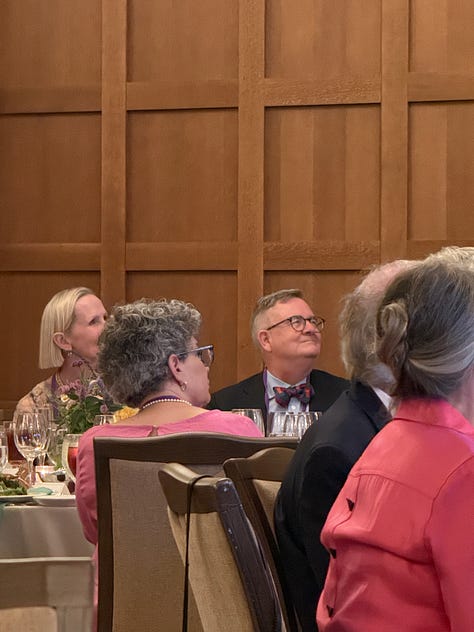
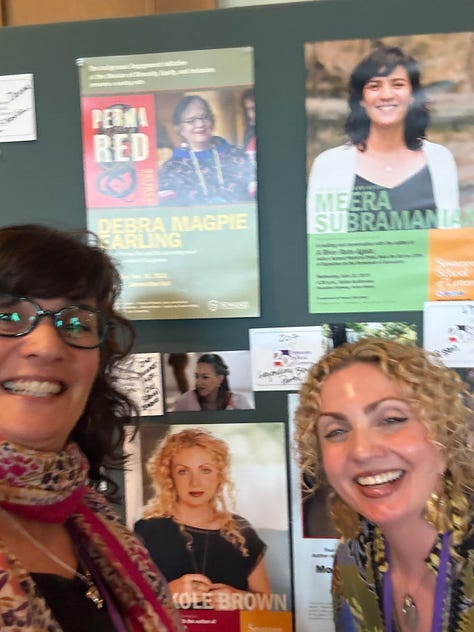
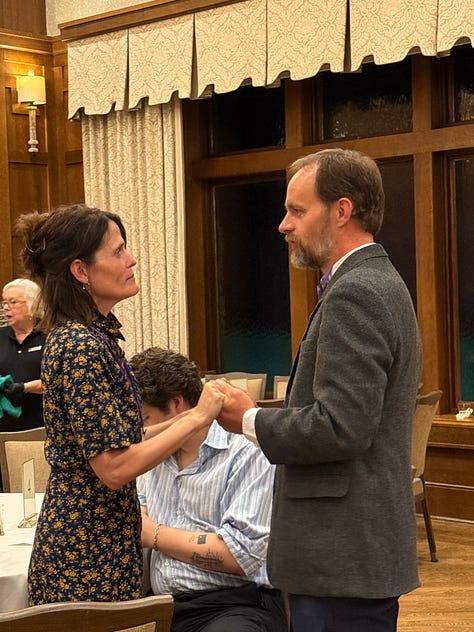
School of Letter Twentieth Anniversary


Sewanee School of Letters… Twenty years so far
- A pause in the reading list to share a bit about the SSL 20th Anniversary, honoring what John Grammer brought into being, what Justin Taylor and April Alvarez sustain. Poet Laureate of the US, Natasha Tretheway, gave the keynote. She spoke of the beautiful skills her father, a poet, instilled in her, reading from books, teaching her about metaphor. She valued what she found within bound pages, believed books held truth. And then she told about when she was working her way through the World Book Encyclopedia. Came across the entry on races. Caucasoid, mongoloid, negroid. Measuring her femur and tibia as a girl, trying to figure out how she fit in the world, half white, half black. She spoke about the silences around race that, too often, hold the dominant “Caucasoid” vantage, unable to see people like her, people with more melanin in their skin. It was a perfect set up for the next day….
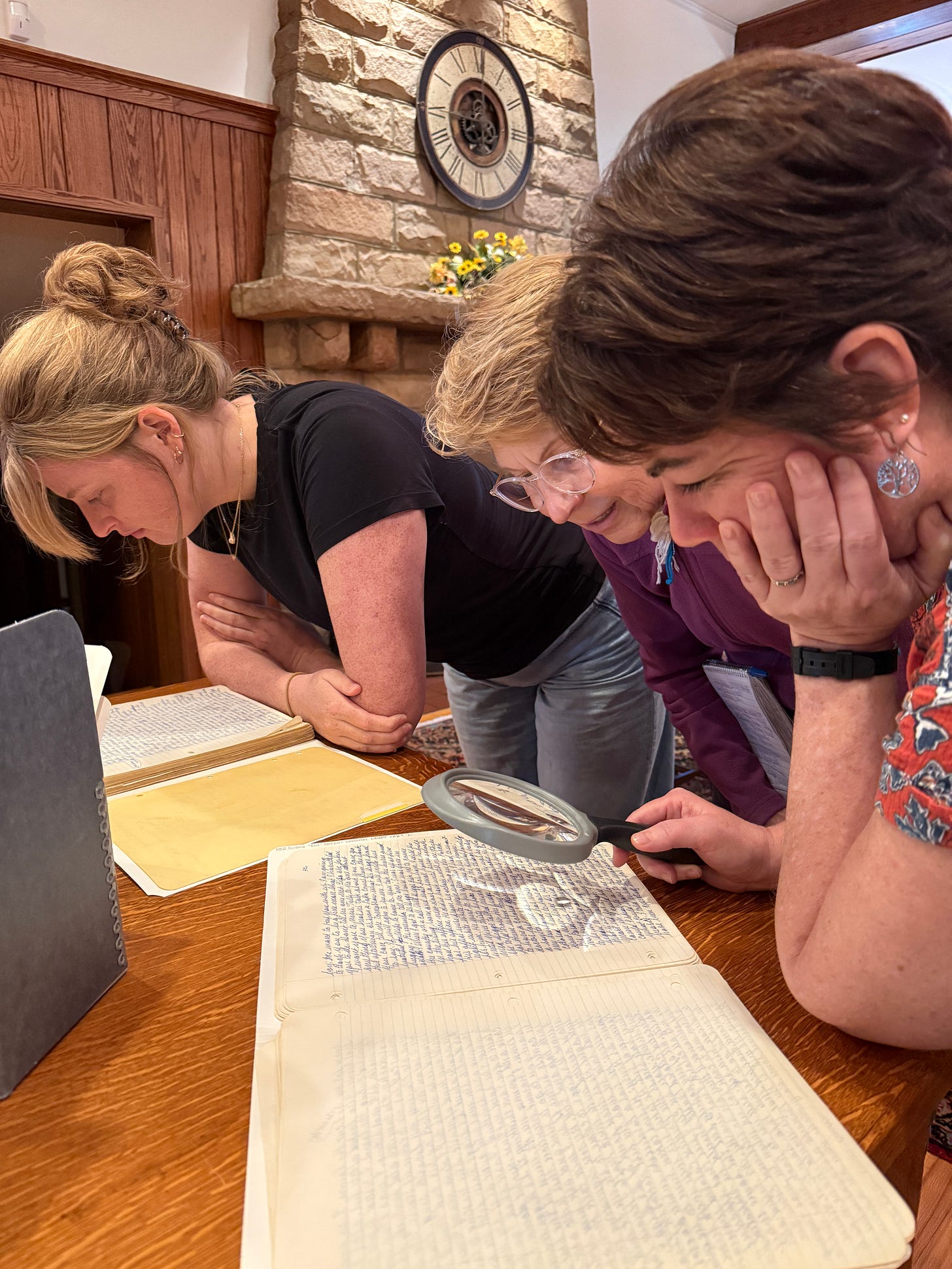
Students read Ely Green’s original manuscript at the archives. By Meera Subramanian

On Juneteenth, a trip to the University Archives & Special Collections
- First two chapters of Ely Green’s Too Black, Too White was the reading assignment, and then a visit to the archives to see the original handwritten manuscript by the bi-racial Sewanee native and hear about how Sewanee is reckoning with its racist roots from Woody Register of the Roberson Project, archivist Mandi Johnson, and podcast producer (and School of Letters Assistant Director) April Alvarez. It was the first time in an archive for many of them. Troves of history and stories and possibilities, many still unprocessed, far beyond the knowledge of seemingly all-knowing Google and AI searches. Go. Touch paper.
- Episode One of The Suitcase: Discovering Ely Green podcast
More racial reckoning:
- Between the World and Me by Ta-Nehisi Coates. Where to begin. read this book if you haven’t yet.
- “This is Not Who We Are” by Naomi Shaibab Nye, a post 9/11 essay.
How can creative nonfiction writers bridge political divides, chasms created by geography, and other shifts in personal or place-based divisions?
- “Compression Wood” by Frank Burroughs, which John Grammer believes Frank read here at School of Letters in its first year. Exquisite piece about how language elevates but also cleaves us from experience, about a friendship that lasts, about how to be from one place and also of another.
- “American Grotesque” by John Jeremiah Sullivan
How does nationality shape the stories we tell?
- One Day, Everyone Will Have Always Been Against This, by Omar El Akkad, won the National Book Award last year. It was described as “a chronicle of that painful realization, a moral grappling with what it means, as a citizen of the U.S., as a father, to carve out some sense of possibility in a time of carnage.” The carnage he writes about continues. Yesterday, Omar generously Zoomed into our classroom. It was the day after the one that marked a thousand days in which Israel has been trying to bomb Gaza out of existence. Not in (our) news much anymore, what with the Reflecting Pool and all, but the UN has stated that human development in Gaza has been set back 77 years, life expectancy now averages 40 years. So far, an estimated 73,066 Palestinians have been killed, include 21,000 children, a thousand babies. Nine thousand are still missing, likely buried in a place that is virtually all uncleared rubble. Bombings continue, in spite of a supposed ceasefire since October. I’ve written about this book before. It was so good to teach it. To examine the craft of writing into bewilderment and anger, the “scorch marks still on the page,” he told us. “Literature should be a vehicle against loneliness,” he said. He gives voice to all those who believe an unrelenting bombing of a people and blocking of all aid is wrong. Full stop.
- The Archive Project – Ta-Nehisi Coates in conversation with Omar El Akkad. To bring the two authors together, some of us listened to this. Omar mentions his go-to poem by Noor Hindi: Fuck your lecture on Craft: My People are Dying. Ta-Nehisi responds, “We need your lecture on craft, because my people are dying.” Omar agrees. Let literature keep fighting against loneliness.
Still to come
- Late Migrations: A Natural History of Love and Loss by Margaret Renkl
- “Phantom Pains” by Rochelle L. Johnson
- “Literature of Place” by Barry Lopez
- “Living Like Weasels” by Annie Dillard
- “The Undertow” by Jeff Sharlet, the chapter from the book