Meera Subramanian
  • Home
  • Books
  • Writing
  • Bio
  • Blog
  • Photos
  • Events
  • Speaking
  • Contact

The Lady at the Entrance: On American belonging and possibility

July 6, 2025 By meerasub Leave a Comment

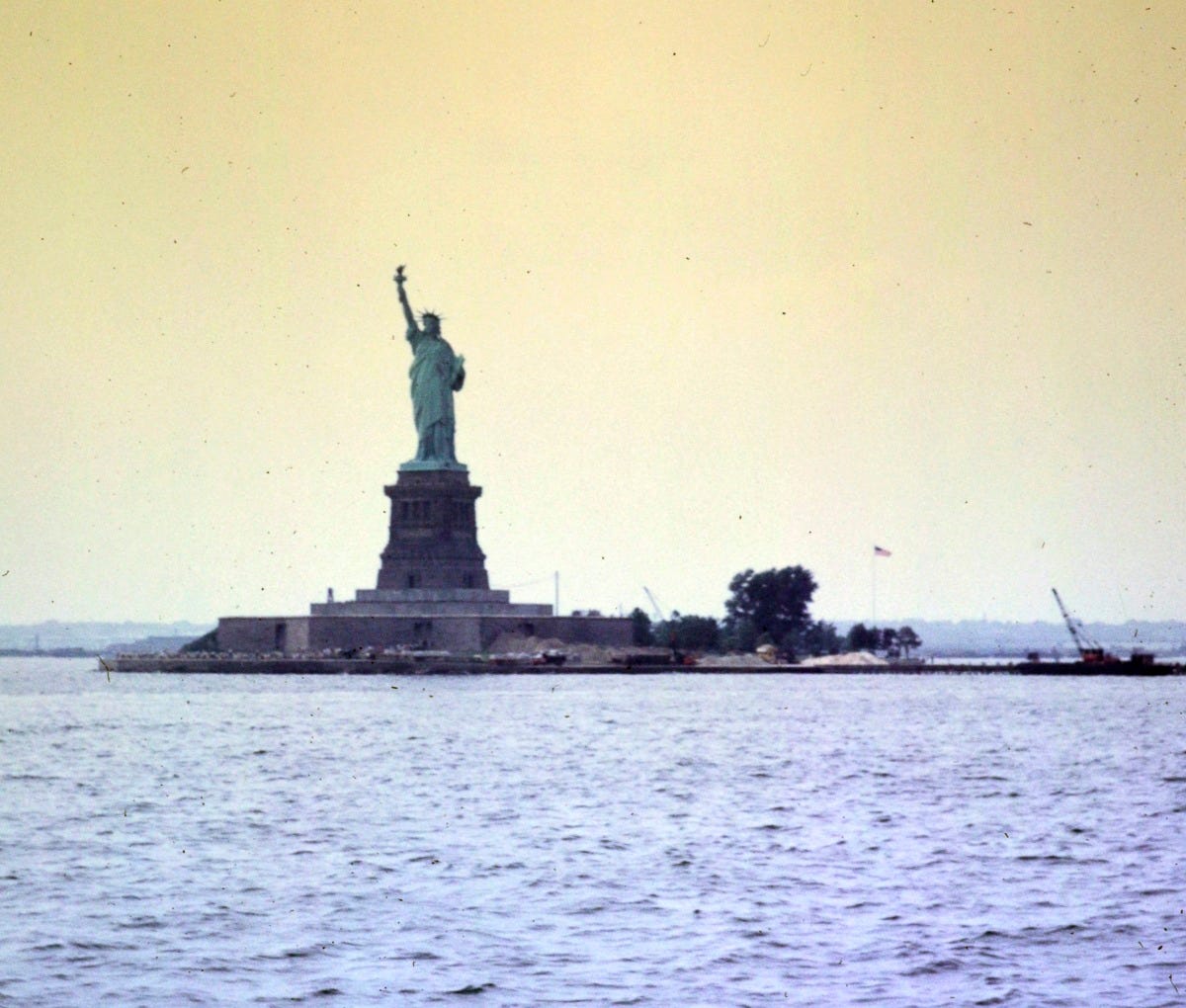
Old snapshot of the Statue of Liberty

Undated photo my dad took of the Statue of Liberty, sometime in the 1980s.

My dad reaches for words more than he used to. A few years ago, we met regularly on Zoom so I could interview him about his life. I’d given him homework on our third meeting: tell me about places that have been meaningful to you. He arrived to our fourth meeting ready with notes.

“The first places of importance, of significance,” he began, “is the lady at the entrance.”

“Wait, what does that mean?” I asked, not willing to let a single ambiguity linger.

“The freedom… What do you call that?”

Ah, I realized, drawing on the telepathy between father and daughter. The Statue of Liberty. I liked his name better. The lady at the entrance. When he arrived to New York City, with his cardboard suitcase in 1959, three weeks and a day after he left India, he didn’t go through immigration on Ellis Island, closed a handful of years earlier. But he did arrive into New York Harbor. He saw the copper-clad woman with her upheld torch standing on her wee island on the edge of an immense continent that was all possibility.

What do those of us born here see? What did I see, on our visits to the city from nearby New Jersey, where I was born? From a tour boat, with visiting relatives, when I saw the image above, that my Dad snapped? A statue I took for granted. Inert, yet eternal. I believed, as that kid, that the level of the water at her island’s perimeter that would always be static. But my faith that she’d always be standing there, greeting newcomers, was already beginning to fray.

Later generations of my Indian family have come, too. I’ve never talked about the lady at the entrance with a favorite cousin who came in the 1990s. Instead, we’d repeat lines from Eddie Murphy, who plays an African prince in Coming to America:

Good morning, my neighbors! (he cries from his fire escape in Queens)

Hey, fuck you! (shouts back a neighbor)

After the 2016 election, I traveled around America asking those in conservative communities who have faced climate impacts (floods, droughts, failed harvests), about their perceptions of climate change for an Inside Climate News nine-part series (and an Orion piece that feels positively wishful now).

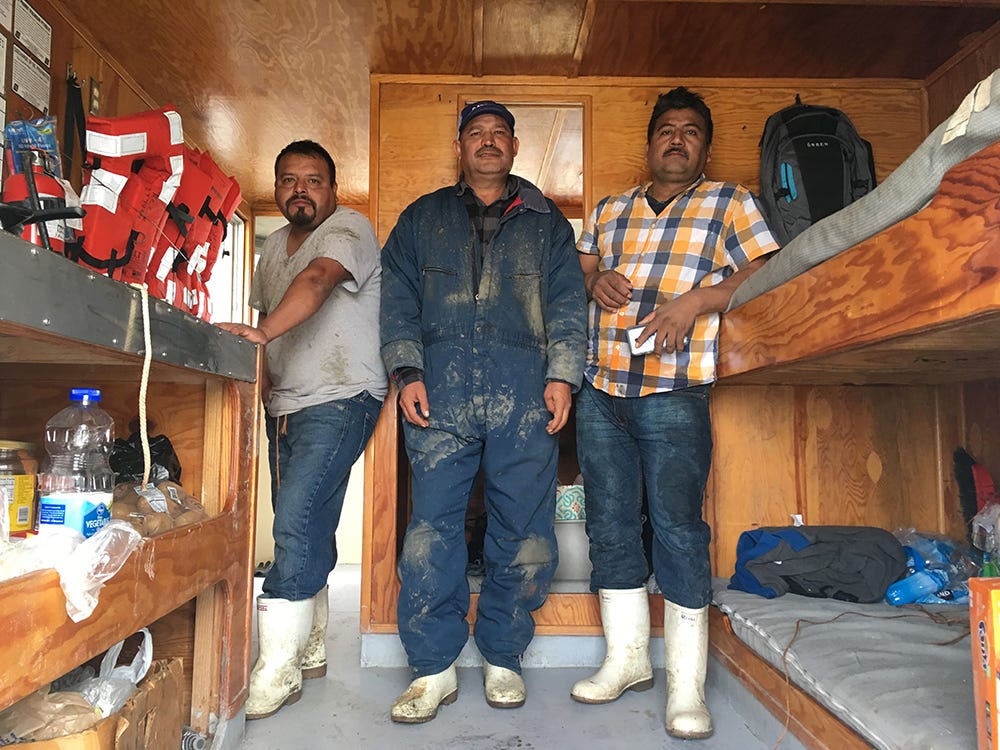
I only touched on it briefly in the pieces but multiple times, die-hard Republicans shared stories about how much they depended on their immigrant employees. They could not—no matter the pay—find local (read White) people both capable and willing to do the work that needed doing. In Georgia, that meant pruning peach trees and stacking up the limbs into massive piles in the mid-summer heat. The locals, I was told, didn’t last ‘til noon. In Texas, that meant getting on a shrimp boat that would be at sea for the next two months. The locals, I was told, showed up for departure drunk. The folks I talked to didn’t want to go on the record. But as business men, they knew who was a good worker. Some were in the country legally. Many, I imagine, were not. It saddened them that that their (White) neighbors didn’t want the work. But the reality was that they didn’t.

Misho's crew. Credit: Meera Subramanian

Oystermen in San Leon, Texas. Credit: Meera Subramanian

ICE deportations and detentions are at record levels, sweeps targeting the places people go looking for daywork—7-Elevens and Home Depots. Crackdowns in places that have been established as sanctuary cities. Good morning, my neighbors! Some arrests are made by men in plainclothes, setting the stage where anyone can impersonate an officer, can decide the fate of another, can disappear another human being. Hey! Fuck you!

Where is the lady at the entrance? Where is the recognition of who is actually doing the labor in this country, below the burning sun that beats on the agricultural fields of the Central Valley, behind the restaurant’s swinging kitchen doors and the swinging hammers clutched on rooftops?

I’m still harboring a crush on Spain, meanwhile, which is welcoming immigrants. (I get there are limitations to which immigrants, but still….) El País ran a report in 2022: “A day without immigrants,” recognizing their roles in agriculture, construction, healthcare. Recognizing that “without them, Spain simply would not function.”

No such recognition here from the powers that be. These days, it’s not just my Dad who’s struggling as they reach for words.

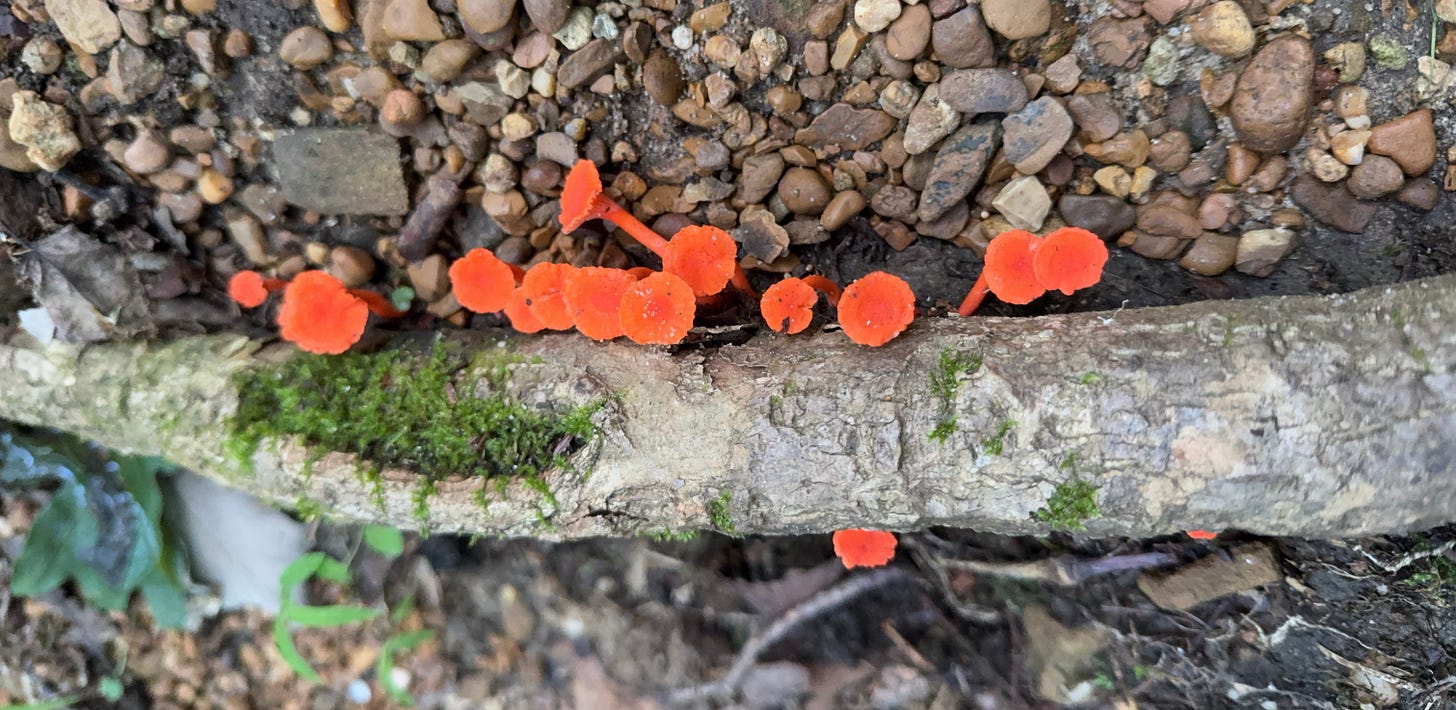
tiny orange mushrooms along a branch

Credit: Meera Subramanian

Upcoming…

  • On a lighter note…mushroom! Join Orion and the Food & Environment Reporting Network (FERN) on July 17 (2-3pm ET) to celebrate Orion’s Summer 2025 issue, The Future Is Fungi. I’ll be in conversation with FERN editor Theodore Ross and the wonderful writer Erica Berry, talking about our pieces (here & here). Register here.
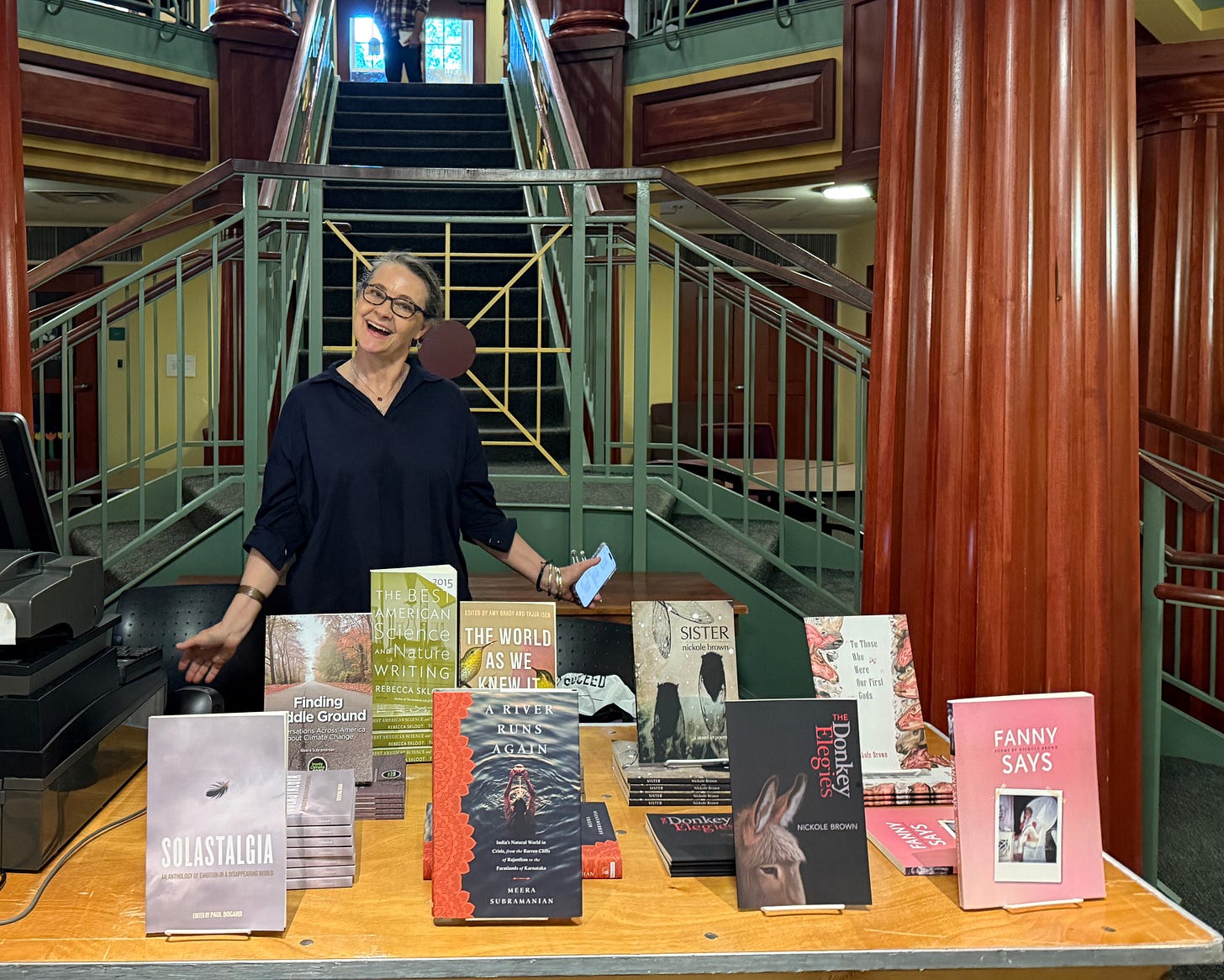
Woman smiling behind a table full of books

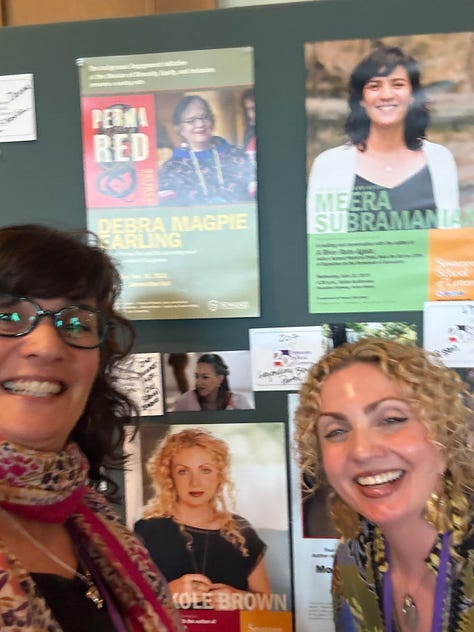
Lucy Murray of the University of the South Bookstore, hamming it up at the book table at the School of Letters faculty reading.

I’m reading/listening…

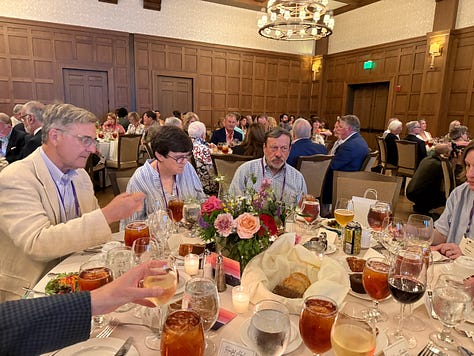
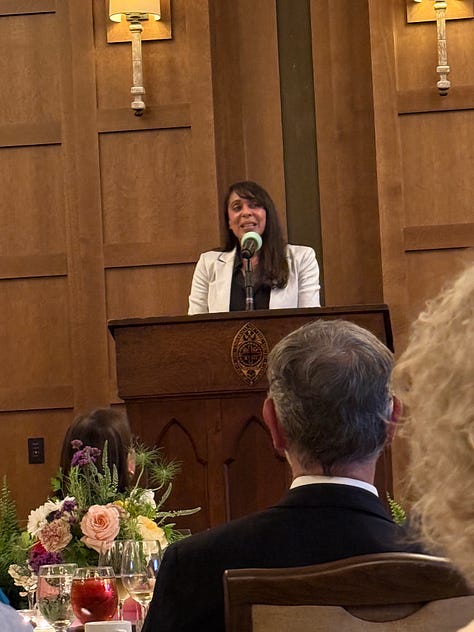
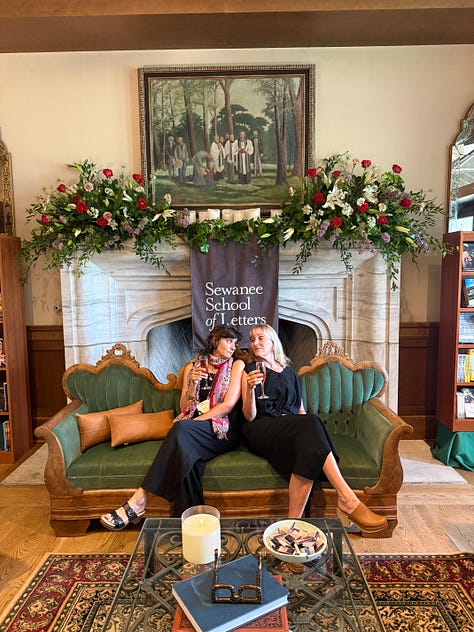
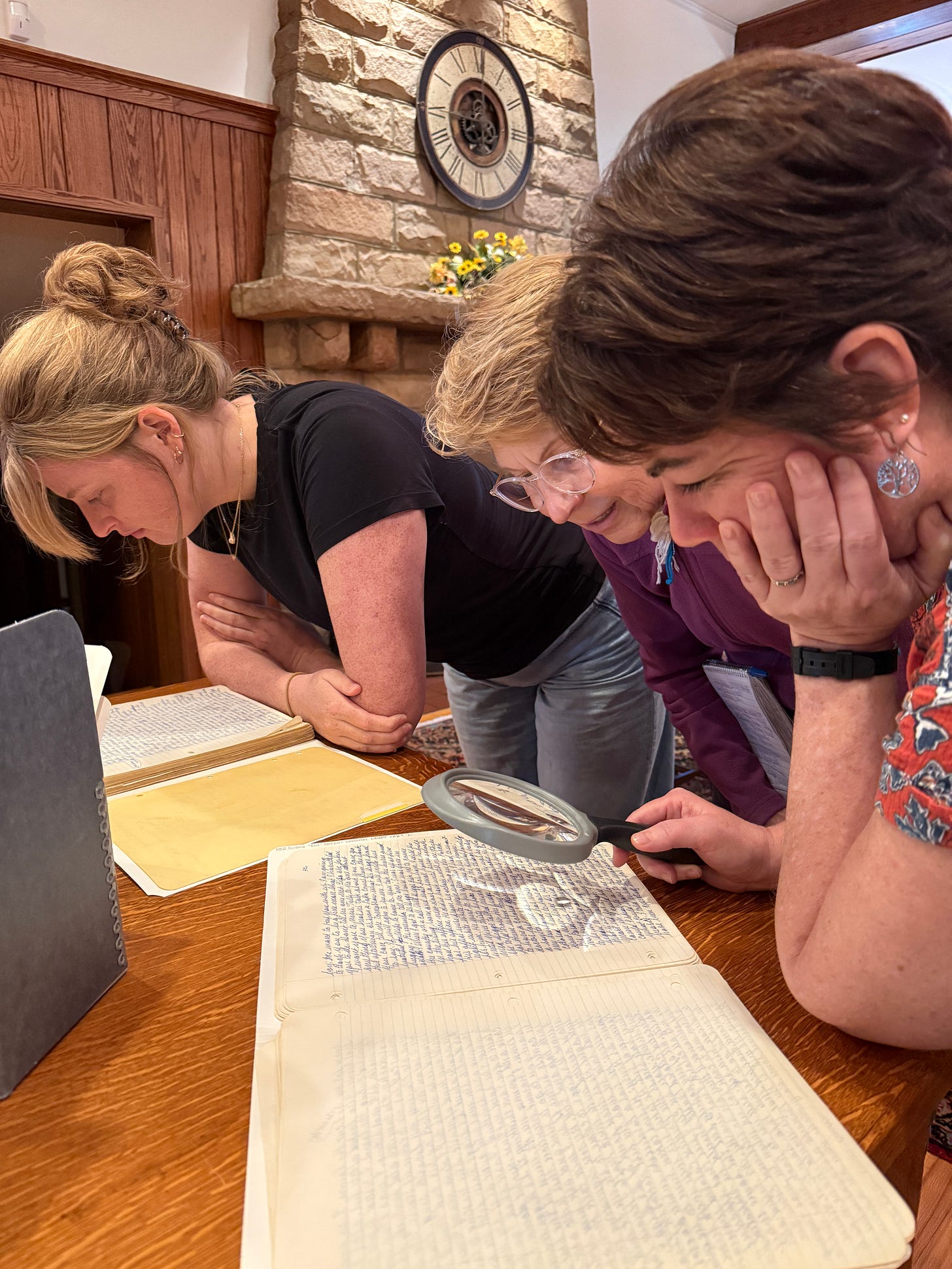
  • My time teaching at the School of Letters in Sewanee, TN is fast coming to a close. The students and fellow faculty are all inspiring, as are those who run the program. Assistant director April Alvarez, with a team that includes one of my former students, Sam Worley, have launched The Suitcase, a podcast that tells a fascinating story of the South in the first half of the last century through the life of Ely Green, a mixed-race man. Have a listen. More episodes coming soon.
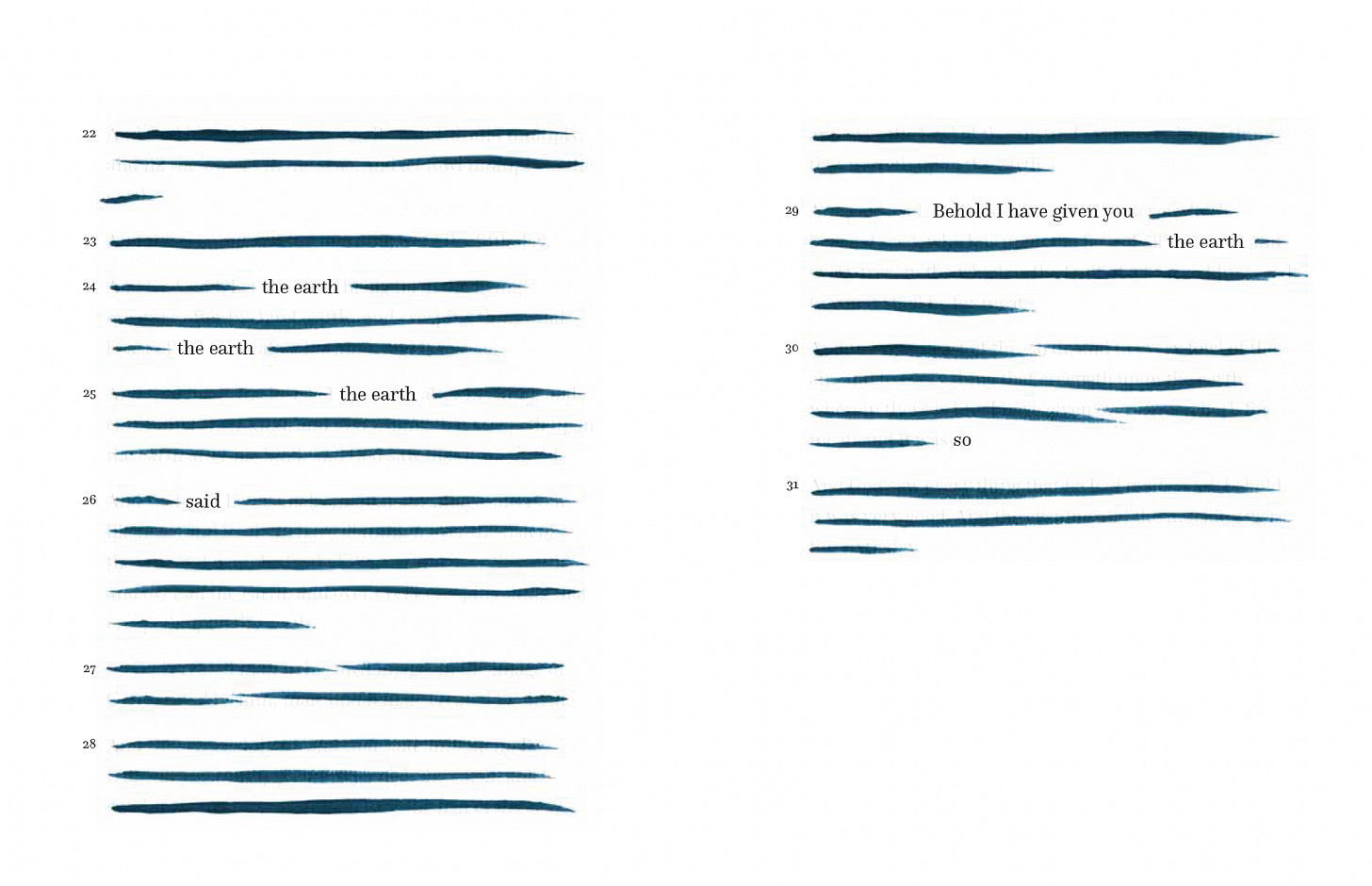
  • This year I have the delight of teaching with two new faculty, Dan Hornsby and Rebecca Gayle Howell. I deeply enjoyed Dan’s novel Via Negativa. And at the first faculty reading, Rebecca shared work from her new prose poem, Erase Genesis, forthcoming in November 2025. I’ll let Rebecca tell you what it is in her own words: she “made the poems by repeatedly erasing the first three chapters of Genesis (KJV), where the creation myths are told. Each time I came to the chapter again, a new poem emerged. Eventually, this accumulated into a new creation myth, one that seems to begin at climate change and centers the Earth’s vast and divine intelligence for interconnected being.” Oh, yes! This is going to be a gorgeous book, with an aching message. Here’s a peek:
mostly redacted text, only leaving words "the earth, the earth..." and more

Credit: Rebecca Gayle Howell

  • Thanks to Michelle Nijhuis of Conservation Works for tipping me off about Boyce Upholt’s new magazine, Southlands, which aims to capture the unique land and life of Southern habitats. (I reviewed Boyce’s book The Great River for Scientific American a couple years ago.) See what Southlands is up to and pitch in if you want to help make it happen!
  • I also had the joy of reading writer and illustrator (and one of our RESP fellows) Martha Park’s debut book, World Without End: Essays on Apocalypse and After, a literary love song to the future, beheld with an expectant hope. Daughter of a mainline Protestant preacher, native of Memphis, Martha writes of the human experience, quite literally, from the deeply personal act of giving birth to the reported inquiry into green burials in the American South, shattering the typical glass wall that separates writing about the climate crisis and writing about faith, and she does it with humility and grace. She absolutely wowed my Creative Nonfiction class when she came to visit last week. We also had a lovely conversation that was just published on Orion.
  • I tore through Alison Bechdel’s new comic novel, Spent, and am savoring Feeding Ghosts by Tessa Hull, a graphic memoir about her immigrant mother and grandmother. I taught the start of the it in my class and we keep returning to it again and again.
  • “Is nature alive?” The short answer is “Hell, yes!” but the longer answer to the question is explored in Robert Macfarlane’s new book Is a River Alive? Here’s Elizabeth Rush’s review of it: A New Concept for Fighting Climate Change.

Coda…

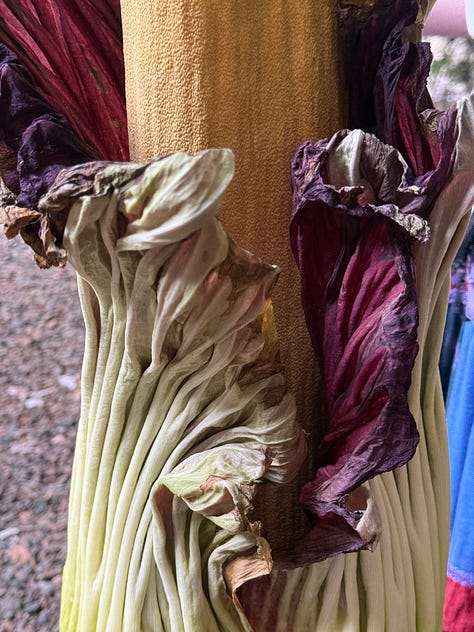
Sewanee environs, in various stages of life, seeding, death.

Filed Under: just another day, Substack, teaching

Writing this Warming World

June 26, 2024 By meerasub Leave a Comment

**Join me and four brilliant writers this fall! Registration open now! **

From climate change to climate catastrophe to existential crisis, the vocabulary of our changing planet is quickly escalating in urgency. Writers are responding. Whether you are just finding your way into this space or have been writing about the natural world for years, this class is designed to help you find the right words to meet this moment of metamorphosis. How do we bring the personal and planetary together? How do we render beauty in a world aflame? In what ways is the state of the planet changing the shape of our lives? As chroniclers of the natural world under transformation, how does our ink find the fine line between hope and despair, or should it?

Led by author and journalist Meera Subramanian, this four-week course explores writing the twinned experience of climate grief and fierce love for the planet. Conversations with guest authors Emily Raboteau, Elizabeth Rush, J. Drew Lanham, and Helen Macdonald will shed light on the unique challenges that nature writers and climate journalists face. Learn how these five exemplary writers who cross genres in the climate space today are navigating common conundrums.

We’ll look closely at the work of our guest authors to deepen our understanding of best practices in portraying the physical world as it changes. We’ll analyze craft but also make space for thornier issues such as political realities and flagging morale. We’ll discuss the use of braided essays and other structural devices that are especially useful to storytellers and journalists in this niche, and get practical about how to deepen narratives with research and reporting.

Students will get weekly writing prompts and assignments to catalyze their climate writing, giving you the tools you need to work towards a solid draft essay by the end of the course. Although we will not be workshopping, there will be ample opportunities to ask questions and share struggles and insights. Participants will also receive a suggested reading list to serve as inspiration beyond the last class, as well as a list of outlets that publish climate-related writing or that are especially interested in stories with a strong element of place or nature.

REGISTER HERE

*

This course will take place on Zoom on Sundays, November 3-24 from 12 to 2 p.m. EST. Participants will receive a Zoom link prior to the course as well as a recording of the course afterwards. We cannot offer refunds once the course has begun. Please email [email protected] with any questions.

A limited number of scholarships may be available for this course; please send a brief statement outlining how and why a scholarship would impact your ability to attend to [email protected] by October 14 and we’ll get back to you by October 21.

*

Off Assignment’s Masters’ Series courses are unique four-session courses on in-depth writing topics that harness the perspectives and craft tactics of a lead instructor plus celebrated guest lecturers, such that participating writers gain a wealth of input while benefiting from the cohesive leadership of one renowned writer in a particular niche of nonfiction.

Related show

  • Author: Meera Subramanian
  • Tour: Teaching/Workshops
  • Date: November 3, 2024 - November 24, 2024
  • Time: 12:00pm
  • Venue: Online
  • City: Everywhere
  • Country: United States
  • Admission: $400 USD
  • More information
  • Notes: WRITING THIS WARMING WORLD. From climate change to climate catastrophe to existential crisis, the vocabulary of our changing planet is quickly escalating in urgency. Writers are responding. Join journalist Meera Subramanian for this four-week course that explores writing the twinned experience of climate grief and fierce love for the planet. Conversations with guest authors Emily Raboteau, Elizabeth Rush, J. Drew Lanham, and Helen Macdonald will shed light on the unique challenges that nature writers and climate journalists face. This course will take place on Zoom on Sundays, November 3-24 from 12 to 2 p.m. EST.

Filed Under: climate change, teaching, writing tips Tagged With: class, climate change, Elizabeth Rush, Emily Raboteau, Helen Macdonald, J. Drew Lanham, literary, workshop, writing

Climate Change as Threat (& Opportunity) Multiplier

May 26, 2020 By meerasub Leave a Comment

My year at Princeton University is coming to a close, although the second half of the spring semester was disrupted, as everything has been, by the COVID-19 pandemic. But I still wanted to share the syllabus for the class, which includes the adaptations I made given the shifting situation. After spring break in March, we all transitioned to Zoom, and our planned trip to a local farm to learn about carbon farming had to be cancelled, but the class remained a great series of discussions, inquiries, tough questions, thoughtful answers, exciting possible solutions, and more.

Here’s the description for ENV 381, which was cross-listed in journalism and urban studies:

The US Department of Defense has called climate change a “threat multiplier,” referencing military bases inundated by sea level rise and increased global political instability from extreme weather events, especially in vulnerable countries already struggling with poor governance and impoverished populations. Likewise, among conservation biologists and urban designers, farmers and social justice activists, there is acknowledgement that perennial challenges are all exacerbated because of a rapidly warming planet for these same reasons. Every aspect of life on earth, for humans and other living creatures, is changing. This class will explore everything from the state of songbirds to the national security concerns of war hawks to agriculture to urban design to storytelling to social justice. The aim is to understand how, while climate change aggravates existing struggles, innovative climate action solutions might also help ease them.

As always, feel free to reach out to me with your suggestions or to let me know if you’ve adapted it for your own class. Here’s the full syllabus:

ENV381_SYLLABUS_ClimateChangeAsThreatMultiplier

Filed Under: climate change, journalism, teaching Tagged With: A River Runs Again, biodiversity, climate change, COVID-19, girl power, human migration, military security, organic farming, pandemic pedagogy, pollution environment, Princeton University, syllabus, teaching, water

(Cancelled) New Imaginings: Storytelling, Science & Activism

February 22, 2020 By meerasub Leave a Comment

Imagery: Jules Bartl/BBC World Service

*Due to the coronavirus/COVID-19 crisis, this event has been cancelled*

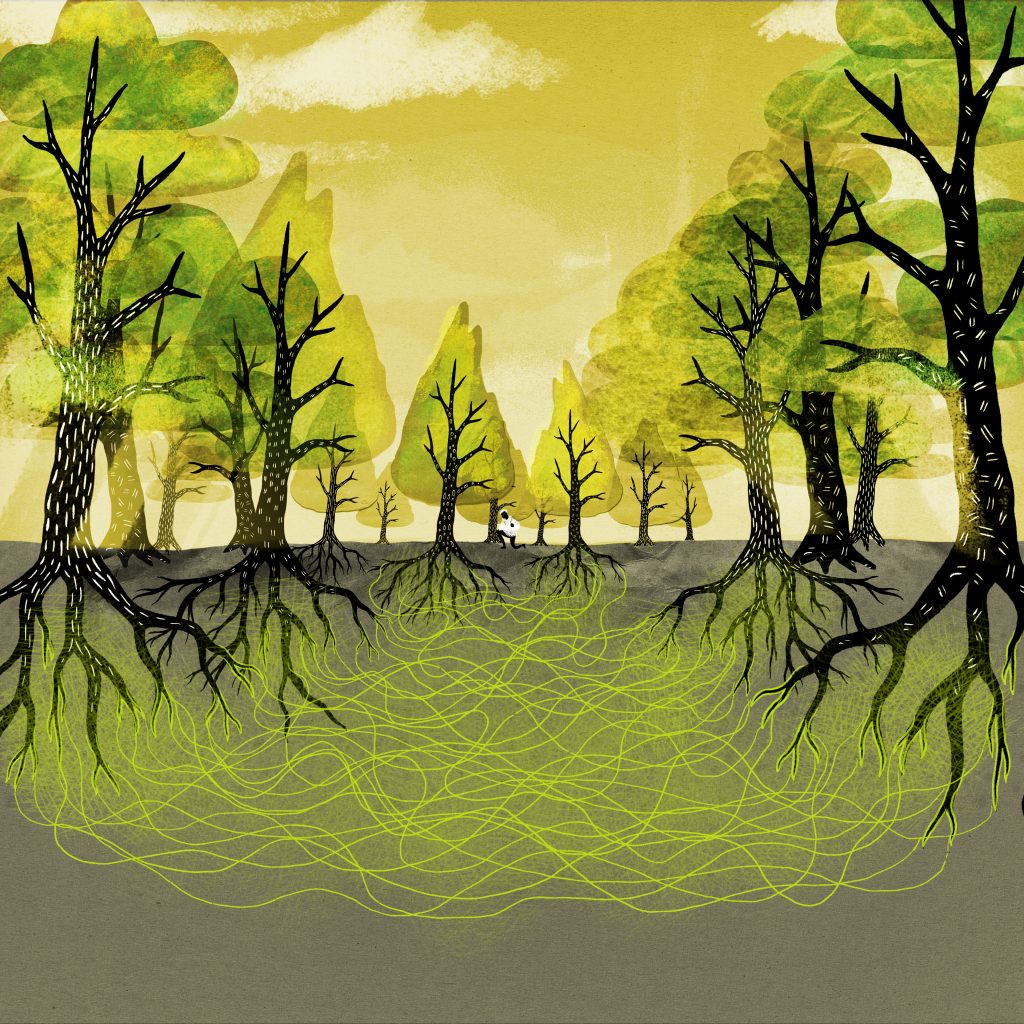
During my time at Princeton University, I have the pleasure of organizing an event, and I decided to shape it around the powerful novel The Overstory. If you’re in the Princeton area on March 26, please join me. And thanks to Jules Bartl and the BBC for letting us use this exquisite image for the event (check out the short animated film!).

More event info here.

Award-winning environmental journalist Meera Subramanian will host the discussion “New Imaginings: Storytelling, Science and Activism” featuring Pulitzer Prize-winning novelist Richard Powers, author of The Overstory; Robin Wall Kimmerer, SUNY professor of environmental biology and author of Braiding Sweetgrass; and forest activist Timothy Ingalsbee, executive director of Firefighters United for Safety, Ethics and Ecology.

Subramanian, the 2019-20 PEI Barron Visiting Professor in the Environment and the Humanities, will lead a conversation exploring how the work of scientists, artists and activists come together to inspire fundamental shifts in perspective. From the underground networks that feed forests to how human activity impacts the upper atmosphere, our understanding of how the world works shapes our minds, the stories we tell, and the way we act.

This event is free and open to the public. Books will be available for purchase from Labyrinth Books.

Thu, Mar 26, 2020
4:30 PM
 – 7:00 PM
Princeton University, McCosh Hall, Room 10


Related show

  • Author: Meera Subramanian
  • Tour: Teaching/Workshops
  • Date: March 26, 2020
  • Time: 4:30pm
  • Venue: Princeton University: McCosh Hall
  • City: Princeton , NJ
  • Address: McCosh Hall, Room 10
  • Country: United States
  • Cancelled
  • More information
  • Notes: Award-winning environmental journalist Meera Subramanian will host the discussion “New Imaginings: Storytelling, Science and Activism” featuring Pulitzer Prize-winning novelist Richard Powers, author of The Overstory; Robin Wall Kimmerer, SUNY professor of environmental biology and author of Braiding Sweetgrass; and forest activist Timothy Ingalsbee, executive director of Firefighters United for Safety, Ethics and Ecology. Subramanian, the 2019-20 PEI Barron Visiting Professor in the Environment and the Humanities, will lead a conversation exploring how the work of scientists, artists and activists come together to inspire fundamental shifts in perspective. From the underground networks that feed forests to how human activity impacts the upper atmosphere, our understanding of how the world works shapes our minds, the stories we tell, and the way we act.

Filed Under: climate change, events, News, readings, teaching Tagged With: climate change, ecology, event, forest, Princeton University, Richard Powers, Robin Wall Kimmerer, Tim Ingalsbee

Crossing the Climate Change Divide

October 24, 2019 By meerasub Leave a Comment

ENV 375 class. Photo by Denise Applewhite

This fall, I’ve been leading Princeton undergraduates as we take a deep dive into the climate debate in the seminar “Crossing the Climate Change Divide.” Tom Garlinghouse from Princeton’s Office of Communications joined us to share what we’re doing. To see the full syllabus, click here. And here’s his piece:

The course is taught by award-winning journalist Meera Subramanian, who is asking students to examine what people think about climate change — whether they accept the current climate science, reject it or are simply confused by it — and why they think the way they do.

“I’d love the students to engage in the conversation around climate change with a slightly more wide-open lens about how people are thinking about this and why people are thinking about it in the ways that they do,” said Subramanian, the Currie C. and Thomas A. Barron Visiting Professor in the Environmental Humanities in the Princeton Environmental Institute (PEI). She is participating in a panel titled “Breaking the Logjam” at the Princeton Environmental Forum on Oct. 25.

Subramanian wants the students to use what anthropologists call an “emic,” or “insider’s,” approach — that is, taking into account a person’s words, perceptions and beliefs as main sources of information rather than adopting a potentially more objective or “outsider’s” approach. This demands that the students consider factors such as how an individual’s ideology, religion, economic level and politics impinge on a particular topic — in this case, the climate debate.

“Humans are messy creatures,” Subramanian said. “It’s not like we’re just economic creatures or just religious creatures. We are all of those things, all at once.”

Read the rest here.

Filed Under: climate change, teaching Tagged With: climate change, ENV375, environmental humanities, Princeton University, teaching

Follow Meera on Substack

for the very occasional bit of news.

Categories

Tags

Alaska anthology A River Runs Again Art awards birds birds of prey books book tour Cambridge cape cod climate change conservation death dissent Elemental India energy events Fulbright india InsideClimate News journalism kenya Knight Science Journalism Nature New York City organic farming Orion peregrine falcon pesticides photography politics pollution environment Princeton University radio readings religion reviews science Society of Environmental Journalists teaching travel USA vulture water

Archives by Month

Connect

  • Bluesky
  • Facebook
  • Instagram
  • LinkedIn

© 2026 Meera Subramanian. | All Rights Reserved. | Mastodon | Website design by Sumy Designs, LLC

Green_14