Meera Subramanian
  • Home
  • Books
  • Writing
  • Bio
  • Blog
  • Photos
  • Events
  • Speaking
  • Contact

Voices from America

July 4, 2026 By meerasub Leave a Comment

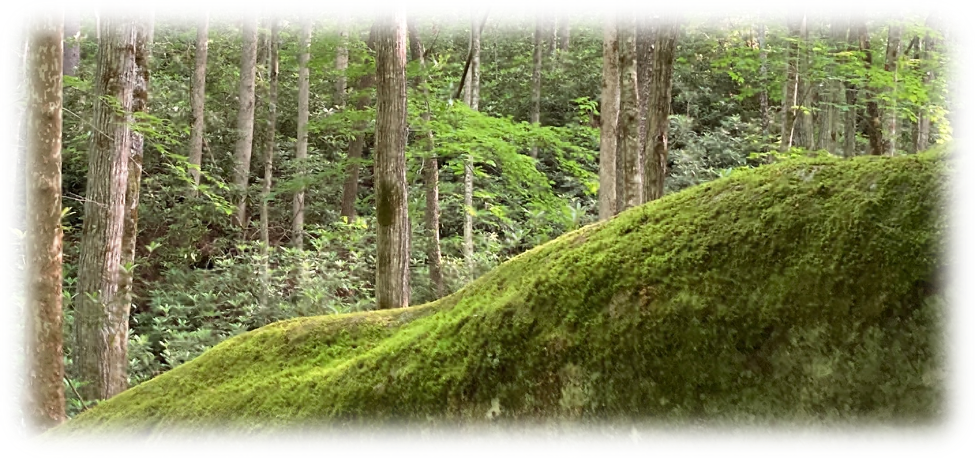
A picture from Sewanee domain of moss-covered rock and forest.

Cumberland Plateau, Sewanee, TN. By Meera Subramanian

It’s my seventh year teaching creative nonfiction at Sewanee School of Letters in eastern Tennessee, drawn back each year by the students so committed to improving their craft, by the stellar faculty, by the very land itself, alive with life. As I developed the syllabus this year, I leaned into two anniversaries, the 250th of this nation and the 20th of the Master’s writing program here, bringing a bit of history into the class to illuminate how the art of creative nonfiction metamorphosizes over time and in response to cultural contexts. What can we learn about craft from some of the best voices of creative non-fiction past and present? What can they tell us about our nation’s history and its relationship to the rest of the world today? What can they tell us about ourselves? Here’s the reading list, with some thoughts…

To get started:

  • “A Fortnight in the Wilderness” by Alexis de Tocqueville, an appendix to his two-volume Democracy in America (1835 and 1840). The Frenchman is sent by his governmment, along with Gustave de Beaumont, to study America’s prison system, but they go rogue and study all of American society (like James Agee veering from his Fortune assignment and ending up writing Let Us Now Praise Famous Men). “Man becomes accustomed to everything,” he writes, as he documents the felling of the forests and the eternal march west by a “nation of conquerors,” eliminating the native lives that once inhabited the landscape. “What is the life of an Indian?” he asks, seemingly sympathetically. It’s a question that we’ll echo later in the syllabus, when considering a Palestinian child.
  • “Apocalypse Logic” by Elissa Washuta
  • What Happened in Vegas by John D’Agata and Jim Fingal

How do writers capture the elusive element of time?

  • “Law of Acceleration” by Henry Adams, which was awarded the Pulitzer Prize in 1919, is a dense piece about how progress hurtles forward (Oh, Henry, if you only knew…). The “volume of coal power may serve as a dynamometer,” he writes, citing how coal output doubled every ten years between 1800 and 1900. Annual coal use had grown to 300 million tons. In 2024… 15 billion tons of coal, and that’s not counting the 18 billion tons of oil and gas.
  • “In Praise of Idleness” by Bertrand Russell, in which he “advances my own arguments for laziness.” Fuck progress.
  • “How to Wind the Clock of your Days: Notes on the Nature and Function of Time in the New Millennium” by Bob Shacochis, who reminds us we live in both Big Huge Time and Itsy-Bitsy Time, the chronos and kyros that Jeff Sharlet taught us about when I was in grad school.

What do different forms and structures of nonfiction offer to writers?

  • “This Is, Quite Literally, What a Personal Essay Looks Like” by Tim Bascom
  • “The Fourth State of Matter” by Jo Ann Beard. One of the most brilliant braided essays ever written. Perfectly woven.
  • “Are We Racist?” by Mira Jacob, to show the power of the graphic novel form.
  • “Indianapolis” by John Green in his Anthropocene Reviewed podcast, to turn words into breath.
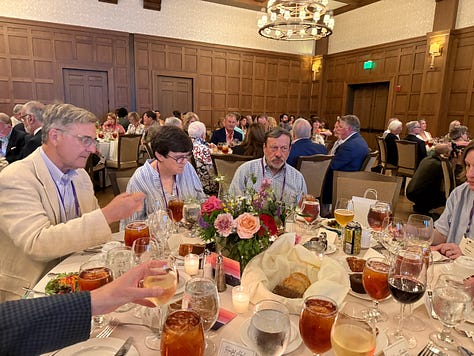
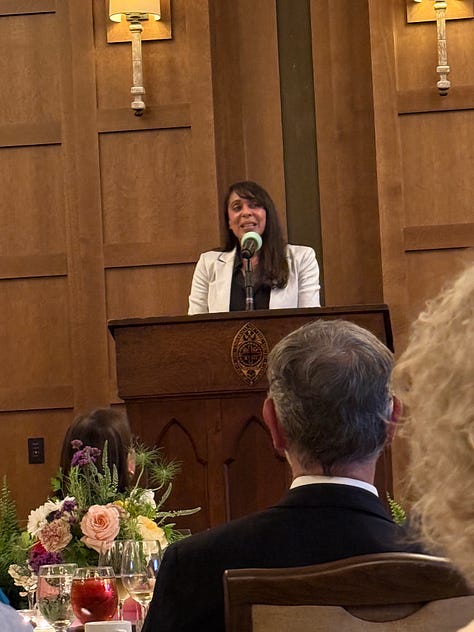
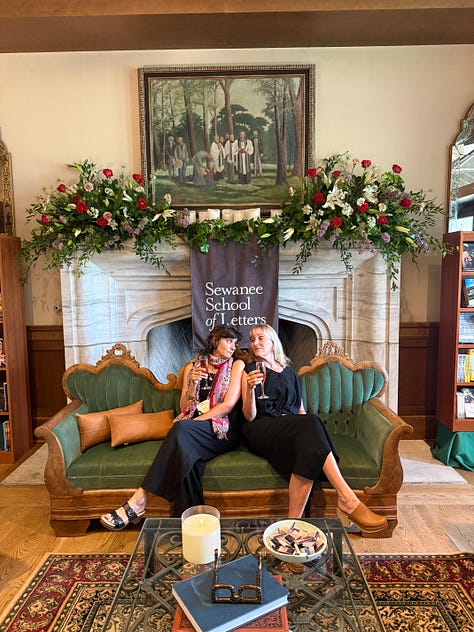
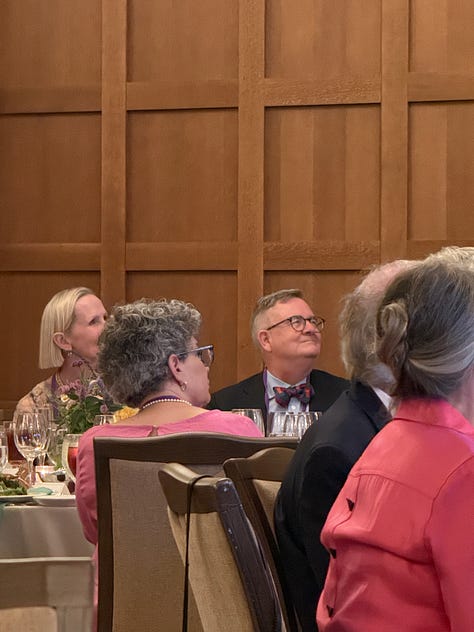
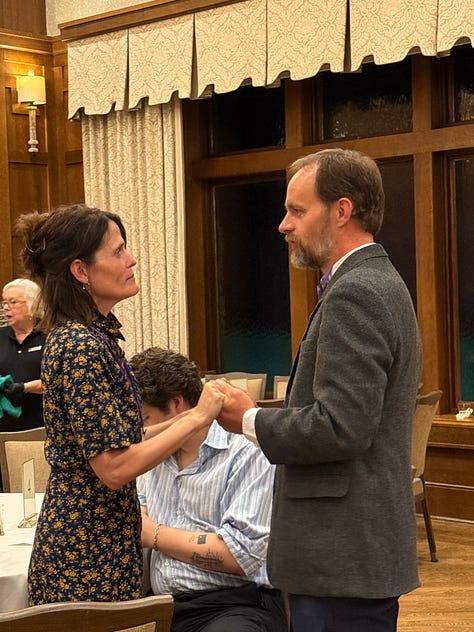
    party picsparty picsparty pics
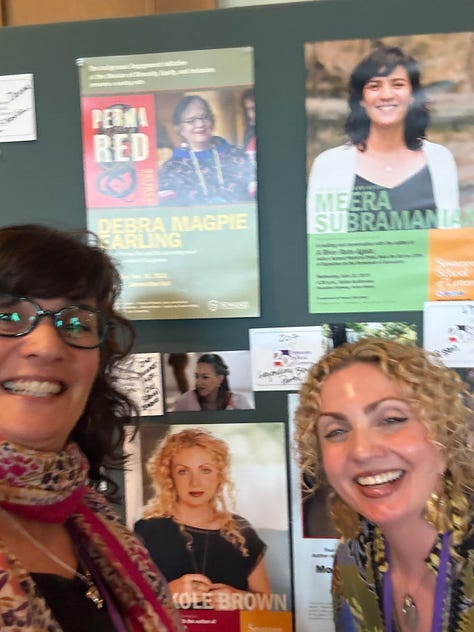
    party picsparty picsparty pics
    School of Letter Twentieth Anniversary

Sewanee School of Letters… Twenty years so far

  • A pause in the reading list to share a bit about the SSL 20th Anniversary, honoring what John Grammer brought into being, what Justin Taylor and April Alvarez sustain. Poet Laureate of the US, Natasha Tretheway, gave the keynote. She spoke of the beautiful skills her father, a poet, instilled in her, reading from books, teaching her about metaphor. She valued what she found within bound pages, believed books held truth. And then she told about when she was working her way through the World Book Encyclopedia. Came across the entry on races. Caucasoid, mongoloid, negroid. Measuring her femur and tibia as a girl, trying to figure out how she fit in the world, half white, half black. She spoke about the silences around race that, too often, hold the dominant “Caucasoid” vantage, unable to see people like her, people with more melanin in their skin. It was a perfect set up for the next day….
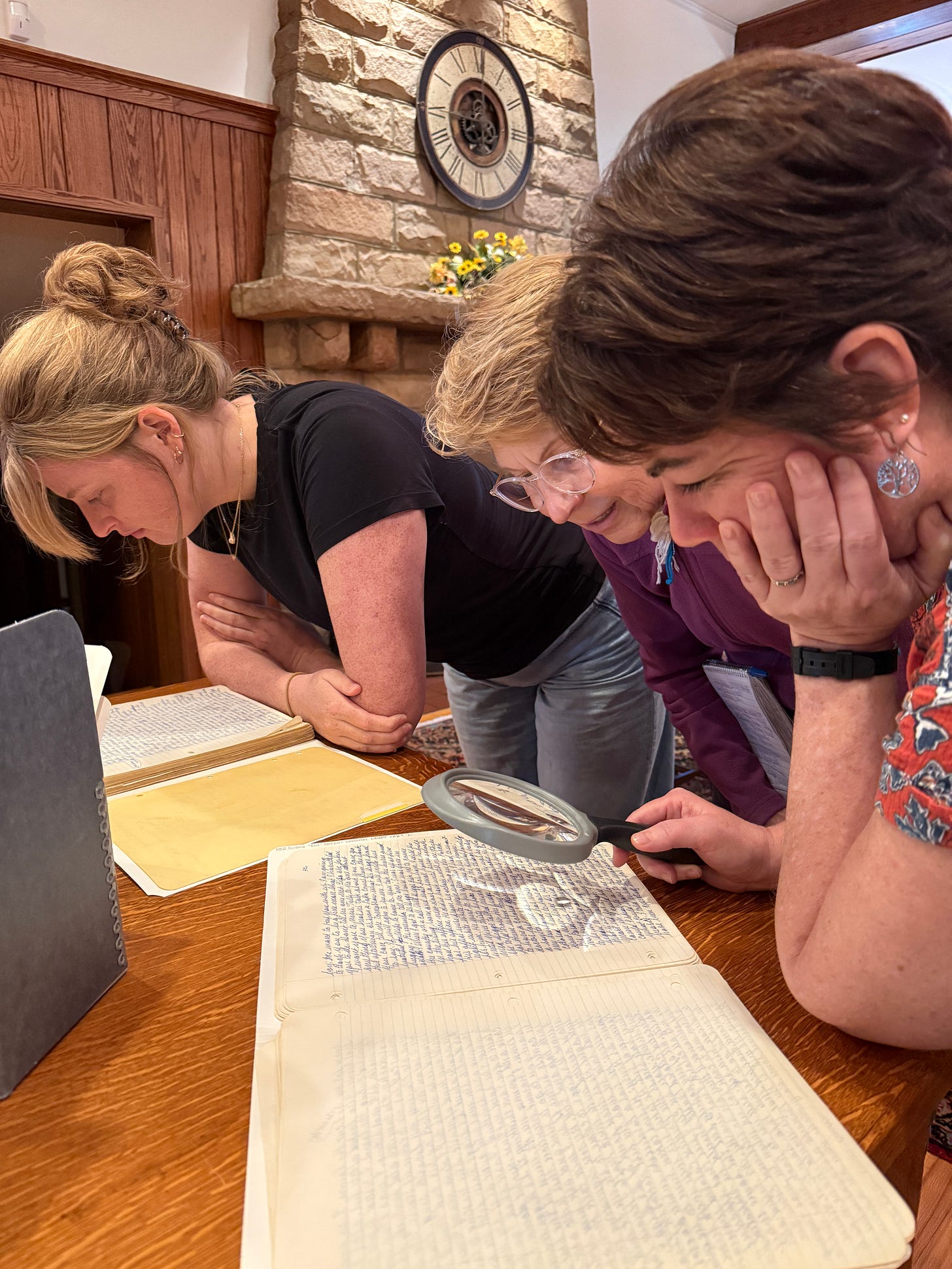
    Students lean over manuscript with magnifying glass
    Students read Ely Green’s original manuscript at the archives. By Meera Subramanian

On Juneteenth, a trip to the University Archives & Special Collections

  • First two chapters of Ely Green’s Too Black, Too White was the reading assignment, and then a visit to the archives to see the original handwritten manuscript by the bi-racial Sewanee native and hear about how Sewanee is reckoning with its racist roots from Woody Register of the Roberson Project, archivist Mandi Johnson, and podcast producer (and School of Letters Assistant Director) April Alvarez. It was the first time in an archive for many of them. Troves of history and stories and possibilities, many still unprocessed, far beyond the knowledge of seemingly all-knowing Google and AI searches. Go. Touch paper.
  • Episode One of The Suitcase: Discovering Ely Green podcast

More racial reckoning:

  • Between the World and Me by Ta-Nehisi Coates. Where to begin. read this book if you haven’t yet.
  • “This is Not Who We Are” by Naomi Shaibab Nye, a post 9/11 essay.

How can creative nonfiction writers bridge political divides, chasms created by geography, and other shifts in personal or place-based divisions?

  • “Compression Wood” by Frank Burroughs, which John Grammer believes Frank read here at School of Letters in its first year. Exquisite piece about how language elevates but also cleaves us from experience, about a friendship that lasts, about how to be from one place and also of another.
  • “American Grotesque” by John Jeremiah Sullivan

How does nationality shape the stories we tell?

  • One Day, Everyone Will Have Always Been Against This, by Omar El Akkad, won the National Book Award last year. It was described as “a chronicle of that painful realization, a moral grappling with what it means, as a citizen of the U.S., as a father, to carve out some sense of possibility in a time of carnage.” The carnage he writes about continues. Yesterday, Omar generously Zoomed into our classroom. It was the day after the one that marked a thousand days in which Israel has been trying to bomb Gaza out of existence. Not in (our) news much anymore, what with the Reflecting Pool and all, but the UN has stated that human development in Gaza has been set back 77 years, life expectancy now averages 40 years. So far, an estimated 73,066 Palestinians have been killed, include 21,000 children, a thousand babies. Nine thousand are still missing, likely buried in a place that is virtually all uncleared rubble. Bombings continue, in spite of a supposed ceasefire since October. I’ve written about this book before. It was so good to teach it. To examine the craft of writing into bewilderment and anger, the “scorch marks still on the page,” he told us. “Literature should be a vehicle against loneliness,” he said. He gives voice to all those who believe an unrelenting bombing of a people and blocking of all aid is wrong. Full stop.
  • The Archive Project – Ta-Nehisi Coates in conversation with Omar El Akkad. To bring the two authors together, some of us listened to this. Omar mentions his go-to poem by Noor Hindi: Fuck your lecture on Craft: My People are Dying. Ta-Nehisi responds, “We need your lecture on craft, because my people are dying.” Omar agrees. Let literature keep fighting against loneliness.

Still to come

  • Late Migrations: A Natural History of Love and Loss by Margaret Renkl
  • “Phantom Pains” by Rochelle L. Johnson
  • “Literature of Place” by Barry Lopez
  • “Living Like Weasels” by Annie Dillard
  • “The Undertow” by Jeff Sharlet, the chapter from the book
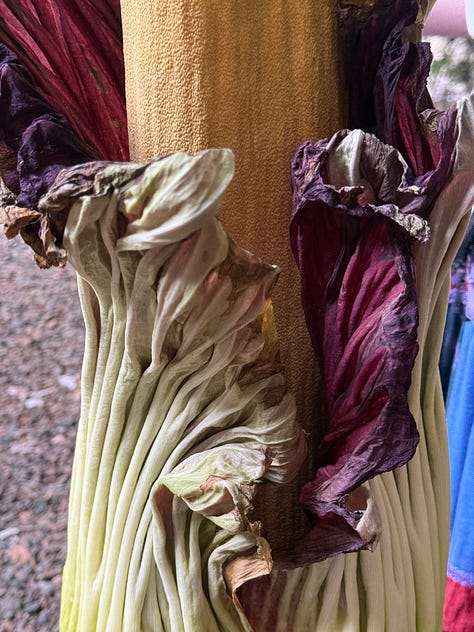
Around Sewanee. Corpse flower. Black light millipede (?). Barred owl. Deer.Around Sewanee. Corpse flower. Black light millipede (?). Barred owl. Deer.Around Sewanee. Corpse flower. Black light millipede (?). Barred owl. Deer.

Around Sewanee. Corpse flower. Black light millipede (?). Barred owl. Deer.Around Sewanee. Corpse flower. Black light millipede (?). Barred owl. Deer.Around Sewanee. Corpse flower. Black light millipede (?). Barred owl. Deer.
Around Sewanee. Corpse flower. Black light millipede (?). Barred owl. Deer. Fungi. by Meera

Filed Under: peregrinations, teaching, writing tips Tagged With: Creative Nonfiction, syllabus

Climate Change as Threat (& Opportunity) Multiplier

May 26, 2020 By meerasub Leave a Comment

My year at Princeton University is coming to a close, although the second half of the spring semester was disrupted, as everything has been, by the COVID-19 pandemic. But I still wanted to share the syllabus for the class, which includes the adaptations I made given the shifting situation. After spring break in March, we all transitioned to Zoom, and our planned trip to a local farm to learn about carbon farming had to be cancelled, but the class remained a great series of discussions, inquiries, tough questions, thoughtful answers, exciting possible solutions, and more.

Here’s the description for ENV 381, which was cross-listed in journalism and urban studies:

The US Department of Defense has called climate change a “threat multiplier,” referencing military bases inundated by sea level rise and increased global political instability from extreme weather events, especially in vulnerable countries already struggling with poor governance and impoverished populations. Likewise, among conservation biologists and urban designers, farmers and social justice activists, there is acknowledgement that perennial challenges are all exacerbated because of a rapidly warming planet for these same reasons. Every aspect of life on earth, for humans and other living creatures, is changing. This class will explore everything from the state of songbirds to the national security concerns of war hawks to agriculture to urban design to storytelling to social justice. The aim is to understand how, while climate change aggravates existing struggles, innovative climate action solutions might also help ease them.

As always, feel free to reach out to me with your suggestions or to let me know if you’ve adapted it for your own class. Here’s the full syllabus:

ENV381_SYLLABUS_ClimateChangeAsThreatMultiplier

Filed Under: climate change, journalism, teaching Tagged With: A River Runs Again, biodiversity, climate change, COVID-19, girl power, human migration, military security, organic farming, pandemic pedagogy, pollution environment, Princeton University, syllabus, teaching, water

Crossing the Climate Change Divide syllabus

December 23, 2019 By meerasub Leave a Comment

I’m just wrapping up a semester of teaching a class I called Crossing the Climate Change Divide, an undergraduate seminar I led at Princeton University.

The effects of climate change are here, now. Yet Americans are divided on this singular issue. Or are they? While media often portray climate change debates as binary—fact-averse conservative denialists vs. Green-New-Deal leftists—the reality is that all Americans are experiencing changes in their own backyards. For some it is the impact of devastating extreme events such as wildfires or storm flooding; for others, it is noticing quieter shifts such as when spring blooms and birds arrive. How they process and understand these changes was the focus of our semester.

Our readings included:

  • Bill McKibben, The End of Nature
  • Andrew J.  Hoffman, How Culture Shapes the Climate Change Debate
  • Michael Mann and Tom Toles, Madhouse Effect: How Climate Change Denial is Threatening Our Planet, Destroying Our Politics, and Driving Us Crazy
  • Naomi Oreskes and Erik. M. Conway, Merchants of Doubt
  • Arlie Russell Hochschild, Strangers in Their Own Land: Anger and Mourning on the American Right
  • Earl Swift, Chesapeake Requiem: A Year with the Watermen of Vanishing Tangier Island
  • Elizabeth Rush, Rising: Dispatches from the New American Shore
  • Candis Callison, How Climate Change Comes to Matter: The Communal Life of Facts
  • Mitch Hescox and Paul Douglas, Caring for Creation: The Evangelical’s Guide to Climate Change and A Healthy Environment
  • Pope Francis, Encyclical on Climate Change & Inequality: On Care for Our Common Home

But for educators curious about the whole class, here’s the syllabus:

ENV375_SYLLABUS_CrossingClimateChangeDivide

And I’d love to hear from others out there about the readings that you are using in your classrooms, too. Write me!

Filed Under: climate change Tagged With: climate change, conservative, Princeton, syllabus, teaching, university

Follow Meera on Substack

for the very occasional bit of news.

Categories

Tags

A Better World Is Possible Alaska anthology A River Runs Again Art awards birds of prey books book tour Cambridge cape cod climate change conservation dissent Elemental India energy events Fulbright india InsideClimate News journalism kenya Knight Science Journalism Nature New York City organic farming Orion peregrine falcon pesticides photography plastics politics pollution environment radio readings religion renewable energy science Sewanee Society of Environmental Journalists teaching travel USA vulture water

Archives by Month

Connect

  • Bluesky
  • Facebook
  • Instagram
  • LinkedIn

© 2026 Meera Subramanian. | All Rights Reserved. | Mastodon | Website design by Sumy Designs, LLC

Green_14