Meera Subramanian
  • Home
  • Books
  • Writing
  • Bio
  • Blog
  • Photos
  • Events
  • Speaking
  • Contact

Spanish lessons in small-town survival

March 11, 2026 By meerasub Leave a Comment

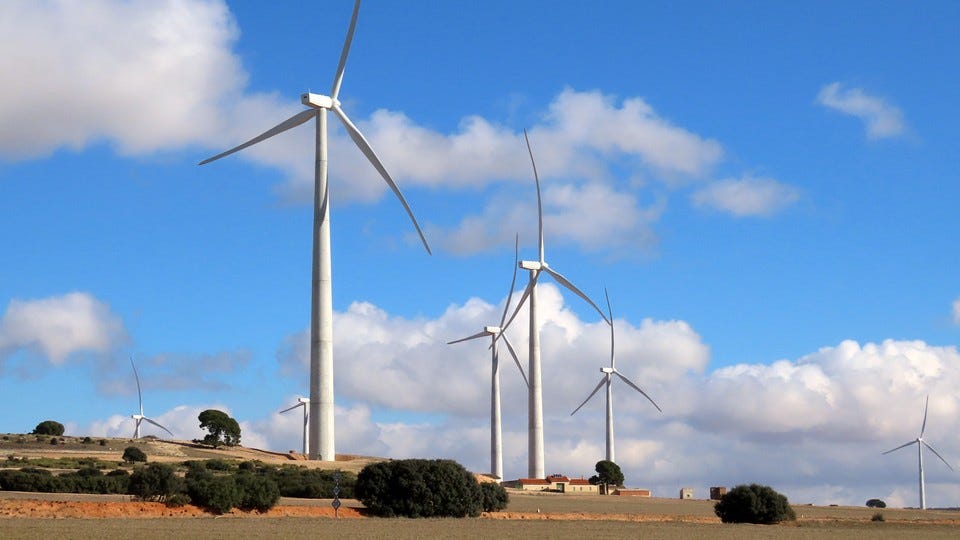
Wind turbines in the Spanish countryside near Higueruela

Last year, I spent three months on a FRONTIERS science journalism fellowship in Spain trying to understand if the clean energy transition could work better for biodiversity, people and place. I spent the first part of my time based at the Basque Center of Climate Change (BC3) in Bilbao, and the rest traveling to wind and solar farms around the country.

The question was becoming urgent. In 2023, the world’s annual renewable capacity increased by almost 50% to over 500 gigawatts. Current climate goals have that figure tripling by 2030. As a science journalist who has covered environmental issues for twenty years, I recognize both the need to quickly scale up renewables to meet the climate crisis and the risk of treating the clean energy transition as a technological problem alone. In order to succeed, mega renewable energy projects must address local concerns—ecological, cultural and economic—or risk public backlash that threatens to derail efforts. I realized this while standing with South Indian farmers who’d lost their land to a solar farm the size of Manhattan, reporting for a New Yorker feature. With global renewable energy buildout happening now, projects (and their impacts) will be in place for decades, so these controversial projects must get it right from the start. Turbines that don’t kill birds. Solar that doesn’t steal agricultural land and disproportionately hurt women. Power that is affordable. Is that possible?

The Atlantic just published my piece that emerged from that reporting and researching. It begins…

Go looking for wind farms in Spain, and you might quickly end up in Castilla–La Mancha, a region southeast of Madrid. This is the place where Don Quixote, Miquel de Cervantes’s delusional Man of La Mancha, attacked small wooden windmills he perceived as fierce giants and where today giant wind turbines have become an embedded part of the landscape.

There, I met Mayor Isabel Martínez Arnedo, who has run the town of Higueruela since 2019. The region’s distinctive wind whipped her dark curls as she stepped out of her car. “Look!” she said in Spanish. “Windmills, windmills, windmills.”

Read the full piece here.

I hope to share some more stories from my time in Spain here when time allows. Which isn’t now, but hopefully someday. But I did sit down upon a Moorish ruin on a ridge lined with wind turbines that I write about in the Atlantic piece, in the town of Higueruela, at the end of all that exploration. Here’s a video I recorded of me thinking through what I had experienced. Sorry for the whistling of the audio, and the wild hair, but well, wind. (whooosh!)

And for the science journalists out there, applications for the fourth round of the FRONTIERS Science Journalism Residency Programme are now being accepted. All levels of experience can apply.

A Better World Book Tour

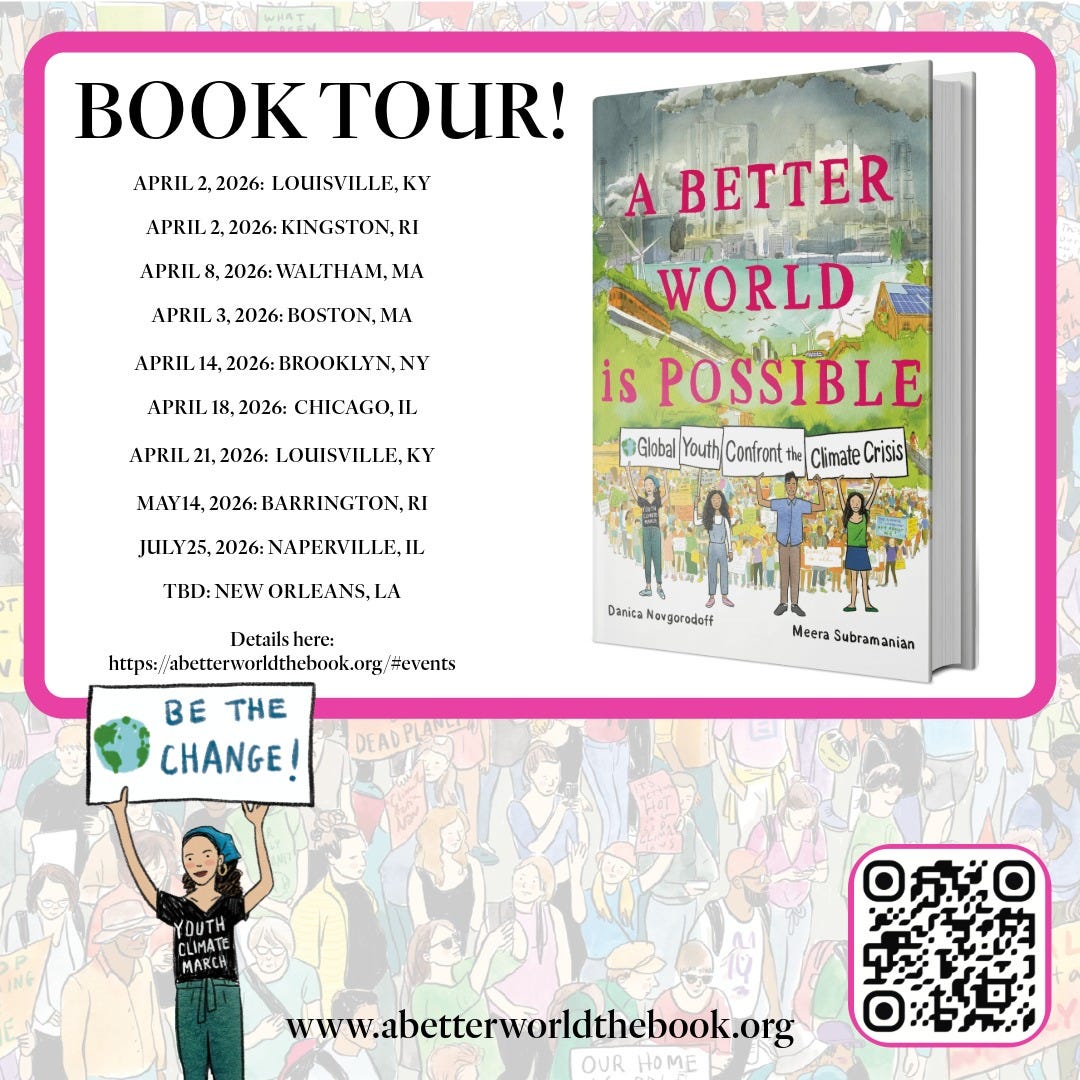
  • Danica and I have kicked off our book tour for our new graphic novel, A Better World Is Possible: Global Youth Confront the Climate Crisis. Mostly, sadly, we’re doing separate events, but we’ll be together, along with two of the youth featured in the book at an all-ages book event April 14 at 6:30pm at Greenlight Bookstore in Brooklyn, NY. This event is sure to be popular, so be sure to save your spot here. You can also buy the book here and pick it up at the event.
  • Head to the website to see all the details about these other upcoming events:
How you can help!

  • If you’ve ordered a copy of A Better World Is Possible, first, THANK YOU. We hope you are enjoying it. Both Danica and I are hearing so many good things from people and reviewers. Here are ways you can help us get the word out:
  • Share kind words on Goodreads. Or on Amazon. Or wherever you can leave a review. Those stars are super helpful.
  • Take a picture of yourself with the book and tag us or invite the book & me to collaborate on the post! Here are our socials:
    • Meera Facebook: https://www.facebook.com/meerasub/
    • ABWIP Facebook: https://www.facebook.com/ABetterWorldTheBook/
    • Meera Instagram: @meerasub
    • ABWIP Instagram: @abetterworldthebook
    • Meera Bluesky: @meerasub.bsky.social
    • ABWIP Bluesky: @abetterworldbook.bsky.social
    • Meera LinkedIn: https://www.linkedin.com/in/journomeerasub/
    • ABWIP LinkedIn: https://www.linkedin.com/company/abetterworldthebook/
  • Follow us on any of those sites!
  • Also tag us if you want to share images that show how the world could be a better place if there were more of X.
  • Ask your local library to buy a copy.
  • Comment or DM me. I’d love to hear how you’re responding to the book. 🙂

More press:

  • Graphic Policy has a long positive review on YouTube with one spectacularly placed f-bomb. 🙂 He recognized what a good resource it could be for his kid but also admitted he learned a lot, too. This book was written with a YA audience in mind, but now that it’s out there, we keep hearing how not only teens are loving it, but parents can read it to their five-year-old…and learn something themselves. It’s an all-ages book.
  • I’m a member of the great organization, the National Association of Science Writers. Here’s a piece I wrote for their Advance Copy column explaining some of the craft process of collaboration.
  • And here’s another guest post in the School Library Journal Teen Library Toolbox Not Just Greta: True stories of youth acting to fight the climate crisis
  • Danica and I had a great conversation with Uma Krishnaswami for Writing with a Broken Tusk (all you Ganesha fans out there will get the reference).

Coda…

A vibrant field covered in pink and yellow wildflowers stretches toward distant blue mountains under a clear sky.
Elliot McGucken via PetaPixel

Photographer drove to Death Valley to capture exquisite images of a superbloom in Death Valley. If you are hungry for color and an riot of life and flower sex, check out more of his images here.

Keep blooming, everyone.
Filed Under: A Better World Is Possible, climate change, events, journalism, News, travels Tagged With: A Better World Is Possible, FRONTIERS, renewable energy, Spain, The Atlantic, wind turbines

Out of Order

February 4, 2025 By meerasub Leave a Comment

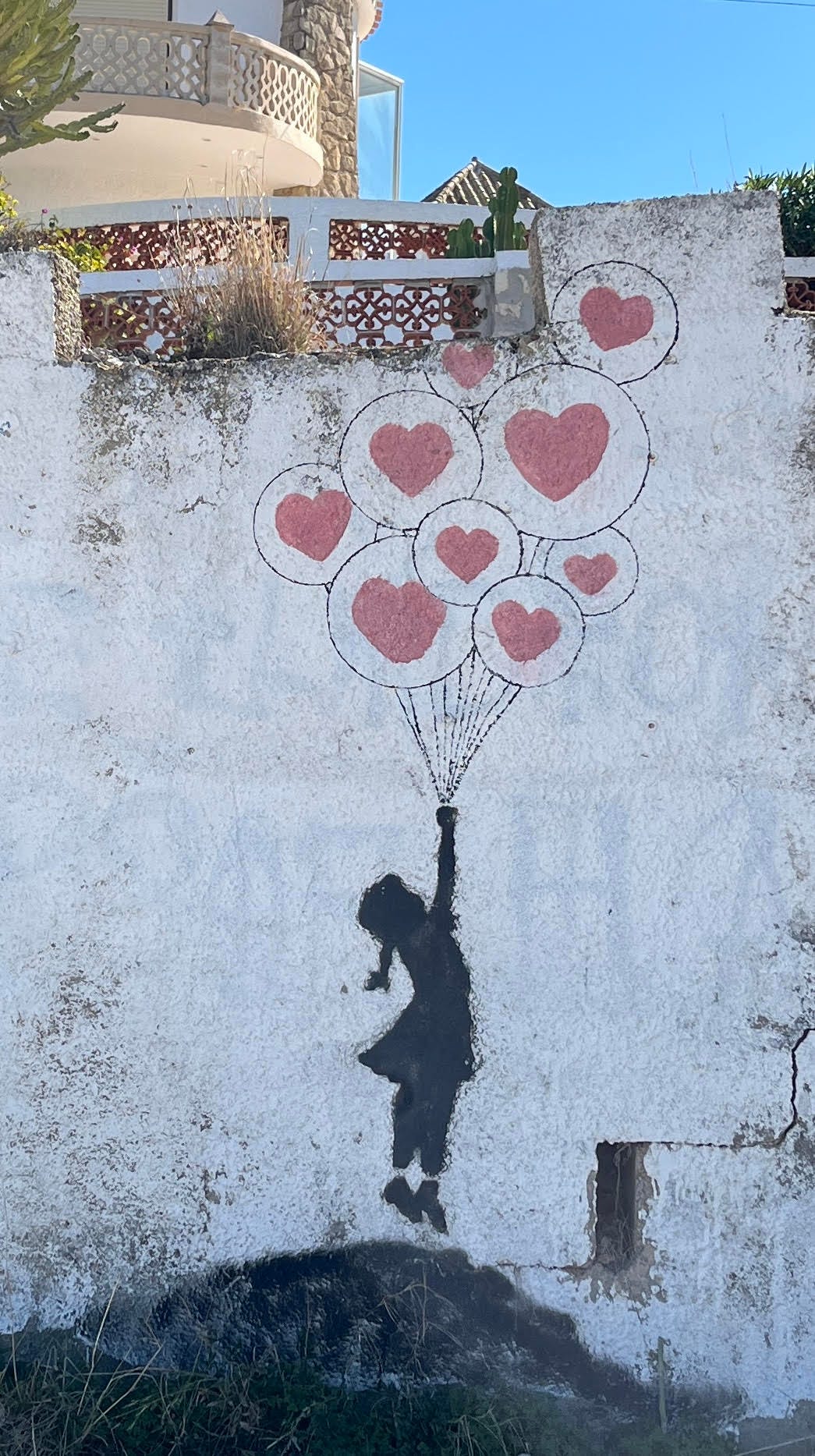
graffiti of girl being lifted by heart balloons

{latest Substack…}

Sentiments can be lost in translation, but also found. I’m out of the US but its mess spreads across the globe like its carbon emissions. The absolute least of it is was sitting in a cafe eating tortilla española and cringing as our new old president declared Spain is a BRICS nation (it isn’t). The most of it is hearing from friends and family about direct impacts: jobs lost, projects frozen, students with questionable immigration status disappeared. Last week, I stood with an Austrian woman and when the subject of our state of affairs came up, both of us speechless about the chaos the 47th has unleashed in a baker’s dozen worth of days, she said, of the country or the man, I’m not sure, that it’s “out of order.”

“Yes, yes! That’s the perfect phrase,” I exclaimed. “I’m going to use that.” And so here we are.

As I walked home afterwards, a woman alone, after midnight, feeling totally safe on the streets of Bilbao even as I walked through a group of a dozen men (oh, the sweet relief of not having cortisol continually coursing through one’s body; consider the whales; consider immigrants now being rounded up), I tumbled the phrase “out of order” around in mind. Out of order can mean broken, nonfunctional. It can indicate an experience of tumult and bedlam. It can also mean when someone steps of out of line, and acts in ways that are socially, ethically, morally improper. With the Austrian woman’s three words, she’d spoken a triple entendre.

To process this moment, I’m alternating between Jeff Sharlet’s Scenes from a Slow Civil War and Katharine Hayhoe’s Talking Climate, somehow finding solace in simultaneously recognizing how bad things are and how good they could be. Be? Maybe? Ayana Elizabeth Johnson reminds us to act locally. My form of protest is to dig deeper into my FRONTIERS fellowship work based at BC3, trying to understand all the dynamics at play in the efforts to shift our energy systems to cleaner forms of wind and solar, something that will continue to happen regardless of the white man in the White House. It’s led me to encouraging conversations about agrivoltaics in France and energy companies that build in community funds voluntarily, but also to a recurring and troubling story of conflict—a chasm between the rural and urban populations of the world—identical to what I’ve experienced in America, especially when I reported on conservative perceptions of climate change for Inside Climate News. I also attended an event, La Agenda Climática en La Nueva Legislatura Europa y su Impacto en Euskadi, The Climate Agenda in the New European Legislature and its impact in Basque Country. And we were right back to the impacts of the global shift to the far right. A sense of nervousness, geopolitics shaky, and the hope that energy independence in the form of renewables can be a part of regional security strategies.

panel discussion on climate and politics

Sweet dreams & flying machines…

There was also, last week, the horror over DC skies. Someone I love deeply and dearly has lost someone they love deeply and dearly in the unspeakable plane crash that ended in the Potomoc. She asked me for hard-won advice, knowing I have lost friends, this one, and this one, and others. Words fail, but I say something about letting the grief come when it will, to not fight it, to let it wash over you when it appears urgent and unexpected, even months, years, down the road of recovery. No, not recovery. Something else. Love and loss burnished into your being. But now the grief is immediate, and the only thing to do is take the unbidden reminder that life is short, precious. Love big. Hold loved ones close. Tell them. This is the other way we can act locally, in our most intimate lives.

Keep notice…

As I’m exploring this new place, I’m searching for slivers of joy amid all this grief and allowing myself moments to recognize them. I found one, as the sun broke through the relentless clouds of Bilbao, of the news, on Friday afternoon, when I finally made it up Etxebarri Parkea. Once a factory site that has been transformed into a park overlooking the city, its tall smokestack is a reminder of what once was. There was a pond created to support birds and critters, and a skate park for humans to play.

When I walked by the skate park, I noticed two men on skateboards, then I noticed that one was much, much older than the other. I was intrigued. Circled around the park and returned to watch him as he made a smooth steady run across the shallow end. Then, as the younger skater was leaving, the older one recruited him to help him summit the last lip of his run. “Come help me,” he said. “Stand here, with one foot here and the other there, and then when I come up, take my hand.” The young man did exactly as told. They tried it 5-6 times, and the older man never quite made it. Except that, well, he’s already made it, right?

I took a picture of them both, then handed my phone to Nico, the 26-year-old German so he can forward it to himself. And Juanjo is telling us he’s famous. “Google me!” he instructed, and indeed there he is on YouTube and TikTok. He is 87 years old, older than ages of the young skater and me, combined. Some lives are unfairly cut short. Others are long, and embraced by the bodies that contain them.

Journalists & writers friends, take note…

  • For rising juniors and seniors pursuing journalism, consider applying to the Opening Doors, a new initiative aimed at increasing diversity in public media newsrooms. The two-year program will provide skills training, mentorship, and paid internships for ten BIPOC journalism students, with a focus on science, health, and economics reporting. Apply here.
  • The Uproot Project Fellowship offers funding to seven journalists to pursue reporting projects over the course of a year. Fellows will receive up to $2,000 to cover travel and other reporting expenses for their fellowship project. Learn more about the Uproot Project Fellowship and find this year’s application here. Deadline: 11:59pm on March 1, 2025
  • And to connect with poets who are using their art to face the climate crisis, check out the Hellbender Gathering of Poets, run by my friend and Sewanee colleague Nickole Brown. They’re gearing up for a fall gathering and having inspiring events along the way.
  • The Matthew Power Literary Reporting Award is a grant of $12,500 to support the work of a promising early-career nonfiction writer on a story that uncovers truths about the human condition. Matt was one of those dear friends we lost way too early. Deadline: Feb. 19

Take care, friends. Take care of each other.

[Read more…]

Filed Under: climate change, peregrinations, photography, Substack, travels Tagged With: BC3, Bilbao, death, FRONTIERS, grief, politics, skateboarding, Spain

Follow Meera on Substack

for the very occasional bit of news.

Categories

Tags

Alaska anthology A River Runs Again Art awards birds of prey books book tour Cambridge cape cod climate change conservation death dissent Elemental India energy events Fulbright india InsideClimate News journalism kenya Knight Science Journalism middle east Nature New York City organic farming Orion peregrine falcon pesticides photography plastics politics pollution environment Princeton University radio readings renewable energy science Society of Environmental Journalists teaching travel USA vulture water

Archives by Month

Connect

  • Bluesky
  • Facebook
  • Instagram
  • LinkedIn

© 2026 Meera Subramanian. | All Rights Reserved. | Mastodon | Website design by Sumy Designs, LLC

Green_14
