Meera Subramanian
  • Home
  • Books
  • Writing
  • Bio
  • Blog
  • Photos
  • Events
  • Speaking
  • Contact

(Cancelled) New Imaginings: Storytelling, Science & Activism

February 22, 2020 By meerasub Leave a Comment

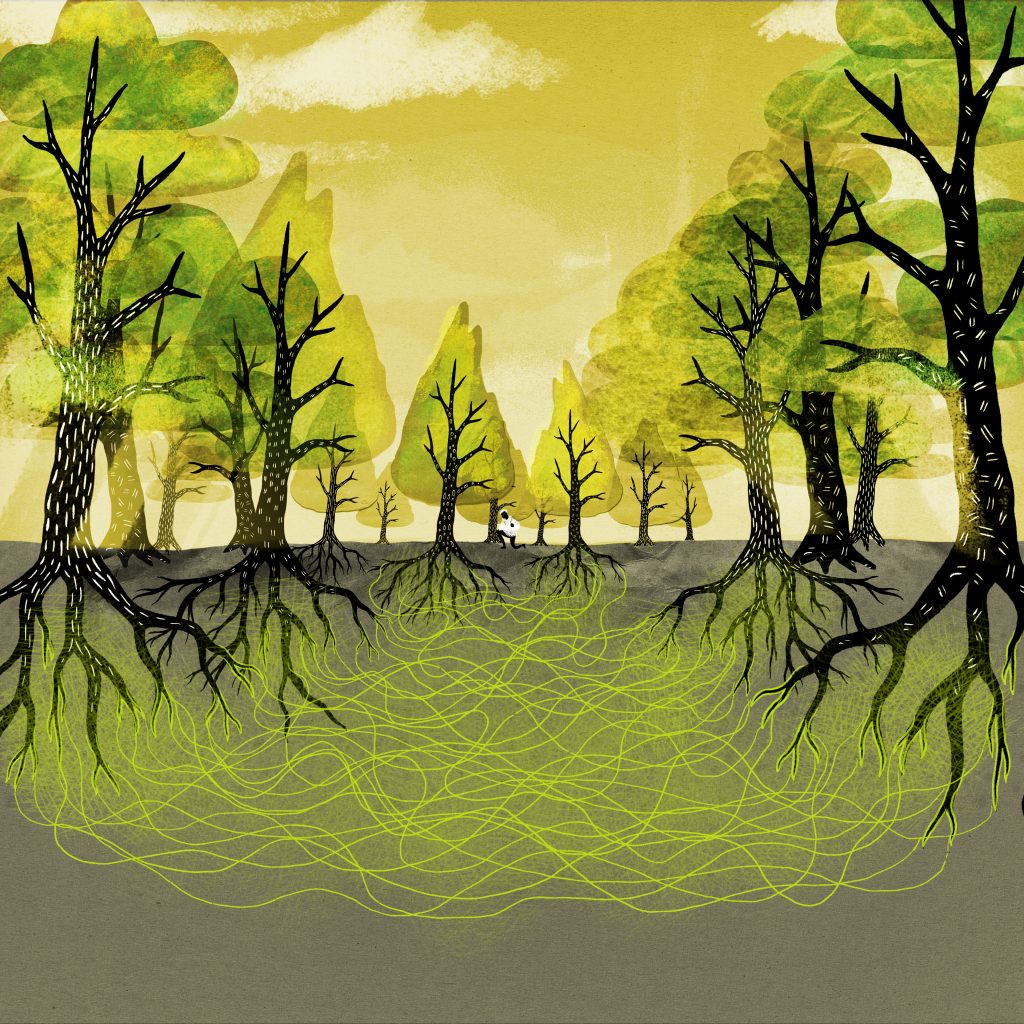
Imagery: Jules Bartl/BBC World Service

*Due to the coronavirus/COVID-19 crisis, this event has been cancelled*

During my time at Princeton University, I have the pleasure of organizing an event, and I decided to shape it around the powerful novel The Overstory. If you’re in the Princeton area on March 26, please join me. And thanks to Jules Bartl and the BBC for letting us use this exquisite image for the event (check out the short animated film!).

More event info here.

Award-winning environmental journalist Meera Subramanian will host the discussion “New Imaginings: Storytelling, Science and Activism” featuring Pulitzer Prize-winning novelist Richard Powers, author of The Overstory; Robin Wall Kimmerer, SUNY professor of environmental biology and author of Braiding Sweetgrass; and forest activist Timothy Ingalsbee, executive director of Firefighters United for Safety, Ethics and Ecology.

Subramanian, the 2019-20 PEI Barron Visiting Professor in the Environment and the Humanities, will lead a conversation exploring how the work of scientists, artists and activists come together to inspire fundamental shifts in perspective. From the underground networks that feed forests to how human activity impacts the upper atmosphere, our understanding of how the world works shapes our minds, the stories we tell, and the way we act.

This event is free and open to the public. Books will be available for purchase from Labyrinth Books.

Thu, Mar 26, 2020
4:30 PM
 – 7:00 PM
Princeton University, McCosh Hall, Room 10


Related show

  • Author: Meera Subramanian
  • Tour: Teaching/Workshops
  • Date: March 26, 2020
  • Time: 4:30pm
  • Venue: Princeton University: McCosh Hall
  • City: Princeton , NJ
  • Address: McCosh Hall, Room 10
  • Country: United States
  • Cancelled
  • More information
  • Notes: Award-winning environmental journalist Meera Subramanian will host the discussion “New Imaginings: Storytelling, Science and Activism” featuring Pulitzer Prize-winning novelist Richard Powers, author of The Overstory; Robin Wall Kimmerer, SUNY professor of environmental biology and author of Braiding Sweetgrass; and forest activist Timothy Ingalsbee, executive director of Firefighters United for Safety, Ethics and Ecology. Subramanian, the 2019-20 PEI Barron Visiting Professor in the Environment and the Humanities, will lead a conversation exploring how the work of scientists, artists and activists come together to inspire fundamental shifts in perspective. From the underground networks that feed forests to how human activity impacts the upper atmosphere, our understanding of how the world works shapes our minds, the stories we tell, and the way we act.

Filed Under: climate change, events, News, readings, teaching Tagged With: climate change, ecology, event, forest, Princeton University, Richard Powers, Robin Wall Kimmerer, Tim Ingalsbee

Crossing the Climate Change Divide syllabus

December 23, 2019 By meerasub Leave a Comment

I’m just wrapping up a semester of teaching a class I called Crossing the Climate Change Divide, an undergraduate seminar I led at Princeton University.

The effects of climate change are here, now. Yet Americans are divided on this singular issue. Or are they? While media often portray climate change debates as binary—fact-averse conservative denialists vs. Green-New-Deal leftists—the reality is that all Americans are experiencing changes in their own backyards. For some it is the impact of devastating extreme events such as wildfires or storm flooding; for others, it is noticing quieter shifts such as when spring blooms and birds arrive. How they process and understand these changes was the focus of our semester.

Our readings included:

  • Bill McKibben, The End of Nature
  • Andrew J.  Hoffman, How Culture Shapes the Climate Change Debate
  • Michael Mann and Tom Toles, Madhouse Effect: How Climate Change Denial is Threatening Our Planet, Destroying Our Politics, and Driving Us Crazy
  • Naomi Oreskes and Erik. M. Conway, Merchants of Doubt
  • Arlie Russell Hochschild, Strangers in Their Own Land: Anger and Mourning on the American Right
  • Earl Swift, Chesapeake Requiem: A Year with the Watermen of Vanishing Tangier Island
  • Elizabeth Rush, Rising: Dispatches from the New American Shore
  • Candis Callison, How Climate Change Comes to Matter: The Communal Life of Facts
  • Mitch Hescox and Paul Douglas, Caring for Creation: The Evangelical’s Guide to Climate Change and A Healthy Environment
  • Pope Francis, Encyclical on Climate Change & Inequality: On Care for Our Common Home

But for educators curious about the whole class, here’s the syllabus:

ENV375_SYLLABUS_CrossingClimateChangeDivide

And I’d love to hear from others out there about the readings that you are using in your classrooms, too. Write me!

Filed Under: climate change Tagged With: climate change, conservative, Princeton, syllabus, teaching, university

United in Change

December 16, 2019 By meerasub Leave a Comment

Photo by Meera Subramanian

As a reader I find there are stories that just stick with me; I can’t shake them. But as a journalist, I experience this a thousand-fold. What appears in print can feel like a haiku, with too many interviews and notebook jottings ending up on the cutting room floor. The histories of place I unearthed through research. The letters to the editor in the thin pages of the local newspaper. The anecdotes shared by those who didn’t make it into the piece. The deep story revealed behind and between their words, too big for the bounds of the word-count. 

As I finished up each of the nine pieces that were part of the series Finding Middle Ground series for InsideClimate News that I worked on for most of 2017-18, about perceptions of climate change in conservative parts of the country, I would find filaments linking them with each other that I didn’t have room to explore. I’d get tangled in threads leading to stories I’d reported in other parts of the world, a lament I heard from a peach farmer in Georgia echoing what a rice farmer had said in India. There were strands of sinew between what I learned in the field and what I knew from my own personal life, a peripatetic journey that’s granted me multiple vantage points, making me feel at home both nowhere and everywhere at once. 

Last year I became a contributing editor of Orion magazine, a publication I’ve read for many years, enjoying the lush richness of its pages, the images and poems and book reviews and NO ADS. (Yes, this is a nonprofit endeavor, and, yes, you can support it by subscribing.)  With this piece for Orion, I finally had a chance to reach up for some of those disparate threads that have been floating around in my head since I finished the ICN series and try to weave them into something that made sense. Or, at least, began to make sense. Still, it feels like a haiku. Still, there is so much unsaid at the edges. Because the story of climate change at this moment in time is immense, and shifting. We’re all living this in real-time, the scientists and storytellers and skeptics all. Much of what I found over 18 months of reporting is deeply troubling, the changes underway stirring so much into uncertainty, but I also hold onto the possibility of the disruption as a great opportunity. No rain without thunder and lightning, Frederick Douglass reminded us. And the storm of climate change is here, now. Anything could happen. 

The piece begins…

For the past couple of years, I traveled across my country, falling in love with strangers. I sought them out—farmers, ranchers, fly fishermen, evangelicals— and stepped into their lives, uninvited but nearly always, inexplicably, welcome. I sought some kind of connection, asking them questions few seemed to be asking them, about their lives and what they care about and what they believe in. Who they vote for and why. What they remember from before and what they expect in the future, which to their collective grief are often different things.

Read the rest here.

Filed Under: agriculture, cattle, climate change, drought, InsideClimate News, journalism, North Dakota, photography, travels Tagged With: climate change, conservation, grief, InsideClimate News, journalism, loss, Nature, Orion, photography, politics, pollution environment

Crossing the Climate Change Divide

October 24, 2019 By meerasub Leave a Comment

ENV 375 class. Photo by Denise Applewhite

This fall, I’ve been leading Princeton undergraduates as we take a deep dive into the climate debate in the seminar “Crossing the Climate Change Divide.” Tom Garlinghouse from Princeton’s Office of Communications joined us to share what we’re doing. To see the full syllabus, click here. And here’s his piece:

The course is taught by award-winning journalist Meera Subramanian, who is asking students to examine what people think about climate change — whether they accept the current climate science, reject it or are simply confused by it — and why they think the way they do.

“I’d love the students to engage in the conversation around climate change with a slightly more wide-open lens about how people are thinking about this and why people are thinking about it in the ways that they do,” said Subramanian, the Currie C. and Thomas A. Barron Visiting Professor in the Environmental Humanities in the Princeton Environmental Institute (PEI). She is participating in a panel titled “Breaking the Logjam” at the Princeton Environmental Forum on Oct. 25.

Subramanian wants the students to use what anthropologists call an “emic,” or “insider’s,” approach — that is, taking into account a person’s words, perceptions and beliefs as main sources of information rather than adopting a potentially more objective or “outsider’s” approach. This demands that the students consider factors such as how an individual’s ideology, religion, economic level and politics impinge on a particular topic — in this case, the climate debate.

“Humans are messy creatures,” Subramanian said. “It’s not like we’re just economic creatures or just religious creatures. We are all of those things, all at once.”

Read the rest here.

Filed Under: climate change, teaching Tagged With: climate change, ENV375, environmental humanities, Princeton University, teaching

more on Chennai’s water crisis

August 2, 2019 By meerasub Leave a Comment

The summer Southwest monsoon has brought some rain and momentary relief to Chennai, but the question of how to mitigate water shortages (and excesses) are not gone. After my New York Times op-ed last month, I’ve had a chance to speak about water with others interested in the story. These issues are not disappearing anytime soon. From the World Resources Institute:

New data from WRI’s Aqueduct tools reveal that 17 countries – home to one-quarter of the world’s population—face “extremely high” levels of baseline water stress, where irrigated agriculture, industries and municipalities withdraw more than 80% of their available supply on average every year.

I spoke to Mark Goldberg on the Global Dispatches Podcast. In essence, do all the small stuff first: restore wetlands, enforce rainwater catchment mandates, educate on conservation, fix leaky pipes, capture water across the landscape with small-scale systems that work with nature, and not against it. Can India develop a new 21st-century model of sustainable development? The opportunity is still there, though hard to see evidence of embracing such possibility. Listen to the podcast here:

On the BBC’s podcast Beyond Today, I spoke with host Matthew Price about the crisis. BBC’s Rajini Vaidyanathan also reported from Chennai directly. Have a listen here.

I also make a cameo appearance in this Al Jazeera The Stream news piece, featuring Veena Srinivasan, a senior fellow with Ashoka Trust, Raj Bhagat Palanichamy, a data manager with World Resources Institute India, and T.M. Krishna, a musician, artist, and activist. Watch the episode here:

And then sit back and watch/listen to T.M. Krishna’s haunting song Poromboke:

Filed Under: A River Runs Again, audio, climate change, drought, elemental india, journalism Tagged With: Chennai, climate change, india, interview, podcast, water

Chennai’s Water Crisis

July 15, 2019 By meerasub Leave a Comment

Rebecca Conway for The New York Times


While researching and reporting A River Runs Again (aka Elemental India), I explored small-scale, across-the-landscape solutions for water crises in India. Even just a few years later, the world is warmer and there are more people in need of water. When the major South Indian city of Chennai, where my father is from and where many in my extended family live, ran out of piped water during its current drought, I wrote an op-ed for The New York Times about how India might consider a new approach to development that might embrace the methods I wrote about in the book. Here’s how it begins:

India’s water crisis offers a striking reminder of how climate change is rapidly morphing into a climate emergency. Piped water has run dry in Chennai, the capital of the southern state of Tamil Nadu, and 21 other Indian cities are also facing the specter of “Day Zero,” when municipal water sources are unable to meet demand.

Chennai, a city of eight million on the Bay of Bengal, depends on the fall monsoon to provide half of the city’s annual rainfall. Last year, the city had 55 percent less rainfall than normal. When the monsoon ended early, in December, the skies dried up and stayed that way. Chennai went without rain for 200 days. As winter passed into spring and the temperature rose to 108 degrees Fahrenheit, its four water reservoirs turned into puddles of cracked mud.

Some parts of the city have been without piped water for five months now. Weary women with brightly colored plastic jugs now await water tankers, sometimes in the middle of the night. On June 20, the delayed summer monsoon arrived as a disappointing light shower.

These water crises are now global and perennial….

Read the rest of “India’s Terrifying Water Crisis” here at The New York Times.

Filed Under: A River Runs Again, climate change, drought, elemental india, journalism, News Tagged With: Chennai, climate change, dams, development, drought, india

a letter from 2049

April 22, 2019 By meerasub Leave a Comment


Shutterstock


I don’t normally do speculative fiction, but when In These Times told me they were doing a special climate issue and asked me what our world might be like if we were to achieve a net zero carbon economy, I found myself writing a letter to my cousin-brother. 

Dear Harish,

Hello, my sweet, faraway cousin-brother! As we approach our—gasp!—80th birthdays, I felt inspired to resurrect the old tradition of letter writing.

It seems like yesterday we were sitting on your parents’ rooftop, taking in the night sounds of Besant Nagar, in the days when I would impulsively buy a ticket from Boston to Chennai without much of a thought beyond my bank account balance.

Remember when a ticket cost a few weeks’ pay instead of six months’? Has it really been 20 years since I last flew to India? I have forgotten the smell of the jasmine flowers women sold along the streets. Remind me again of their fragrance…

Do you see more stars now that the coal plants have shut down? Are the streets quieter without the roar of motorbikes? I suspect the electric vehicles still honk just as frequently and drive as wildly.

Perhaps everything is a little calmer, without the overwhelming crowds? But I imagine there’s an eeriness to that calm, knowing the cost at which it came.

Read the rest here.

Filed Under: climate change, journalism Tagged With: carbon-free economy, climate change, family, future, In These Times, india, net zero carbon, speculative fiction, The Tumult

Longreads Best of 2018 / Science & Technology

December 14, 2018 By meerasub Leave a Comment

So insanely honored to have one of my InsideClimate News Finding Middle Ground pieces mentioned in Longreads Best of 2018 list for science and technology stories. I’m still blushing, reading these words from…

Deborah Blum
Director of the Knight Science Journalism program at MIT and author of The Poison Squad.

They Know Seas Are Rising, but They’re Not Abandoning Their Beloved Cape Cod (Meera Subramanian, InsideClimate News)

For more than a year, Meera Subramanian has been traversing the country for InsideClimate News, creating a series of vivid and wonderfully balanced portraits of small communities wrestling with the havoc of climate change (whether they admit it or not). This one from October, focused on an increasingly flood-washed area called Blish Point, stands out for me. It’s a tapestry-like picture woven of relentlessly rising seas, threatened homes and businesses, the politics of climate change science, and pure, stubborn human reluctance to give up on a beloved way of coastal living.

Subramanian never raises her voice or treats any viewpoint with less than respect — although she occasionally deftly slides in the scientific arguments that counter climate denialism. She has an elegant way of making both people and place live on the page. The result is a compelling and compassionate narrative in which this one small, beautiful, vanishing strip of Massachusetts, perched on the edge of an encroaching ocean, becomes a microcosm for the much bigger story of change — and its reckoning — now being realized around the world.

Filed Under: awards, climate change, InsideClimate News, journalism, Knight Science Journalism Tagged With: Best Of, cape cod, Longreads, sea level rise

Can young evangelicals change the climate debate?

November 27, 2018 By meerasub Leave a Comment

YECA fellow and Wheaton College student Chelsey Geisz and Representative Roskam take a nature walk and talk about climate change. Photo by Jessie Smith.

This is the eighth and final piece of Finding Middle Ground, a series I’ve been working on for InsideClimate News for the last year and a half.

This piece also made the Longreads Best of 2018 list for science and technology!

And I had a great conversation with Illinois Public Radio’s The 21st host Niala Boodhoo, along with Wheaton College sophomore Diego Rivera, whom you’ll meet in the story, and Riley Balikian of Young Evangelicals for Climate Action. Have a listen here, starting at 17:30.

Here’s the start of the piece:

WHEATON, Illinois — Diego Hernandez wasn’t thinking much about climate change until last summer, when he was traveling with his family along the Gulf Coast in his home state of Texas, where his ancestors—cowboys and politicians, he said—reach back to the 1600s. His mother suggested they take the “scenic route” for that summer drive, Diego said, his fingers making air-quotes because there was nothing “scenic” about it. All he saw were oil refineries.

“At that moment,” said 19-year-old Diego, who considers himself a libertarian, “the switch kind of flipped for me.” Why are we putting refineries in this beautiful place? he thought. The impacts from Hurricane Harvey, which had hit Houston the previous August and had affected some of Diego’s relatives, were also still lingering in his mind.

“I used to be like, oh, there’s oil, go start drilling, you know, because of course it’s all about the money, right?” he said, his voice tinged with sarcasm. But after that family outing, he began to ask questions—”What is it doing to our environment? How is it going to affect us in the next 10 to 50 years?”—and since then he’s had climate change on his mind.

Read the rest here. 


Filed Under: audio, climate change, InsideClimate News, journalism, religion Tagged With: Christianity, climate change, Creation Care, evangelicals, Illinois, Illinois Public Radio, interviews, politics, radio, The 21st, Wheaton College

Conversations Across America: Talking Climate Change with Conservative Voters

November 7, 2018 By meerasub Leave a Comment

As the InsideClimate News Finding Middle Ground series nears an end, I had a chance to speak with the lovely Heather Goldstone of WCAI’s Living Lab about some of the experiences I’ve had as I traveled across the country.

Click here to listen.

Filed Under: audio, climate change, InsideClimate News, journalism Tagged With: cape cod, climate change, InsideClimate News, interview, Montana, North Dakota, politics, radio, Texas, WCAI

  • « Previous Page
  • 1
  • 2
  • 3
  • 4
  • Next Page »

Follow Meera on Substack

for the very occasional bit of news.

Categories

Tags

Alaska anthology A River Runs Again Art awards birds birds of prey books book tour Cambridge cape cod climate change conservation dissent Elemental India energy events Fulbright india InsideClimate News journalism kenya Knight Science Journalism Nature New York City organic farming Orion peregrine falcon pesticides photography plastics politics pollution environment Princeton University radio readings religion science Society of Environmental Journalists teaching Texas travel USA vulture water

Archives by Month

Connect

  • Bluesky
  • Facebook
  • Instagram
  • LinkedIn

© 2025 Meera Subramanian. | All Rights Reserved. | Mastodon | Website design by Sumy Designs, LLC

Green_14