Meera Subramanian
  • Home
  • Books
  • Writing
  • Bio
  • Blog
  • Photos
  • Events
  • Speaking
  • Contact

India’s Quest to Build the World’s Largest Solar Farms

April 28, 2023 By meerasub Leave a Comment

endless expanse of photovoltaic panels reaching to horizon

by Meera Subramanian

“Electrify everything” is a mantra of the global transition away from fossil fuels. But what does this look like, as the entire planet attempts to transition to a clean energy system? I went to the world’s third largest solar park to find out, and the story is just out in The New Yorker  as part of their special climate issue on #bottlenecks.

Pavagada Ultra Mega Solar Park covers thirteen thousand acres, or about twenty square miles—only slightly smaller than the area of Manhattan. And the way that the public-private partnership secured all that land was through a leasing model that’s being replicated elsewhere. Is it working? I met with peanut farmers and security guards, school teachers and solar farm officials, Dalit women who’ve lost access to the lands they once worked on, now covered with solar.

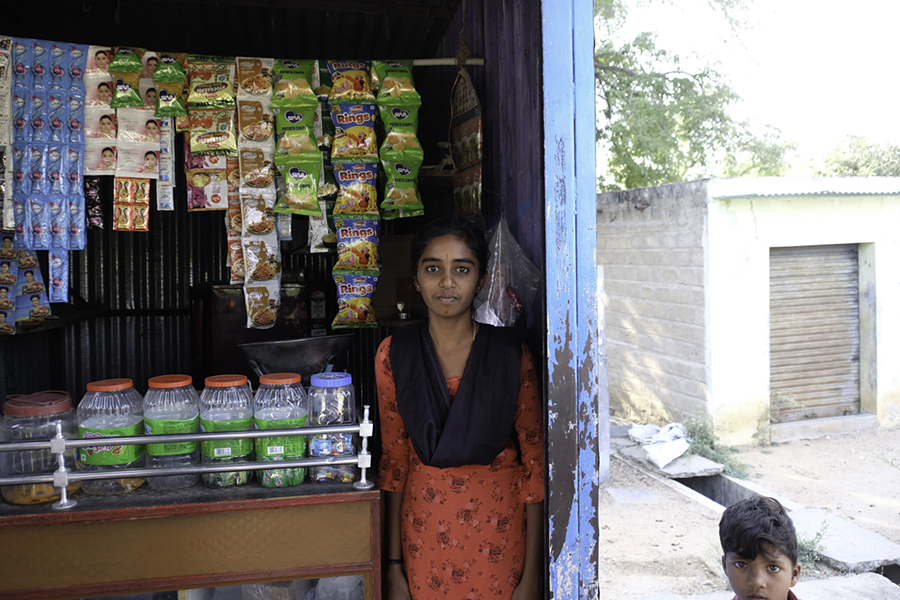
Teenager standing by her family's small shop.

by Meera Subramanian

Man leads his bullock cart laden with hay along road with large power pylons and solar beside it.

by Meera Subramanian

The massive project was up and running in under four years, but now—four years since then—village roads and schools and other promised development projects are still limping along.

Village man with turban walks on road that is being built, a frontloader with gravel and a cow in the background

by Meera Subramanian

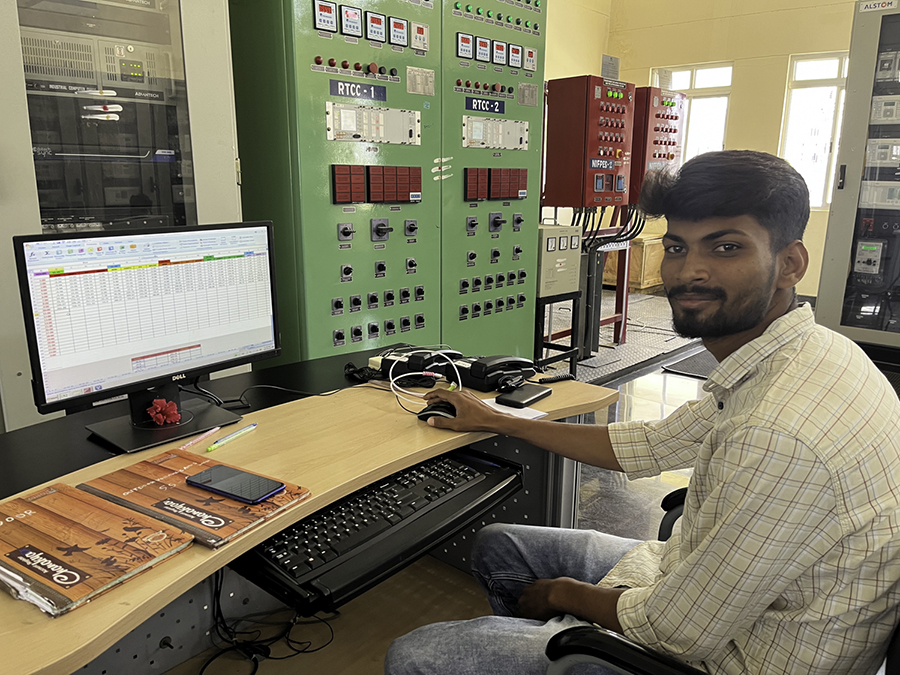
And yet, as I stood in a substation, I marveled at how clean this energy is. Is it possible to make these massive installations work for the locals who find them on their homegounds?

Engineer in Pavagada Solar Park substation, sitting by his computer adorned with a flower.

by Meera Subramanian

Thanks to the incredible editor at the New Yorker Daniel A. Gross, and the photographer @SupranavDash, whose photographs are featured in the piece. Huge appreciation to journalist Elizabeth Mani in Bengaluru for her translation and reporting assistance.

#India #solar #renewable #energy #climatechange #climatecrisis #climateemergency #renewableenergy #globalwarming #solarpanels #green #nature #solarpower #environment #cleanenergy  #climate #solarenergy#greenenergy #sustainability #design #earth #sun #environmentaljustice #justtransition #livelihood

Read the story here.

Filed Under: climate change, elemental india, journalism Tagged With: india, just transition, renewable energy, solar, The New Yorker

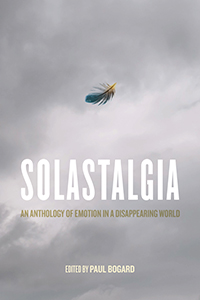
Solastalgia: An Anthology of Emotion in a Disappearing World

February 14, 2023 By meerasub Leave a Comment

Cover of Solastalgia with a feather floating in a grey sky.34 writers. One planet in flux. How are we processing the changes underfoot and overhead? Join me and other educators, journalists, poets, and scientists as we try to put words to the experience of what Australian philosopher Glenn Albrecht coined “solastalgia”… “the homesickness we feel while still at home.” Edited by Paul Bogard, author of The End of Night and many other books.
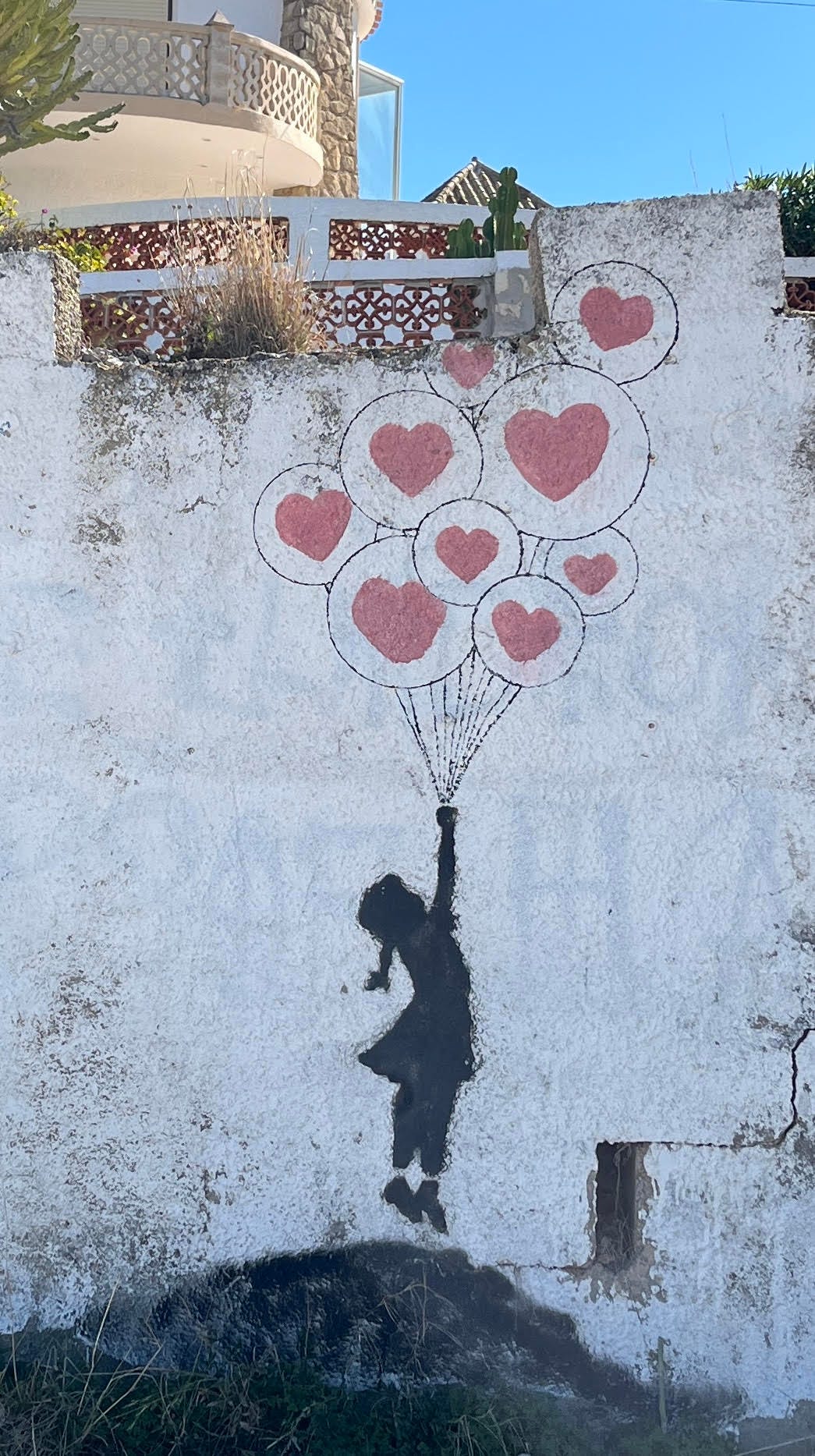
Perfectly fitting to release it today. A valentine for the planet. <3

Find your copy today. 


Filed Under: anthologies, climate change, News Tagged With: anthology, climate change, climate crisis, eco-grief, Paul Bogard, solastalgia

person place thing

July 2, 2022 By meerasub Leave a Comment

Randy Cohen likes to learn about people slant. Instead of asking them about what they do, etc., etc., he asks them about a person, a place, and a thing that are meaningful to them. It was a pleasure to talk with him about girls in India, maps of Texas, and falcons over Cape Cod. Person Place Thing from Northeast Public Radio’s WAMC was produced with Orion magazine. Have a listen here.

Filed Under: audio, climate change, elemental india, events, journalism, Orion

The World As We Knew It

June 15, 2022 By meerasub Leave a Comment

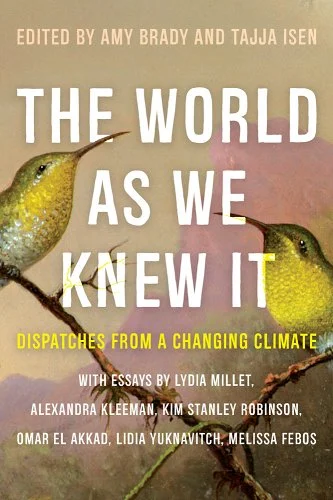
Book cover of The World As We Knew It

The world is changing, in a fast and furious way. The World as We Knew It: Dispatches from a Changing Climate is a new anthology chronicling that change in real time. Co-edited by Amy Brady (now the Executive Director of Orion magazine) and Tajja Isen (author of Some of My Best Friends: Essays on Lip Service and editor for Catapult Magazine) brought together an amazing roster of contributors including Elizabeth Rush, Emily Raboteau, Mary Annaïse Heglar, Alexandra Kleeman, Kim Stanley Robinson, Omar El Akkad, Melissa Febos, and so many others. In my essay “Leap,” I wrote about ticks, and the love child of Poseidon and the earth goddess Gaia, and summer rituals, and more:

Now, I can’t stop the calculus in my head as I interact with the places that once offered solace. This is what climate change is. It’s what it does to the psyche, along with the body, and the places we love. It’s nearly invisible until the moment something startles you into attention. A creeping catastrophe, waiting with arms outstretched to deliver a suffocating embrace. And once the knowledge is gained, there is no unknowing it. You are no longer climate blind. You see and cannot unsee.

From the starred review from Publishers Weekly: “The pieces create a moving mix of resolve and sorrow, painting a vivid picture of an era in which ‘climate change is altering life on Earth at an unprecedented rate,’ but ‘the majority of us can still remember when things were more stable.’ The result is a poignant ode to a changing planet.”

Filed Under: anthologies, climate change Tagged With: Amy Brady, anthology, Catapult, climate change, Tajja Isen

The World As We Knew It

June 12, 2022 By meerasub Leave a Comment

Amy Brady and Tajja Isen have gathered together writers to explore how they’re living in a world changing in a warming climate.  I’m honored to be one of the nineteen, which includes Lydia Millet, Kim Stanley Robinson, Omar El Akkad, Lidia Yuknavitch, Melissa Febos, and many more. Join Amy, Tajja and fellow contributor Alexandra Kleeman to celebrate the launch at this Zoom kick-off event on Wednesday, June 15 at 7:00 p.m. ET. Register here.

Update: here’s the video of the event, if you’d like to watch it:

powered by Crowdcast

And here’s a lovely shout out from Lily Houston Smith over at The Atlantic:

Near the end of her essay, Subramanian writes, “We have returned to the times of mythology, and we need new stories to survive.” The World as We Knew It is an attempt to write these stories, to hold a mirror up to our lives at a crucial moment in our collective history, and reflect the slew of compounding, often conflicting fears that characterize it. In many ways, storytelling while on the precipice of global devastation is no different from storytelling at any moment in our history. Delve into ancient myths and you’ll quickly realize that the human condition has always been marked by an uneasy awareness that even the most rigid systems are subject to the whims of fate.

Filed Under: anthologies, climate change, events

Strange Gardens

October 22, 2021 By meerasub Leave a Comment

By Alicja Wróblewska

It was a pleasure to explore Alicja Wróblewska’s art for the latest issue of Virginia Quarterly Review. Here’s how “Strange Gardens: An Effervescent Vision of Plastic’s Impact on the Ocean” begins…

What is beauty for? What is its source? Polish artist Alicja Wróblewska thinks about such things as she fashions fanciful sculptures, snaps photographs, and creates collages both analog and digital to explore the impact of plastics on ocean health. With a background in political science and commercial photography, Wróblewska lives in the tense space between the consumer societies we inhabit and the wreckage they leave behind.

She’s slipped away from work into the sunlight of a Warsaw park to speak to me, her long brown hair lifting in the wind as she walks with her phone, seeking…

Read the rest here.

Filed Under: Anthropocene, climate change, journalism, photography, plastics Tagged With: Art, climate change, ocean, ocean acidification, plastics, pollution, Virginia Quarterly Review

Introducing…the Religion & Environment Story Project

June 7, 2021 By meerasub Leave a Comment

Here’s a kitchen-table story for you. I’m a science journalist who has been thinking about how humans relate to their environment for decades. I’m also an atheist … who fell in love with a religious studies professor.

While I’d be off on reporting trips from West Virginia to India, Stephen Prothero would be teaching religious literacy to students at Boston University. Over the years, our kitchen-table conversations revealed how much our two arenas rarely overlap and how much is lost because of the divide.

We wanted to try to reconcile the split between these siloed beats of religion and the environment so, with funding from the Arthur Vining Davis Foundations and a base at Boston University, we launched the Religion & Environment Story Project, or RESP.

Our goal is to bridge the divide between religion and science reporting, and to promote new thinking and new narratives that will inform and educate the public, especially on the climate crisis.

In May, RESP partnered up with the Society of Environmental Journalists and the Religion News Association for a webinar entitled “Missing Stories: Uncovering Environment-Climate-Religion Connections.” Watch the whole event, or read the summary in this piece in SEJ News.

Part of this inaugural event was to announce two great opportunities to help journalists find these missing stories. The shared deadline is fast approaching.

  • SEJ’s Fund for Environmental Journalism is offering story grants of up to $5,000 for stories that cover religion and the environment.
  • RESP is offering a paid 6-month fellowship open to journalists, editors and public-facing academics who are producing — or want to learn how to produce — stories at the intersection of religion and the environment.

Deadline for both the story grants and the fellowship is June 15. Apply now and spread the word to others who might be interested.

For more information on these opportunities — and on stories that cut across religion, spirituality and climate change, follow RESP on Twitter at @ReligionEnviro.

Filed Under: climate change, journalism, News, religion, RESP Tagged With: fellowships, grants

climate stories we tell ourselves

May 15, 2021 By meerasub Leave a Comment

There has been an explosion of podcasts on the climate crisis of late, but one has been at it for more than a decade: ClimateOne. It was great to talk with host Greg Dalton about the stories we tell ourselves about the changing planet and what I heard when I was on the road for my series on conservative perceptions of climate change for Inside Climate News in 2017-18. The other half of the show is Greg in conversation with Nathaniel Rich, author of the new book Second Nature: Scenes from a World Remade.

Have a listen here.

Filed Under: audio, climate change, InsideClimate News, journalism Tagged With: ClimateOne, Greg Dalton, Nathaniel Rich, podcast

Climate Stories We Tell Ourselves

May 7, 2021 By meerasub Leave a Comment

How do we connect across the climate divide? In this episode of the Climate One podcast, Greg Dalton explores the answer with Nathaniel Rich, author of the new book Second Nature: Scenes from a World Remade, and yours truly.  Have a listen here.

Filed Under: audio, climate change, InsideClimate News, journalism Tagged With: ClimateOne podcast

The Nature of Plastics

March 5, 2021 By meerasub Leave a Comment


Artwork: Steve McPherson


EARLY IN 2004, a buoy was released into the waters off Argentina. Half of the buoy was dark and the other light, like a planet in relief. The buoy sailed east, accompanied by the vastness of the ocean and all the life it contains, the long-lived great humpback whales with their complex songs that carry for miles, and the short-lived Argentine shortfin squid. Along the way, many thousands of minuscule creatures were colonizing this new surface, which had appeared like a life raft in the open waters of the South Atlantic.

The researchers who’d dropped the buoy followed its movement in hopes of learning more about ocean currents than generations of science and sailing history had revealed. They watched the buoy float into the wide-open ocean between South America and Africa, those twin coastlines that struck me, as I gazed at them on the pull-down map in first grade, as two puzzle pieces that once linked. They surveilled its movements by GPS. Eighteen months later, the signal ceased. Silence from the satellites.

The buoy continued along the currents of the South Atlantic, free from surveillance, sheltered and shocked by sun and clouds and storms overhead. It was likely molded out of a thermoplastic polymer called acrylonitrile butadiene styrene, or ABS, which, like most plastics, was crafted from the extracted remains of long-ago life-forms. ABS was engineered in the lab to endure—rigid, resilient, capable of withstanding all that being let loose at sea may foist upon it.

All plastic begins in a factory. That much we know. But where it goes next remains poorly understood. Only 1 percent of the plastic released into the marine environment is accounted for, found on the surface and in the intestines of aquatic animals. The rest is a little harder to measure. Some presumably washes back ashore. An untold amount settles, sunk by the weight of its new passengers. (One study found four times more plastic fibers in the sediment of the deep-sea floor than on the surface of the ocean.)

And some, like the buoy, just keeps drifting along.

***

I have spent thirty years fixated on environmental issues, spawned during my own oceanic migration in the fall of 1989….

Read the rest at Orion Magazine.

Filed Under: Anthropocene, climate change, journalism, Orion Tagged With: anthropocene, Art, cape cod, lego, ocean, Orion, plastics, sea

  • « Previous Page
  • 1
  • 2
  • 3
  • 4
  • Next Page »

Follow Meera on Substack

for the very occasional bit of news.

Categories

Tags

Alaska anthology A River Runs Again Art awards birds birds of prey books book tour Cambridge cape cod climate change conservation death dissent Elemental India energy events Fulbright india InsideClimate News journalism kenya Knight Science Journalism Nature New York City organic farming Orion peregrine falcon pesticides photography politics pollution environment Princeton University radio readings religion reviews science Society of Environmental Journalists teaching travel USA vulture water

Archives by Month

Connect

  • Bluesky
  • Facebook
  • Instagram
  • LinkedIn

© 2026 Meera Subramanian. | All Rights Reserved. | Mastodon | Website design by Sumy Designs, LLC

Green_14