Meera Subramanian
  • Home
  • Books
  • Writing
  • Bio
  • Blog
  • Photos
  • Events
  • Speaking
  • Contact

the burning garbage heap

February 29, 2016 By meerasub Leave a Comment

2016.02.07Deonar-151

I thought the air would improve as I traveled from New Delhi to Mumbai. Then the dump caught on fire. Here’s a dispatch for The New Yorker:

From above, the sprawling trash heap of Deonar (pronounced “Devnar”), in eastern Mumbai, resembles a large left ear. A curving stream traces its outer edge, feeding into Thane Creek, the body of water that separates the city from the Indian mainland. On the opposite side of the ear, where the head would be, is the teeming neighborhood of Shivaji Nagar. In late January, Deonar erupted in fires. An arrowhead-shaped plume of smoke floated up from the three-hundred-and-twenty-six-acre site, carried aloft by northeasterly winds, and blanketed Mumbai. For six days, the city’s  air-quality rating remained at “very poor,” with measurements of particulate matter exceeding safety standards by a factor of five. Seventy schools were closed, and hospitals were flooded with patients suffering from lung and heart ailments. (Air pollution contributes to more than six hundred thousand premature deaths in India every year.) The acrid smoke burned the eyes and throats of people from the Gateway of India, a monument at Mumbai’s southern tip, to Chembur, fifteen miles away, near the dump. Locals took to calling the neighborhood Gas Chembur.

Read the rest at The New Yorker.

Filed Under: journalism Tagged With: air pollution, compost, fire, garbage, india, Mumbai, recycling

New Delhi car ban yields trove of pollution data

February 22, 2016 By meerasub Leave a Comment

2016.01.17Delhi-21Subramanian

photo by Meera Subramanian

I landed in Delhi at the tail-end of an experiment to limit the number of vehicles on the road. Here’s a piece in Nature about how researchers leapt on the opportunity to study the effects. 

New Delhi may be the world’s most polluted city, but it’s making an effort to relinquish that title. With pollution from particulate matter at potentially lethal levels early last December, city officials took a drastic step: they announced that they would temporarily restrict the use of private vehicles by allowing owners to drive only on alternate days, based on the sequence of their number plates.

The initial results of that 15-day trial, which began on 1 January, are now in.

Read the whole piece here.


Filed Under: journalism Tagged With: air, air quality, india, Nature, New Delhi, pollution, pollution environment, research, science

Amazing things happen… (in the most polluted city on earth)

January 25, 2016 By meerasub Leave a Comment

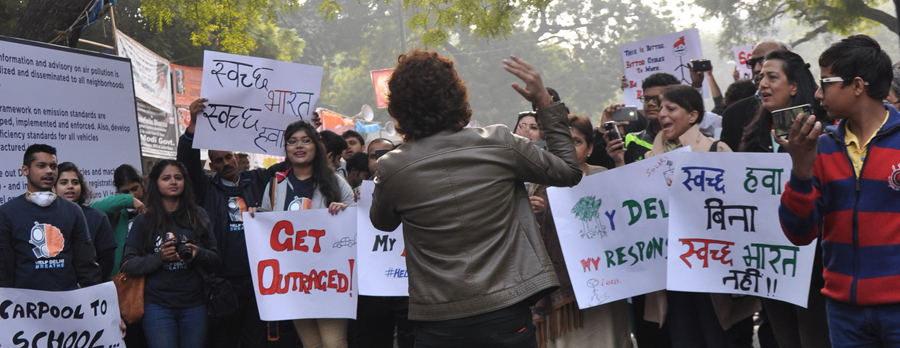
#HelpDelhiBreathe protest. Photo by Meera Subramanian

#HelpDelhiBreathe protest. Photo by Meera Subramanian

In which I report for Vice magazine from New Delhi, which the WHO determined to be the most polluted big city on the planet. It sure feels like it. 

New Delhi is choking on its own air.

On January 1, India’s capital made an attempt to address its status as the world’s most polluted big city, according to the World Health Organization, by implementing a temporary “odd-even scheme” for automobile use. Private vehicles could only be driven on days that matched their plate number or risk a $30 fine. There were loads of exemptions, including the two-wheelers that dominate the roads, hybrids, and cars driven by VIPs or women (with no men in the vehicle). There were jokes about “men riding in the dickey” — the trunk — of cars and more serious conversations about immediately buying a second car to get around the restrictions. But after the 15-day plan came to end, overall sentiment was high as researchers rushed to declare it a success or failure.

Read the rest at Vice.

Filed Under: journalism, travels Tagged With: air, energy, india, photography, pollution, science, travel

#VQRTrueStory

December 8, 2015 By meerasub Leave a Comment

Ashish Ajuta

Last year, at the Boston University Narrative Arc conference (one of my favorite of these journo gatherings), Jeff Sharlet, Neil Shea & Darcy Courteu sat on a stage in front of a not-so-large audience, talking about an Instagram revolution. They were not looking to share food porn, nor adorable pictures of themselves or their offspring or their feline companions. They were journalists who observe their world, and whose work can sometimes take them to distant worlds (whether Iraq in midday or a New England Dunkin Donuts at 3 am), and they watch with a close eye. They listen with a close ear. But what to do with these stories, how to share the stories of the lives, loves, losses they encountered? Answer: iPhone camera. Visceral quick writing. Way more characters than Twitter allows. All the stuff that doesn’t fit into the story you were sent to get. I was inspired, but not quite to action. Til now. Happy to jump onto Jeff & Neil’s platform and with the help of editor Paul Reyes over at Virginia Quarterly Review (one of my favorite publications: solid, serious and sumptuous all), kick off ‪#‎VQRTrueStory‬.

My week takes you to the cotton fields of Punjab, her hand upon mine. Buries your nose in live soil and let’s you feel the heat of a wood fire, the smoke in your lungs. It sets you at the feet of a girl in Bihar, who is reaching, reaching up.

Here’s the whole series in VQR.

We’re recruiting.

Filed Under: A River Runs Again, elemental india, journalism, photography Tagged With: A River Runs Again, Elemental India, Instagram, photography, Virginia Quarterly Review

the age of loneliness

September 16, 2015 By meerasub Leave a Comment

“Ten years ago, I went into the woods I loved to decide whether or not to leave them….”

Ian Davis, Deliberations, 2015. Acrylic on panel, 20 x 16 in. © Ian Davis. Courtesy the artist and Leslie Tonkonow Artworks and Projects, New York.

Ian Davis, Deliberations, 2015. Acrylic on panel, 20 x 16 in. © Ian Davis. Courtesy the artist and Leslie Tonkonow Artworks and Projects, New York.

The brilliant magazine Guernica just came out with a special issue on the Boundaries of Nature. I think about this a lot, perhaps too much. And when the editors approached me about contributing I’d just returned from a trip to my old beloved forest in Oregon, and to a gathering of EcoModernists in Sausalito, and still my mind spun back to clutching falcons in New York City. All wove together into this essay. Thanks, Guernica.

Read it here.

Filed Under: journalism Tagged With: boundaries, EcoModernism, Guernica, journalism, Nature, New York City, Oregon, rewinding

wnyc: bringing India back from the brink

September 12, 2015 By meerasub Leave a Comment

photo 1

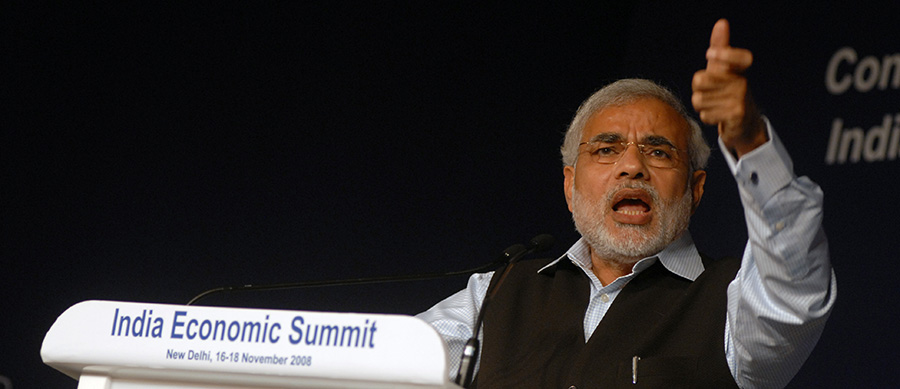
It was with great delight that I entered into the studios of WNYC on Varick Street to sit down and talk with Arun Venugopal, who was guest hosting the Leonard Lopate Show. We talked about the costs of the Green Revolution, of Hindu priests who asked, “What is your duty?” to a farming family considering going organic, of holy waters. Our conversation ended too quickly, and I didn’t quite get to elaborate on my answer to his last question, about the direction PM Modi is taking the country. I said Modi has a choice. What I felt like I didn’t make clear enough is that he can develop India at the expense of the environment, the direction he seems to be heading now, or choose to tap into the exploding number of opportunities to develop in a more sustainable way, providing a model for the world. I’m rooting for the latter, and met the people in India who hope so too.

Listen to the full interview here.

Filed Under: A River Runs Again, elemental india, journalism, News Tagged With: A River Runs Again, book tour, Elemental India, india, New York City, organic farming, pesticides, radio, religion

the pluck

July 29, 2015 By meerasub Leave a Comment

2015.07.27Pluck-79

About 35 years ago, when most ecologists were still musing about how we’d deal with the ice age that models then showed was on its way, young scientists Gus Shaver, Terry Chapin and John Hobbie set up camp on an old abandoned airstrip at Toolik Lake on the North Slope of Alaska. Scientists tinker and so when they gazed at this wild and beautiful yet nutrient-poor place, bereft of nitrogen and phosphorous found in the temperate regions of the globe, they wondered what might happen [Read more…]

Filed Under: journalism, travels Tagged With: Alaska, science, Toolik

toolik-bound

July 24, 2015 By meerasub 2 Comments

2015.07.23Toolik-28

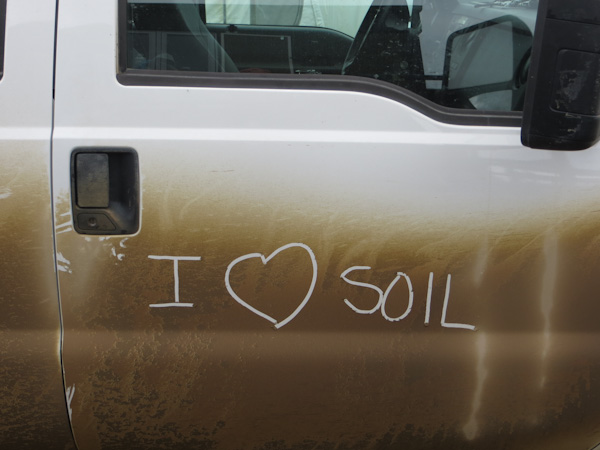
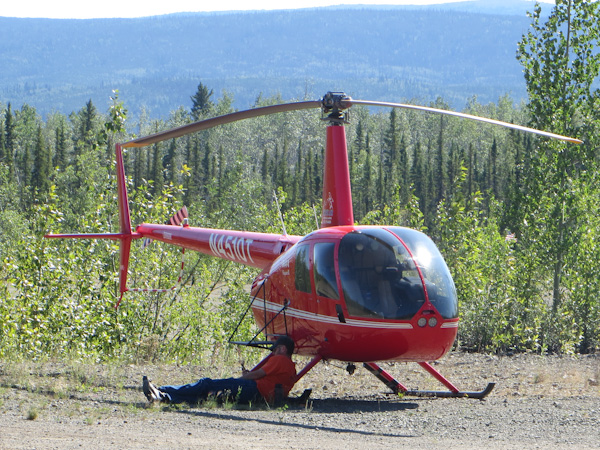
Nope, that wasn’t our helicopter. That would have been too quick. Instead, a fine crew cab pick up truck driven by Ben Tucker of University of Alaska Fairbanks carried us safely north to Toolik Field Station yesterday over the course of about ten hours. [Read more…]

Filed Under: journalism, photography, travels Tagged With: Alaska, MBL, science

getting my bearings straight

July 22, 2015 By meerasub 3 Comments

2015.07.22Fairbanks-6

Strolling through Fairbanks, Alaska is the Chena River, all glassy and glorious beneath a sky miraculously scrubbed of smoke from the fires that clouded it a day before I arrived. A visit to Alaska has been a wish for quite a long time and it’s great to finally be here on my way to Toolik Field Station as a Logan science journalism Arctic fellow with the Marine Biological Lab (MBL).

The first part of the MBL fellowship took place [Read more…]

Filed Under: journalism, photography, travels Tagged With: Alaska, Arctic, MBL, travel

deadly dinners

May 28, 2014 By meerasub

Cooking on an Envirofit improved cookstove. Photo by Meera Subramanian

Cooking on an Envirofit improved cookstove in Tamil Nadu. Photo by Meera Subramanian

I spent a good chunk of last winter stepping into women’s kitchens in rural India to see what was cooking. Rice. Rotis. Dal. Curries. But regardless of the meal, most rural homes were cooking over open fires. With the incredible support of a Fulbright-Nehru fellowship, I was working on a book about environmental stories across India, including doing research and reporting about what — if anything — was helping women move away from the polluting form of cooking with biomass. Today, the journal Nature published my piece that tells a little bit about what I found. Deadly Dinners (a heavy-handed but unfortunately devastatingly accurate title) begins:

After returning from her nine-and-a-half-hour shift as a security guard, Savita Satish Dadas begins plucking fenugreek leaves from their stems for dinner. She and her two children, along with three of their cousins, gather in a shed-like structure next to their house in the Satara District of Maharashtra, India. As goats and cows settle in for the night a few metres away, Dadas and the children sit down on a packed dirt floor around the family hearth.

Whisps of smoke rise up from their chulha, the Indian name given to a traditional cooking-stove fuelled by wood and other organic matter often gathered from the countryside. Dadas’s stove, like several of her neighbours’, is sculpted out of clay. But many make a rudimentary three-stone fire — a triangle of elevated points to support a pot — that humans have used for millennia. Dadas feeds roughly chopped logs into the stove and her hands shape moistened flour into bhakri bread, the rhythmic movement illuminated by the flickering flames.

With this simple daily act, Dadas shares a connection with more than one-third of the world’s population, the three billion people who depend on solid biomass fuels — such as wood, animal dung, agricultural waste and charcoal — or coal for their cooking needs.

[Read more…]

Filed Under: A River Runs Again, elemental india, Fulbright, journalism, travels Tagged With: A River Runs Again, air quality, cookstoves, Elemental India, energy, environment, india, pollution environment

  • « Previous Page
  • 1
  • …
  • 3
  • 4
  • 5
  • 6
  • 7
  • …
  • 9
  • Next Page »

Follow Meera on Substack

for the very occasional bit of news.

Categories

Tags

Alaska anthology A River Runs Again Art awards birds birds of prey books book tour Cambridge cape cod climate change conservation death dissent Elemental India energy events Fulbright india InsideClimate News journalism kenya Knight Science Journalism Nature New York City organic farming Orion peregrine falcon pesticides photography politics pollution environment Princeton University radio readings religion reviews science Society of Environmental Journalists teaching travel USA vulture water

Archives by Month

Connect

  • Bluesky
  • Facebook
  • Instagram
  • LinkedIn

© 2026 Meera Subramanian. | All Rights Reserved. | Mastodon | Website design by Sumy Designs, LLC

Green_14