Meera Subramanian
  • Home
  • Books
  • Writing
  • Bio
  • Blog
  • Photos
  • Events
  • Speaking
  • Contact

a measure of gratitude

November 13, 2024 By meerasub Leave a Comment

Barczyk
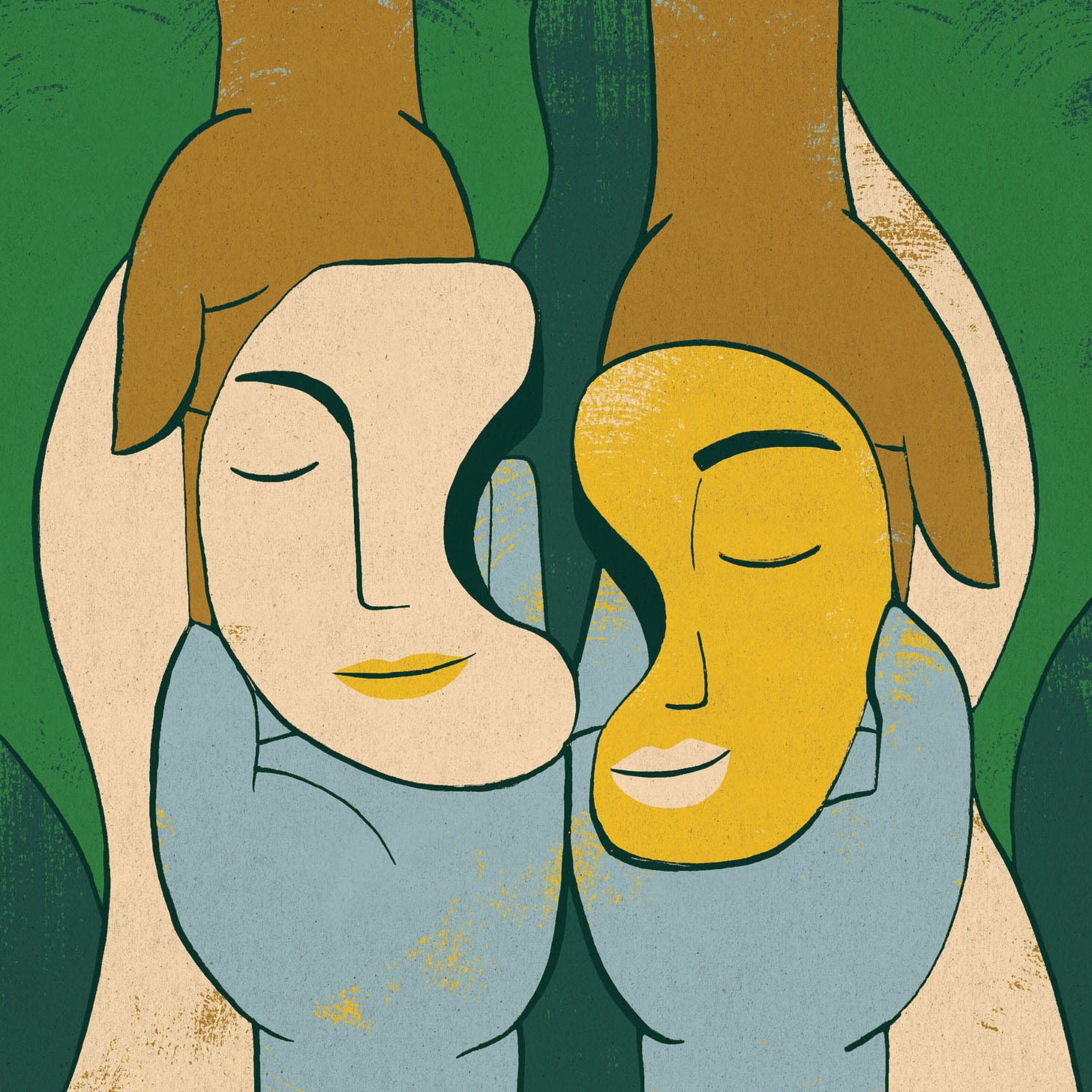
illustration by Hanna Barczyk for VQR

Not all stories need to be told. I held on to one closely since 2018 and then, last year, something shifted. Maybe it was hitting a five-year mark. Maybe it was being immersed in the writerly world of Sewanee School of Letters, where most summers I teach creative nonfiction atop the verdant Southern Cumberland Plateau in eastern Tennessee, drowned in cicada song. In the classroom, I was asking my students to take risks, to be brave, to put blood on the page. Could I?

And so I began to pull from journals and letters, audio recordings and pictures. All to track the arc of a friendship that began, well, here’s how the piece that emerged begins:

We were two women on either side of thirty throwing punches at one another’s faces in a concrete stairwell abuzz with florescent light. Our instructor showed us how to make a fist (thumbs on the outside), take aim, and put our weight into the shot. I threw punches at her first. She was younger than I was by a handful of years and just as racially ambiguous. Then it was her turn, and I jerked my head to the side to dodge impact, heard the whoosh of fist through air. Fight Club for girls. New York University. Coles Rec Center, 2004. Fourteen years before the surgery.

“A Measure of Gratitude,” just published in the fall issue of the Virginia Quarterly Review, is about the power of female friendships and the burden of gratitude. It’s about sickness and health. The prospect of dying and the act of living. It’s about seeking and hoping and letting go and finding. There is cancer, the swapping of body parts, Peter Singer, the Bhagavad Gita, and bluefish, cooked up with cracker crumbs as new love blooms.
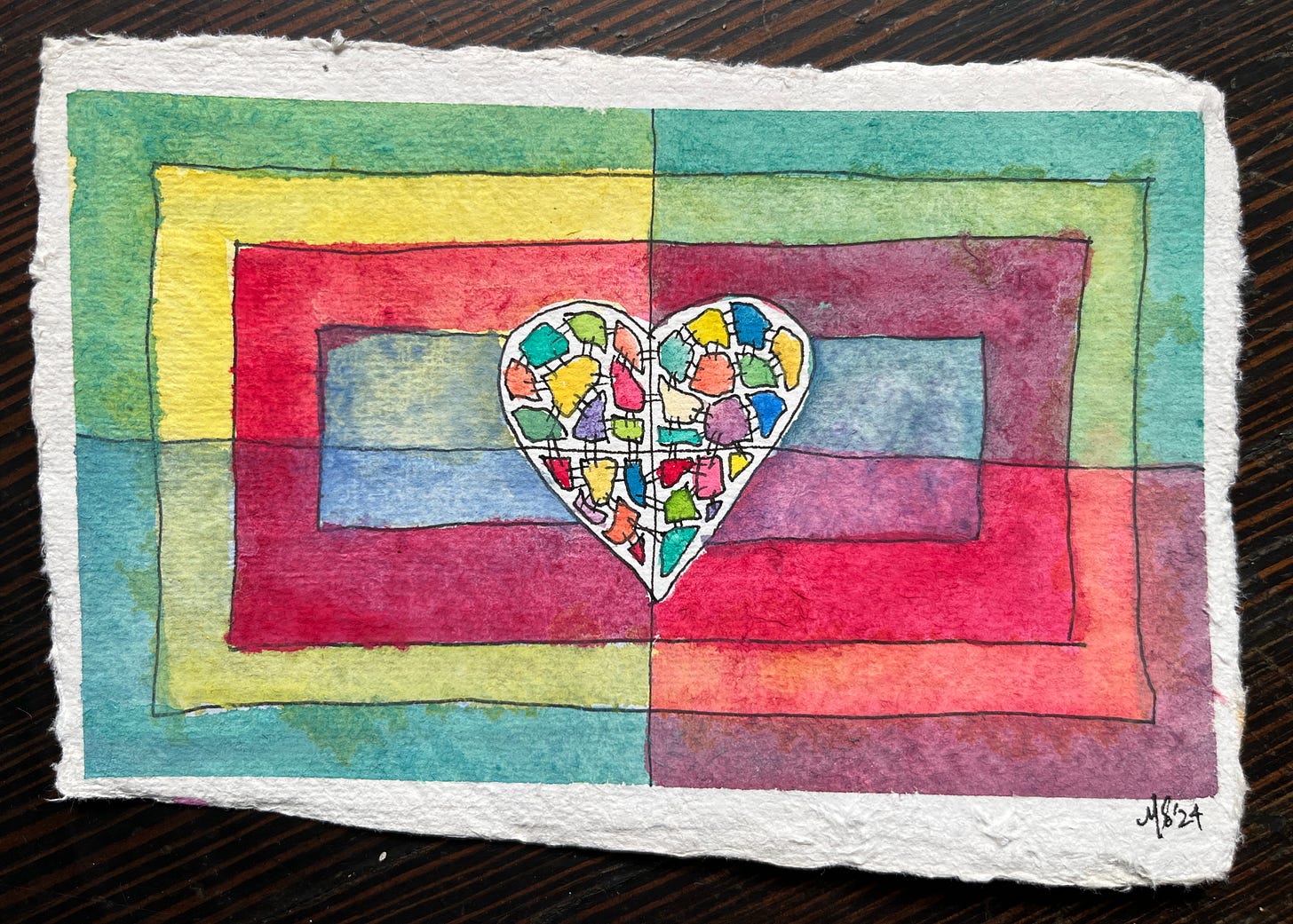
What would you sacrifice for a friendship? This Peregrinations post is public so feel free to share it.

And in some strange way, it’s about how to respond to events like what happened last week at the American ballot box and what will happen in the years to come. How unraveling on the outside can sometimes lead to clarity within. Another snippet from the piece:

Michael waited for my answer. I considered my deepening cynicism, my daily grief. We had a madman scheming in the White House. People were scaling up their assaults—on fellow humans, other species, entire ecosystems, the planet. The world I loved was aflame and the fire spreading. I looked at Michael. “I want to see more good in the world,” I heard myself telling him, “so why not do something…good?” It suddenly seemed achingly simple.

I hope you’ll make a nice cup of tea or pour a glass of wine, put your phone into silent mode, and take the time to read “A Measure of Gratitude.” Maybe afterwards, you’ll decide to dance, or kiss someone, or call up an old friend.

Thanks for reading Peregrinations! Subscribe for free to receive new posts and support my work.

It was a pleasure and honor to once again work with the brilliant editor Paul Reyes at VQR, an ad-free, just-shy-of-a-century-old, award-winning literary magazine that I hope you’ll consider subscribing to so it may exist for another ninety-nine years. And the commissioned illustration by artist Hanna Barczyk is just perfect.

Not all stories need to be told. But, taking a deep breath, I’m glad this one is finally out there.

thanks for reading,

~meera

{Subscribe to my Substack for more of this}

Filed Under: essays, journalism, memoir, peregrinations, Substack Tagged With: applied philosophy, cancer, female friendship, friendship, kidney donation, kidneys, love, organ, organ donation, transplant, writing life

the art of being present

November 13, 2024 By meerasub Leave a Comment

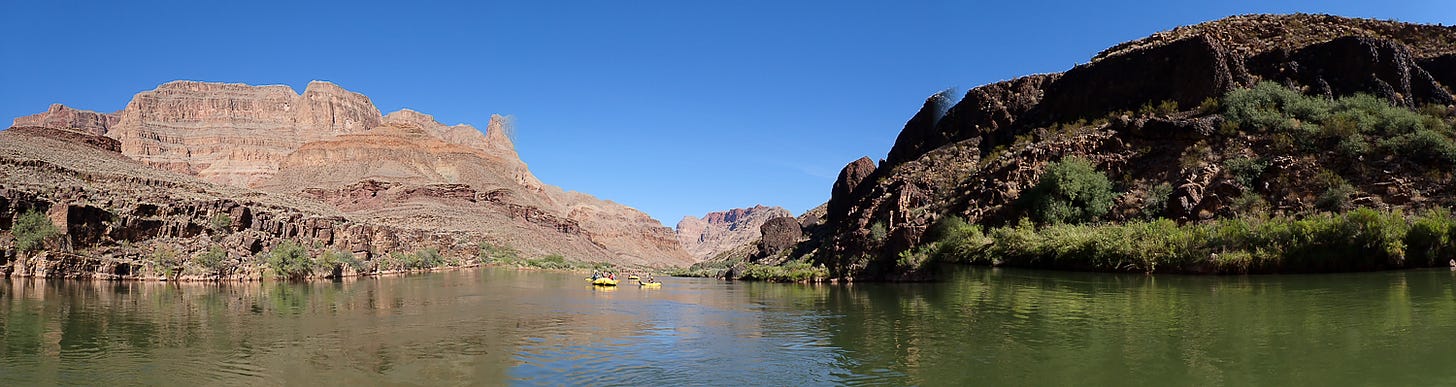
panorama of Colorado River with two rafts in view

by Meera Subramanian

Three rounds in the laundry and there’s still sand in my socks. I like the grit that remains. It’s been over a week since we took out from a bucket list rafting trip down the Colorado River. I adventured there with my husband and his eldest, 226 miles of the river’s reach, from Lee’s Ferry to Diamond Creek, traveling into the depths of what this great earth holds, a truly Grand Canyon.

New layers of rock revealed themselves to us each day as our seven boats moved downstream. Six oar boats and one paddle boat. Some of us slipped into kayaks at times. Us twenty guests in a continual rotation between boats, sometimes paddling, deep strokes into deep green cold water, or relaxing through some stretches, or holding on for dear life as we crashed through the rapids of Granite, Horn, Lava Falls. We pulled onto beaches for hikes into slot canyons, or to go swimming in the Little Colorado River, a tributary with otherworldly pastel blue waters. We passed through sacred lands. All of it felt sacred. I kept feeling like I needed to ask permission. I did, and felt (hope) it was granted. Navajo, Havasupai, Hualapai. And something deeper and more eternal, before even those people arrived, when this place was sea, inhabited by sponges, crinoids, brachiopods, lava flowing and transforming, land masses moving.

[Read more…]

Filed Under: drought, peregrinations, Substack, travels Tagged With: geology, Grand Canyon, river rafting, rivers, silence, tech

Enter…Substack.

November 13, 2024 By meerasub Leave a Comment

Hello, friends and future friends.

Welcome to Peregrinations

I write with an invitation. I hope you’ll subscribe and join me for my new Substack, Peregrinations, a place for those who love the natural world. Whose hearts crack a little at its beauty and wonders, and also at its destruction. Those who want to understand how this glorious and broken planet works, and how we might help make it work better, for everyone. I’ve been covering the environment as a journalist for nearly twenty years, writing for magazines and newspapers around the world, as well as a book about how ordinary Indians are facing environmental crises. Check out my About page for more. But Peregrinations is something else….

The world gets bigger, and smaller, all at the same time.

But our hunger for connection continues unabated. I used to amass stacks of letters, pen on paper. Then there was a zine (rrrrl girlz!). Then a blog. Then Twitter, which felt in the early days like the temporary autonomous zone that it could have been, but is now a dark hole of misery run by a man who might actually be a machine. So let’s try coming together here, on Substack. You. And me. An itty bitty way to stay connected. For now, it’ll be occasional and free.

What to expect:

  • latest pieces and unpublished oldies
  • advance notice of classes and events
  • recommended readings
  • craft tips on creative nonfiction and publishing
  • photos
  • outtakes from reporting trips that don’t quite fit the final piece, but carry a story of their own
  • and birds, likely raptors, cutting through the sky, leaving a slipstream all their own


From the shelf of inspiration in my office. Art by Danica Novgorodoff.

Writing this Warming World

From climate change to climate catastrophe to existential crisis, the vocabulary of our changing planet is quickly escalating in urgency. Writers are responding. Join me this November as I lead an Off Assignment Master Series class. Each week we’ll have a guest author join us, including the incredibly talented writers Emily Raboteau, Elizabeth Rush, J. Drew Lanham & Helen Macdonald. Registration is open now. Join us live or asynchronously. Scholarships are available, and just reach out to me if you want a discount code. I have a few left to give out. Register for Writing this Warming World here! And please spread the word to anyone else who might be interested.

Summer of Great Books

The summer of 2024 was a summer of superb reading experiences. Just a few of my favorites:

  • Two-Step Devil by Jamie Quatro, (I have the good fortune of teaching with Jamie at Sewanee School of Letters each summer, which is when she placed an advance copy in my hands). The New York Times called it “theologically avant-garde and emotionally supple.” I couldn’t agree more. The story of the outsider artist and the girl he’s trying to save was multi-layered story of good and evil and intentions and escape. A page-turner.
  • Orbital by Samantha Harvey transformed my world when I read it in the Appalachian woods this summer in Tennessee, now seeing my surroundings from the elevated vantage of the few who look down on us from the International Space Station. Samantha zoomed in to Jamie Quatro’s fiction class, which I sat in on, and she is a delightful, delighted human. Orbital is now shortlisted for the Booker Prize. Also, read this wonderful review by James Wood in The New Yorker and just get lost in the videos…
  • The Serviceberrry by Robin Wall Kimmerer. I’ve got a review coming up in Scientific American. More soon!
  • Reboot by Justin Taylor. Justin is the director of the Sewanee School of Letters and a voracious collector of ideas gleaned from music and gaming and esoteric religions and more. It all comes together in this romp of a novel. You can find him here on Substack.
  • Love is a Burning Thing by Nina St. Pierre is a brilliant first book by Nina, who I cam to know when we selected her as one of our Religion & Environment Story Project fellows. She is a captivating person, and this book shows how being the daughter of a loving but struggling and seeking mother—and the survival Nina had to find for herself—helped make her who she is.
  • Prophet by Helen Macdonald and Sin Blaché. I toppled for Helen Macdonald’s writing with H is for Hawk. This is completely different and completely wonderful. A queer sci-fi novel about using nostalgia as a method of war. I couldn’t put it down.

Vote!

When Joe Biden withdrew from the US presidential race this summer, it seemed like the biggest story in the world, but something else happened that Sunday. It was the hottest day in recorded history, followed by another record-breaker. Expect more. Now the race is between Donald Trump and Kamala Harris, and the difference between the two candidates couldn’t be more stark. Read this piece from Yale Climate Connections, then read science journalist Michelle Nijhuis’s Substack piece on reading through Project 2025. Register. Vote. Act.

Socials:

I’m done with Twitter. Please come find me at Bluesky: @meerasub.bsky.social and Instagram: @meerasub.   But more than anything, I hope you’ll SUBSCRIBE!

Hope to see you back here, soon!

[Read more…]

Filed Under: journalism, Substack

Covering Climate Now Award

July 10, 2024 By meerasub Leave a Comment

Super honored to join so many other amazing journalists honored with Covering Climate Now Awards yesterdayy! Solutions! Thanks to the great editors at The New Yorker, photographer Supranav Dash & local journalist Elizabeth Mani, the team behind the story—India’s Quest to Build the largest Solar Farms—about the world’s third largest solar farm, located in Karnataka, India.

Here’s what the judges said:

Through deep interviews with peanut farmers, school teachers, government officials, and vulnerable Dalit women — who’ve lost access to farmland they cultivated for generations — Subramanian creates a textured examination of the tradeoffs and power imbalances that the green transition might portend. “Fascinating,” judges said, Subramanian’s work quickly hooks audiences, and her “lovely writing” keeps them reading.

Thanks also to the judges for their time and Covering Climate Now for amplifying these stories that span our warming planet. Check out all the wonderful winning work HERE.

#journalism #climatechange #climatecrisis #awards #amplify

Filed Under: awards, climate change, journalism Tagged With: awards, Covering Climate Now, india, Karnataka, renewable energy, solar

Writing this Warming World

June 26, 2024 By meerasub Leave a Comment

**Join me and four brilliant writers this fall! Registration open now! **

From climate change to climate catastrophe to existential crisis, the vocabulary of our changing planet is quickly escalating in urgency. Writers are responding. Whether you are just finding your way into this space or have been writing about the natural world for years, this class is designed to help you find the right words to meet this moment of metamorphosis. How do we bring the personal and planetary together? How do we render beauty in a world aflame? In what ways is the state of the planet changing the shape of our lives? As chroniclers of the natural world under transformation, how does our ink find the fine line between hope and despair, or should it?

Led by author and journalist Meera Subramanian, this four-week course explores writing the twinned experience of climate grief and fierce love for the planet. Conversations with guest authors Emily Raboteau, Elizabeth Rush, J. Drew Lanham, and Helen Macdonald will shed light on the unique challenges that nature writers and climate journalists face. Learn how these five exemplary writers who cross genres in the climate space today are navigating common conundrums.

We’ll look closely at the work of our guest authors to deepen our understanding of best practices in portraying the physical world as it changes. We’ll analyze craft but also make space for thornier issues such as political realities and flagging morale. We’ll discuss the use of braided essays and other structural devices that are especially useful to storytellers and journalists in this niche, and get practical about how to deepen narratives with research and reporting.

Students will get weekly writing prompts and assignments to catalyze their climate writing, giving you the tools you need to work towards a solid draft essay by the end of the course. Although we will not be workshopping, there will be ample opportunities to ask questions and share struggles and insights. Participants will also receive a suggested reading list to serve as inspiration beyond the last class, as well as a list of outlets that publish climate-related writing or that are especially interested in stories with a strong element of place or nature.

REGISTER HERE

*

This course will take place on Zoom on Sundays, November 3-24 from 12 to 2 p.m. EST. Participants will receive a Zoom link prior to the course as well as a recording of the course afterwards. We cannot offer refunds once the course has begun. Please email [email protected] with any questions.

A limited number of scholarships may be available for this course; please send a brief statement outlining how and why a scholarship would impact your ability to attend to [email protected] by October 14 and we’ll get back to you by October 21.

*

Off Assignment’s Masters’ Series courses are unique four-session courses on in-depth writing topics that harness the perspectives and craft tactics of a lead instructor plus celebrated guest lecturers, such that participating writers gain a wealth of input while benefiting from the cohesive leadership of one renowned writer in a particular niche of nonfiction.

Related show

  • Author: Meera Subramanian
  • Tour: Teaching/Workshops
  • Date: November 3, 2024 - November 24, 2024
  • Time: 12:00pm
  • Venue: Online
  • City: Everywhere
  • Country: United States
  • Admission: $400 USD
  • More information
  • Notes: WRITING THIS WARMING WORLD. From climate change to climate catastrophe to existential crisis, the vocabulary of our changing planet is quickly escalating in urgency. Writers are responding. Join journalist Meera Subramanian for this four-week course that explores writing the twinned experience of climate grief and fierce love for the planet. Conversations with guest authors Emily Raboteau, Elizabeth Rush, J. Drew Lanham, and Helen Macdonald will shed light on the unique challenges that nature writers and climate journalists face. This course will take place on Zoom on Sundays, November 3-24 from 12 to 2 p.m. EST.

Filed Under: climate change, teaching, writing tips Tagged With: class, climate change, Elizabeth Rush, Emily Raboteau, Helen Macdonald, J. Drew Lanham, literary, workshop, writing

Consider the Vulture

January 31, 2024 By meerasub Leave a Comment

Line of vultures on curving branch

Vultures stay close to the feeding grounds of the Jatayu Vulture Restaurant, Nepal. Photo by Alisha Vasudev ©


For close to twenty years, I’ve covered the catastrophic decline, and tentative recovery, of South Asia’s vultures. In my book A River Runs Again, I took a deep dive into the situation in India. Last year, I went to Nepal to cover a new chapter in the story, as the country’s captive-breeding program came to a close, and the last birds were released back into the wild. The story was published today at The New Yorker. Here’s a bit:

We were in a microcosm of abundance in a landscape of loss: most of the nine vulture species found in South Asia were there in front of us. We watched white-rumped vultures, whose neck ruffles look like seventeenth-century formal wear, and Himalayan griffons, which are larger and paler. We also saw an immense cinereous vulture; a red-headed vulture with fuschia wattles; and a small Egyptian vulture. Nepali pointed out a slender-billed vulture. According to the I.U.C.N. Red List of Threatened Species, there are less than one thousand mature individuals left in the world.

One bird tugged at the cow’s head, which was now detached. The vultures were so gross that they were gorgeous. It’s easy to shun vultures as dirty and disgusting, or as harbingers of death, but they are more like undertakers, performing an essential job and receiving little thanks for their work. As obligate scavengers, vultures survive almost exclusively on what is already dead.

[Read more…]

Filed Under: A River Runs Again, elemental india, journalism, National Geographic Explorer, News Tagged With: A River Runs Again, Alisha Vasudev, Asia, birds, birds of prey, captive breeding, conservation, diclofenac, Elemental India, extinction, india, Nepal, pollution environment, The New Yorker, Tulsi Rauniyar, vultures

baby sea turtle release!

January 17, 2024 By meerasub Leave a Comment

two baby sea turtles on the sand

by Meera Subramanian

S. AND I SIT ON A LOG on a San Pancho beach of western Mexico’s Nayarit coast, watching. Soon, we’ve been told, there will be a release of sea turtles, but we don’t know quite where, so we observe the movement of humans on the beach—couples in beach chairs; groups of young, tattooed surfers smoking cigarettes and weed; a woman reading a book. An older man races by in a dune buggy with a woman beside him, and then returns a moment later without her, rousing a trio of short-legged mutts to chase after him, barking and chomping at the tires. Where he has left the woman, a coalescing is under way, and we move toward it.

There we find Odette Brunel, a Mexican ecologist with long brown hair and reading glasses looped around her neck, holding a tan plastic bin. A hundred tiny turtles writhe within. They’re only a few inches long, dark flippers and dark shells barely containing an eager energy. Nearby, an eleven-year-old named Ananda holds another bin with more. A growing crowd crane their necks to look in. Children gather. Parents gather. Cell phone cameras, including mine, are at the ready.

Odette goes hoarse explaining anything she can to anyone who will listen, in English and Spanish. Her soft voice stretches over the sound of island music blaring from a nearby hotel that reaches its square body onto the sand of the beach.
“We call this tortuga golfina. It’s the smallest of the sea turtles that come here.”

…

Read the rest of the story, published in Orion, about witnessing the dangerous, crucial volunteer work of protecting and releasing baby olive ridley sea turtles in Mexico, here. 

And here’s a rough-cut video I made of the evening:

Filed Under: climate change, journalism, peregrinations, photography, plastics, travels, video Tagged With: Mexico, Orion, Project Tortuga, sea turtle, turtle

India’s Quest to Build the World’s Largest Solar Farms

April 28, 2023 By meerasub Leave a Comment

endless expanse of photovoltaic panels reaching to horizon

by Meera Subramanian

“Electrify everything” is a mantra of the global transition away from fossil fuels. But what does this look like, as the entire planet attempts to transition to a clean energy system? I went to the world’s third largest solar park to find out, and the story is just out in The New Yorker  as part of their special climate issue on #bottlenecks.

Pavagada Ultra Mega Solar Park covers thirteen thousand acres, or about twenty square miles—only slightly smaller than the area of Manhattan. And the way that the public-private partnership secured all that land was through a leasing model that’s being replicated elsewhere. Is it working? I met with peanut farmers and security guards, school teachers and solar farm officials, Dalit women who’ve lost access to the lands they once worked on, now covered with solar.

Teenager standing by her family's small shop.

by Meera Subramanian

Man leads his bullock cart laden with hay along road with large power pylons and solar beside it.

by Meera Subramanian

The massive project was up and running in under four years, but now—four years since then—village roads and schools and other promised development projects are still limping along.

Village man with turban walks on road that is being built, a frontloader with gravel and a cow in the background

by Meera Subramanian

And yet, as I stood in a substation, I marveled at how clean this energy is. Is it possible to make these massive installations work for the locals who find them on their homegounds?

Engineer in Pavagada Solar Park substation, sitting by his computer adorned with a flower.

by Meera Subramanian

Thanks to the incredible editor at the New Yorker Daniel A. Gross, and the photographer @SupranavDash, whose photographs are featured in the piece. Huge appreciation to journalist Elizabeth Mani in Bengaluru for her translation and reporting assistance.

#India #solar #renewable #energy #climatechange #climatecrisis #climateemergency #renewableenergy #globalwarming #solarpanels #green #nature #solarpower #environment #cleanenergy  #climate #solarenergy#greenenergy #sustainability #design #earth #sun #environmentaljustice #justtransition #livelihood

Read the story here.

Filed Under: climate change, elemental india, journalism Tagged With: india, just transition, renewable energy, solar, The New Yorker

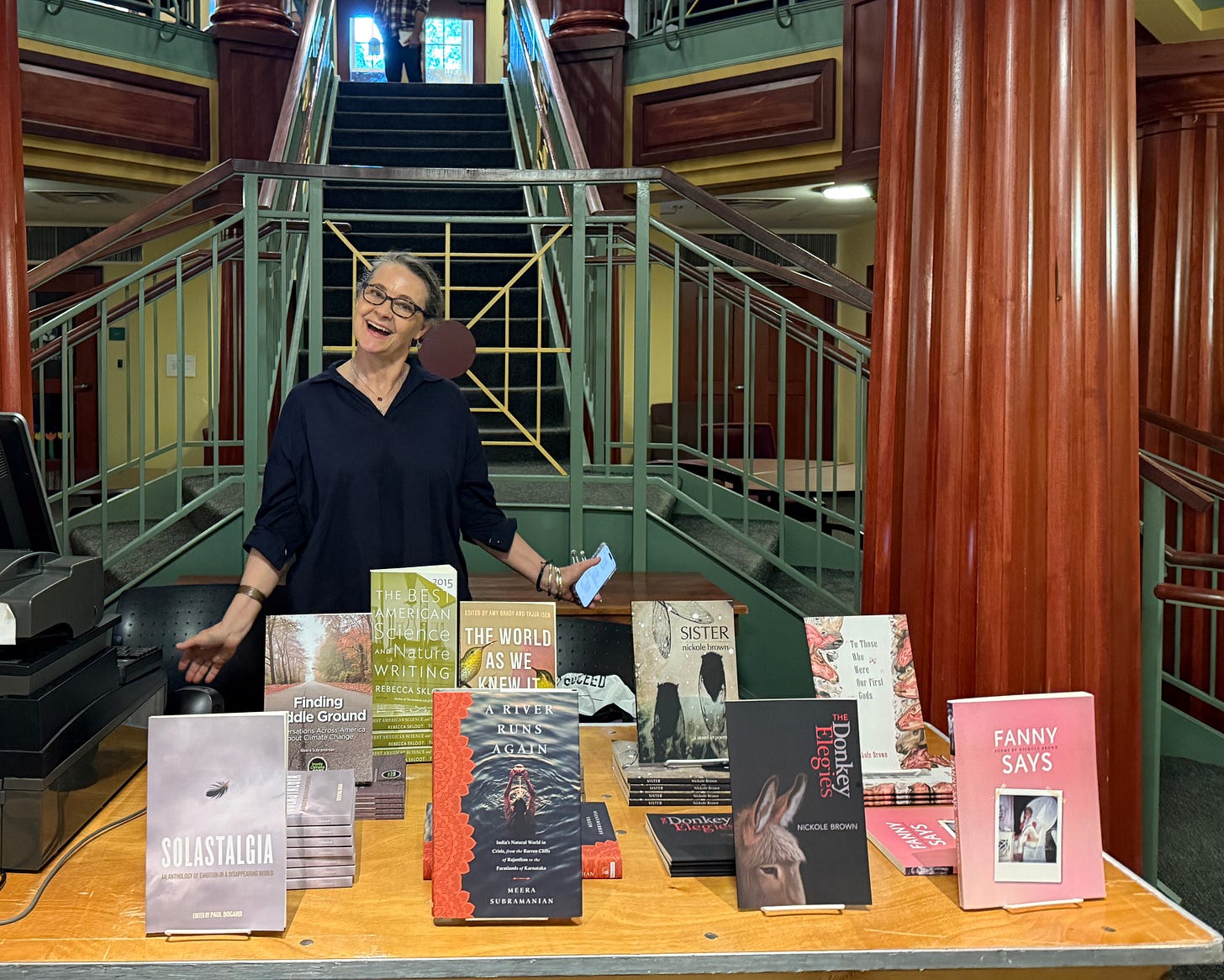
Solastalgia: An Anthology of Emotion in a Disappearing World

February 14, 2023 By meerasub Leave a Comment

Cover of Solastalgia with a feather floating in a grey sky.34 writers. One planet in flux. How are we processing the changes underfoot and overhead? Join me and other educators, journalists, poets, and scientists as we try to put words to the experience of what Australian philosopher Glenn Albrecht coined “solastalgia”… “the homesickness we feel while still at home.” Edited by Paul Bogard, author of The End of Night and many other books.

Perfectly fitting to release it today. A valentine for the planet. <3

Find your copy today. 


Filed Under: anthologies, climate change, News Tagged With: anthology, climate change, climate crisis, eco-grief, Paul Bogard, solastalgia

apologia

September 27, 2022 By meerasub Leave a Comment


Mourning Dove by Meera Subramanian

In homage to Barry Lopez and Amanda Stronza. And the flying creatures.

The familiar thud on the kitchen glass, but louder, heavier. When I look up, I still see small gray feathers suspended in the air. The stickers that help birds see the glass we like to look through, which I found through the American Bird Conservatory, have helped. The thuds have diminished this season, even as we’re in the thick of migration. I suspect that one of the raptors I’m so enamored of was in pursuit of this dove, frantic, flying fast, until the air became glass and she was downed. Other strikes this year were just stuns. Five minutes later, and the feathers lifted the life back into the sky, airborne again. Not this time.

In the summer of 2021, I had great plans to attend the The Art of Mending show at the Brick House Museum in Kennebunk, Maine. Covid thwarted the plans again and again. I watched the video of exhibition, glad for it, at least. The show was curated by Scott and Nancy Nash of the Illustration Institute / @illustration_institute. They’re friends. (Scott designed the gorgeous logo of RESP for us.) They’re the kind of friends you see once or twice a year and hours pass in an instant, so enlivened and wide-ranging is the conversation. They told us about the show when it was still in the planning stages. In these times when it can feel like too much is broken or breaking, they sought out those who were focused on repair.

woodcut of hands holding a dead bird

From Apologia by Barry Lopez, with woodcuts by Robin Eschner

One of the people they found was Dr. Amanda Stronza / @amandastronza, an anthropologist, conservationist and photographer in Austin, Texas whom they’d come across on Instagram when she started honoring the dead animals she discovered in her meanderings. She created memorials with the flowers, cones, seeds, leaves and whatever natural bits she found around the lifeless body. I took it today as inspiration. It seemed the right thing to do, when I lifted the dove from below the window and carried her to the edge of the yard.

Amanda, in turn, was inspired by Barry Lopez, who wrote about his tendency to stop when he sees roadkill and remove the body. “I carry each one away from the tarmac into a cover of grass or brush out of decency,” he writes in his short book Apologia. “Who are these animals, their lights gone out? What journeys have fallen apart here?”

A journey fell apart here today. More than one. It’s likely there’s a mate nearby, a mourning dove in mourning, their broods fledged but their bond still strong. The hawks won’t come back for their quarry, but perhaps she’ll be sustenance for someone else, a scavenger furry or six-legged, the cycle continuing.


Filed Under: just another day Tagged With: Amanda Stronza, Barry Lopez, birds, death, Illustration Institute, mending, mourning

  • « Previous Page
  • 1
  • 2
  • 3
  • 4
  • …
  • 16
  • Next Page »

Follow Meera on Substack

for the very occasional bit of news.

Categories

Tags

Alaska anthology A River Runs Again Art awards birds birds of prey books book tour Cambridge cape cod climate change conservation death dissent Elemental India energy events Fulbright india InsideClimate News journalism kenya Knight Science Journalism Nature New York City organic farming Orion peregrine falcon pesticides photography politics pollution environment Princeton University radio readings religion reviews science Society of Environmental Journalists teaching travel USA vulture water

Archives by Month

Connect

  • Bluesky
  • Facebook
  • Instagram
  • LinkedIn

© 2026 Meera Subramanian. | All Rights Reserved. | Mastodon | Website design by Sumy Designs, LLC

Green_14